Condor grounds an A321 after cockpit window check disrupts rotations
A precautionary inspection on a newly introduced Airbus A321 triggered a chain reaction of operational delays and crew rest adjustments across Condor's network.
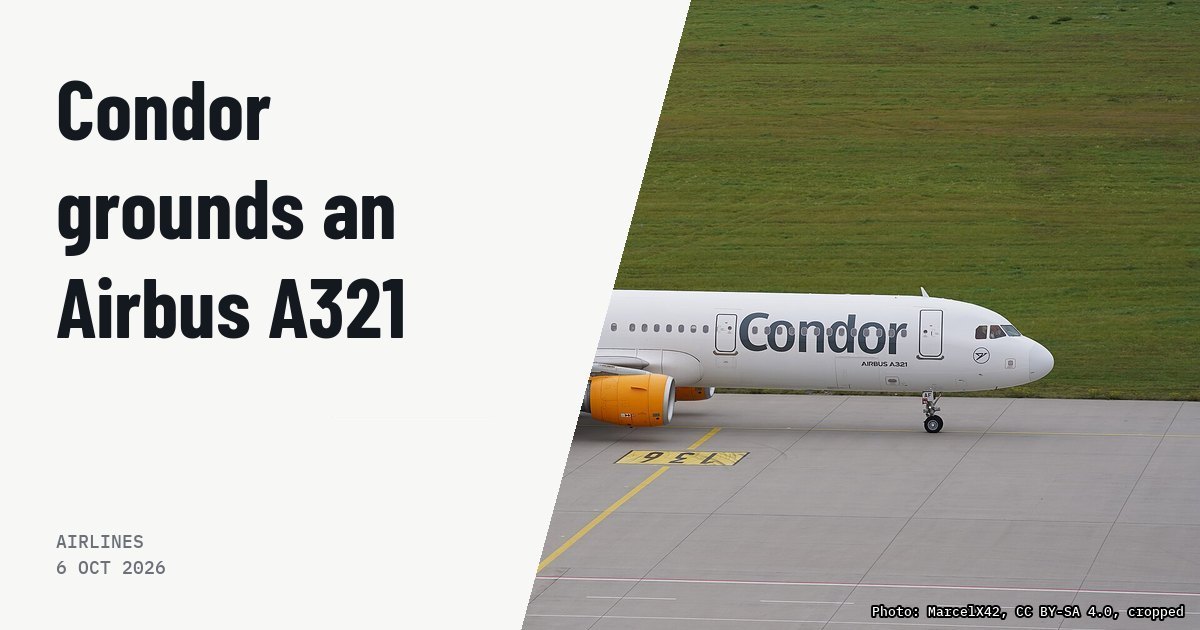
Condor took delivery of a 16-year-old Airbus A321, leased from Aircastle and registered D-AIAH, on 20 September. The airframe previously flew for Smart Lynx and had also operated briefly for Condor during summer 2019.
The aircraft entered commercial service on Friday 2 October 2026, performing two rotations between Frankfurt and Palma. On Saturday 3 October, following two additional round trips on the same sector, Condor removed the airframe from service as a precautionary measure. A company spokesperson stated that the grounding was prompted by a technical inspection performed on one of the cockpit windows.
This operational withdrawal triggered cascading disruptions across the fleet. Another A321, registered D-AIAS, was reassigned to cover the Frankfurt – Lamezia Terme – Frankfurt rotation. Consequently, this aircraft suffered delays within its own flight schedule on Sunday 4 October, beginning with flight DE182 out of Hamburg.
Combined with short-notice crew illness, the schedule disruption impacted statutory crew rest limits. Condor had to postpone the return flight from Hurghada to Hamburg to the following day to maintain mandatory rest periods, accommodating passengers in local hotels.
Both aircraft have since returned to revenue service. D-AIAS arrived back in Hamburg on Monday afternoon, 5 October, while D-AIAH completed a rotation between Frankfurt and Vienna on Monday evening.
Why it matters for your training
This operational chain reaction highlights the sensitivity of tight fleet rotations and illustrates how unscheduled technical groundings directly trigger flight time limitation constraints.
Sources
Article rewritten with the help of AI from the cited sources.