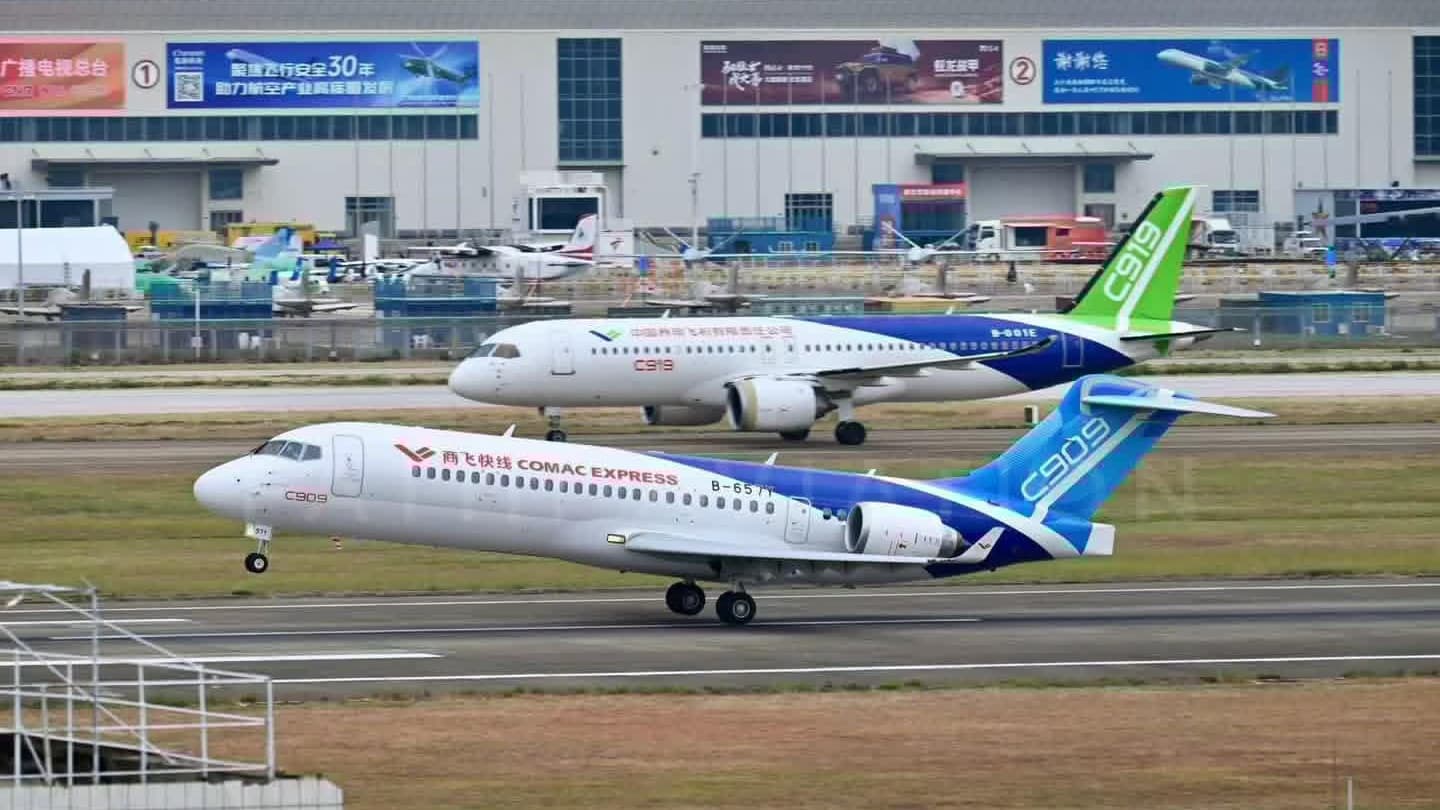
COMAC, the Chinese aircraft manufacturer, has initiated taxi tests of the C919-600, a shortened and optimized variant of its C919 narrowbody, specifically designed for high-altitude airports such as those on the Tibetan Plateau. This development, in partnership with Tibet Airlines, marks a significant step in adapting the C919 to challenging operational environments where reduced air density affects lift and engine performance.
The C919-600, often referred to as the "plateau" variant, features a fuselage approximately 34 meters long, about 3.6 meters shorter than the standard C919. This reduction allows for a capacity of around 140 seats, 28 fewer than the baseline model, while retaining the same wings and engines. COMAC has indicated that the aircraft will have a range of about 3,000 km, suitable for regional and domestic routes connecting high-altitude airports with major Chinese hubs. The taxi tests, observed at COMAC's Shanghai facility, are preparatory for a future flight test campaign, though the company has not officially confirmed the timeline.
Tibet Airlines, based at Lhasa Gonggar Airport, is the launch partner for this variant. The carrier has signed a cooperation agreement with COMAC to design and certify the C919-600, and has already placed an order for 40 of these aircraft, along with 10 ARJ21s adapted for high altitudes. This partnership underscores Tibet Airlines' role as a key operator in high-altitude aviation, and COMAC's strategy to demonstrate the C919's versatility through specialized versions.
For ATPL and ATC students, this development highlights the importance of aircraft performance considerations in high-altitude operations. The C919-600's design—shortened fuselage, reduced weight, and optimized takeoff and climb performance—mirrors adaptations seen in Western aircraft like the Airbus A319neo for similar environments. Understanding these modifications is crucial for pilots operating in regions like the Tibetan Plateau, where thin air requires careful flight planning and performance calculations. ATC students should note the implications for traffic management at high-altitude airports, where runway lengths and climb gradients become critical factors.