**A Decade of the C909: From Delays to Dominance**
Ten years after its first commercial flight, the COMAC C909—originally known as the ARJ21—has become the backbone of China’s regional aviation network. As of June 2026, COMAC reports that 186 C909s have been delivered to more than ten operators, carrying over 37 million passengers across 860+ routes and 180 cities, with roughly 500 daily flights. The aircraft now accounts for about 70% of mainland China’s regional jet fleet, a remarkable turnaround for a program that once symbolized technical struggle.
**A Turbulent Development History**
The C909 began life as the ARJ21 (Advanced Regional Jet for the 21st Century), launched in the early 2000s under the ACAC consortium before being absorbed by COMAC. Its first test flight took place on November 28, 2008, but certification and commercial entry were delayed by roughly eight years due to issues with wet-runway performance, cabin noise, and complex cockpit alerting systems. Type certification was finally granted in December 2014, and the first delivery to Chengdu Airlines occurred in late 2015, with commercial service beginning on June 28, 2016. At the Zhuhai Airshow in November 2024, COMAC rebranded the ARJ21 as the C909 to align it with the C919 and future C929 families.
**Technical Specs and Operational Performance**
The C909 is a twin-engine regional jet seating 78 to 97 passengers, with a range of 2,225 to 3,700 km. COMAC highlights its short-field and hot-and-high performance, as well as crosswind resistance, making it suitable for challenging airports. By the end of April 2026, the fleet had surpassed one million flight hours without a major incident—a symbolic milestone for Chinese aviation credibility. COMAC claims the C909 represented up to 60% of global deliveries of comparable regional jets in 2024.
**Operators and Export Ambitions**
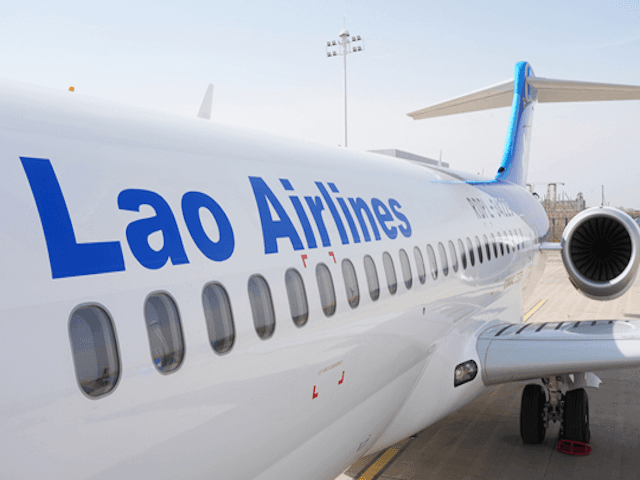
In China, the C909 is operated by eight airlines, including subsidiaries of the Big Three (Air China, China Eastern, China Southern), plus Chengdu Airlines, China Express, Urumqi Air, Tianjiao Airlines, and Jiangxi Air. The aircraft primarily serves routes linking secondary cities to hubs, complementing the C919 and larger foreign types. Its range also supports some regional international routes in Asia. COMAC has delivered C909s to Lao Airlines and signed commitments with Cambodia Airways for 20 aircraft. Vietjet in Vietnam has operated two C909s and returned in 2026 with a lease agreement for ten more.
**Why This Matters for ATPL and ATC Students**
The C909’s rise reflects a broader shift in global aviation: Chinese manufacturers are steadily gaining market share in the regional jet segment. For ATPL students, understanding the C909’s performance characteristics, operating limitations, and certification history is increasingly relevant as it enters more airspace. ATC students should note the aircraft’s impact on regional traffic flows, especially in Asia, and its potential to appear on international routes. As COMAC expands its family, the C909 serves as a case study in how new entrants can reshape fleet planning and operational procedures.