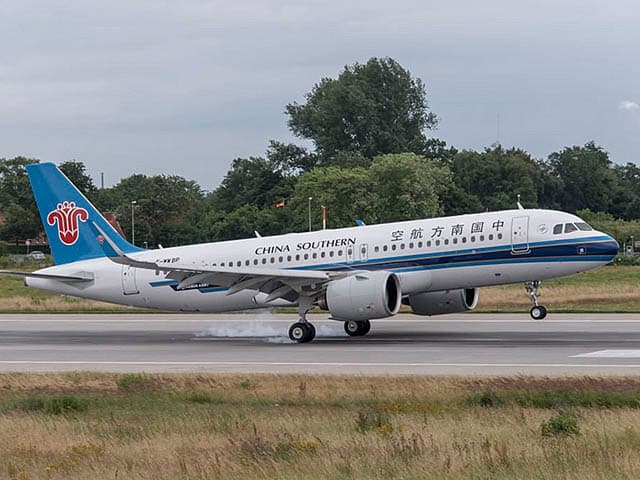
Airbus has secured a massive new order from China Southern Airlines and its subsidiary Xiamen Airlines for 137 A320neo family aircraft, valued at approximately $21.4 billion at list prices. The deal, announced in a filing to the Shanghai Stock Exchange on April 29, 2026, includes 102 A320neos for China Southern and 35 for Xiamen Airlines, with deliveries scheduled between 2028 and 2032. While list prices serve as a benchmark, industry practice involves substantial discounts on such large orders, and China Southern confirmed that the discounts are "fair" and consistent with previous Airbus deals.
This order is part of a broader fleet renewal strategy by the Guangzhou-based group, aimed at replacing older A320ceo and Boeing 737 aircraft to enhance capacity on domestic and regional medium-haul routes. For ATPL and ATC students, this illustrates how airlines plan long-term fleet transitions, balancing capacity needs with financial constraints. The delivery timeline aligns with Airbus's production ramp-up to 75 A320-family aircraft per month by 2027, though supply chain pressures on engines and components remain a challenge. Understanding such industrial dynamics is crucial for future pilots and controllers who will operate in an environment shaped by fleet modernization and global supply chain realities.
China Southern's move reinforces its position as China's largest airline group and a key Airbus customer in Asia. The group previously ordered 96 A320neos in 2022 as part of a block of 292 single-aisle jets for four major Chinese carriers. Xiamen Airlines, historically a Boeing operator, continues its diversification toward Airbus, having ordered 40 A320neos in 2022. This trend highlights the strategic importance of the A320neo for optimizing fuel efficiency and operational flexibility on medium-haul routes—a key consideration for pilots training on modern aircraft systems and for controllers managing increasingly efficient fleets.
Airbus's competitive edge in China is bolstered by its long-term industrial presence, including the Tianjin final assembly line (FAL), which has assembled over 780 A320-family aircraft since 2008. This "in China, for China" approach reduces logistics risks and positions Airbus as a quasi-local partner. In contrast, Boeing awaits a potential mega-order of around 500 737 MAX jets, contingent on US-China trade relations and a planned state visit by Donald Trump. For aviation students, this geopolitical dimension underscores how international relations directly impact fleet planning, route networks, and operational decisions—factors that influence everything from aircraft type ratings to airspace management.