China's commercial aviation fleet is aging faster than it is being replaced, driving up maintenance and fuel costs for airlines. According to IATA's regional vice president for North Asia, Xie Xingquan, the number of aircraft over 20 years old has exceeded new deliveries since 2020, pushing the replacement rate below the threshold needed to maintain a stable average fleet age. This trend is surprising for a country that once boasted one of the youngest fleets globally. Despite large orders placed with Airbus and Boeing by Chinese state carriers, the Civil Aviation Administration of China (CAAC) reported that 65 airlines operated 4,574 commercial aircraft at the end of 2025, with a rapidly aging profile dominated by A320 and 737 narrowbodies.
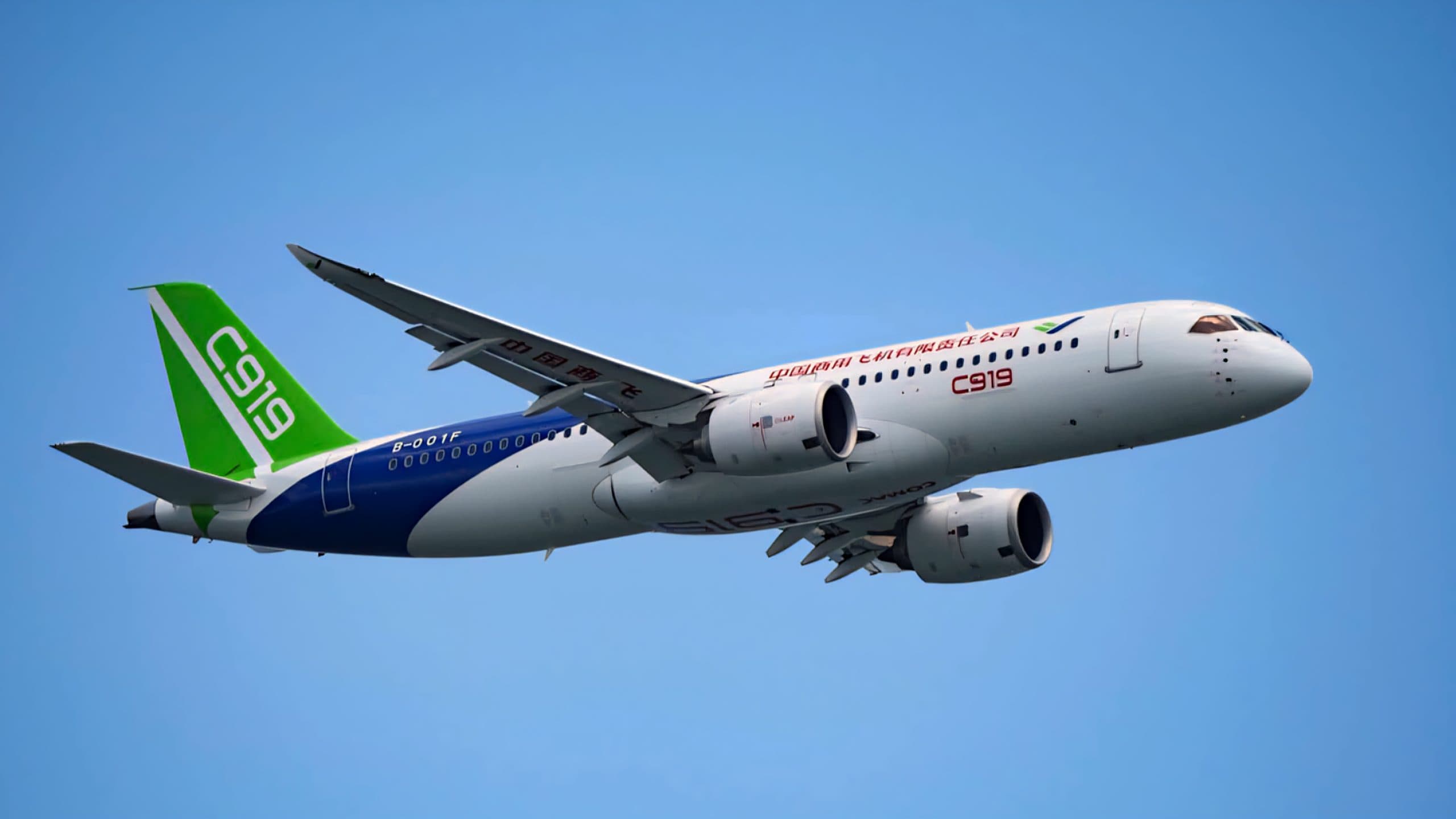
For airlines, older aircraft mean higher operating costs: more frequent heavy maintenance visits, increased labor requirements, and less fuel-efficient engines. Independent analyst Li Hanming noted in the South China Morning Post that maintaining older aircraft is capital-intensive due to the need to stock durable parts and finance long-term asset depreciation, which pressures cash flow. In this context, COMAC's C919 narrowbody emerges as a dual-purpose tool: rejuvenating the fleet while reducing exposure to international supply chain disruptions. COMAC has delivered 35 C919s between late 2022 and early 2026, primarily to China Eastern Airlines, with total orders around 300 units, including 100 for Air China in a longer-range variant. The C919 competes directly with the A320 and 737 families, using Western components like CFM International Leap-1C engines but with centralized industrial assembly and support in China.
Alongside the C919, the C909 (derived from the ARJ21) plays a key role in COMAC's regional strategy. With over 180 units in service, the 90-seat aircraft now operates with foreign carriers such as TransNusa in Indonesia, VietJet Air in Vietnam, and Lao Airlines, demonstrating its potential as an export tool. This growing fleet base justifies heavy investments in maintenance infrastructure. HAECO, a major MRO provider, performed its first C909 landing gear overhaul in Xiamen in May, signaling the expansion of support capabilities. As Jason Zheng of Airwefly consultancy noted, a broader domestic support network helps COMAC aircraft overcome global supply chain disruptions as operators increase their utilization.
For ATPL and ATC students, this development highlights the strategic importance of fleet planning and MRO networks in maintaining operational reliability. Understanding how aircraft age affects operating costs and how manufacturers like COMAC are challenging the Airbus-Boeing duopoly provides valuable insight into global aviation dynamics. The C919 and C909 programs also illustrate the interplay between industrial policy, supply chain resilience, and airline economics—a topic increasingly relevant in today's interconnected aviation environment.