**A Surprising Announcement Amid Trade Tensions**
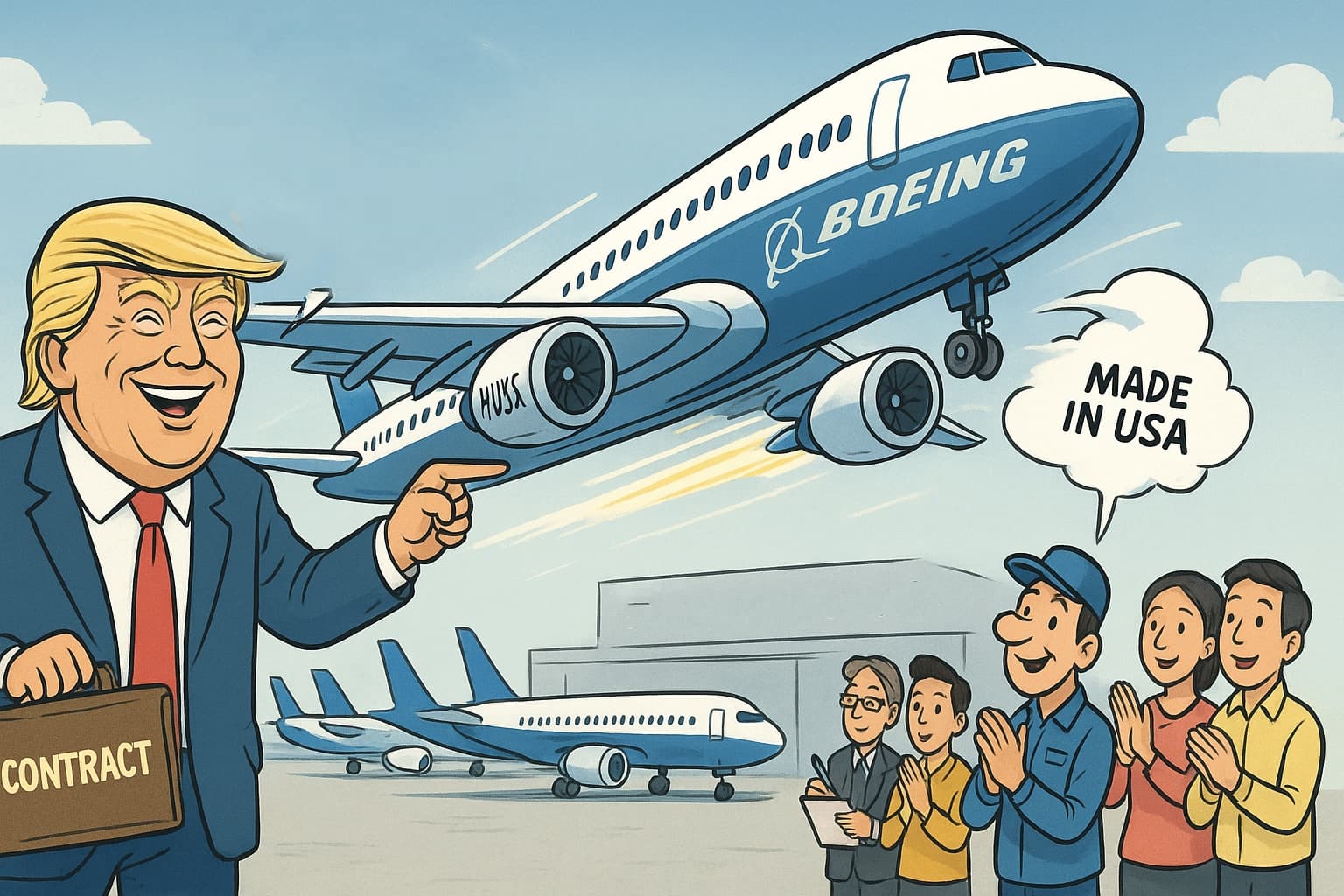
During a high-stakes visit to Beijing, U.S. President Donald Trump revealed that China had agreed to purchase 200 Boeing aircraft. Speaking on Fox News, Trump stated that Chinese President Xi Jinping had committed to buying "200 big Boeings," exceeding Boeing's initial request of 150 units. However, the market had anticipated a much larger order—around 500 aircraft, including the 737 MAX, 787 Dreamliner, and 777X. As a result, Boeing's stock fell over 5% on the New York Stock Exchange, its sharpest single-day drop in six months.
**Why This Matters for Aviation Training**
For ATPL and ATC students, this news is a real-world case study in how macroeconomic and political factors shape the aviation industry. Fleet orders are not just about aircraft numbers; they reflect trade relations, currency fluctuations, and regulatory climates. Understanding these dynamics is crucial for future pilots and controllers who will operate within a global system where airline strategies are influenced by geopolitics. For example, the 737 MAX, a key model in this potential order, has a complex certification history that students should study—its grounding and subsequent re-certification affected pilot training and operational procedures worldwide.
**The Broader Context**
Trump's visit, accompanied by a delegation of business leaders, aimed to ease trade tensions between the world's two largest economies. Boeing, as America's top exporter, is a strategic asset in these negotiations. The order, even if smaller than hoped, could signal a thaw in commercial relations. However, neither Boeing nor Chinese authorities have officially confirmed the deal, leaving room for uncertainty. For aviation students, this uncertainty mirrors the volatility they will face in their careers—whether in fleet planning, route development, or air traffic management.
**What ATPL/ATC Students Should Take Away**
This event underscores the importance of staying informed about global trade and policy. ATPL candidates should consider how aircraft orders affect pilot demand, training needs, and fleet composition. ATC trainees should note that changes in fleet size and type can impact airspace capacity, runway utilization, and traffic flow management. The 200-aircraft order, if realized, would add significant capacity to Chinese airlines, potentially increasing traffic on key routes and requiring adjustments in air traffic control procedures.
**Conclusion**
While the immediate market reaction was negative, the long-term implications for aviation are significant. For students at MyATPS, this is a reminder that aviation is not just about flying—it's about understanding the business, regulatory, and political environment that shapes every flight. Stay curious, and keep analyzing the news through an aviation lens.