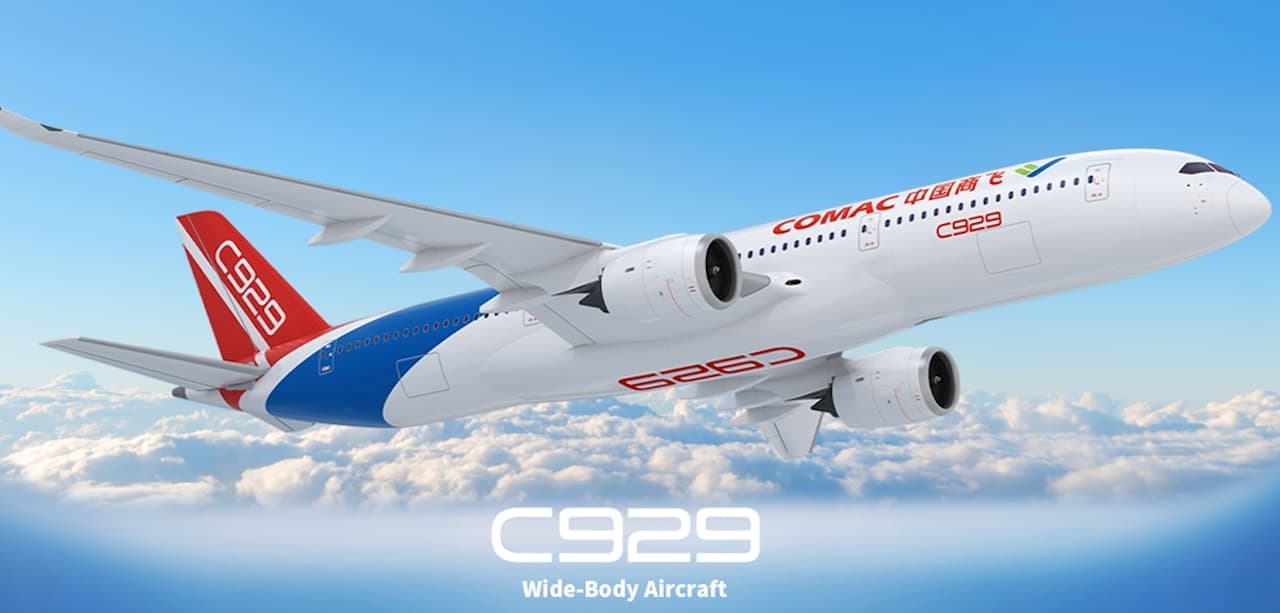
On April 30, 2026, the Civil Aviation Administration of China (CAAC), the Civil Aviation Department (CAD) of Hong Kong, and the Macao Civil Aviation Authority (AACM) signed four landmark cooperation agreements in Hong Kong. These accords cover type certification, maintenance management, and aviation fuels, with a specific focus on the type certification of COMAC's C929 wide-body aircraft. The C929, designed to compete with the Boeing 787 and Airbus A350, represents China's ambitious push into the long-haul market. The agreements aim to deepen mutual recognition of airworthiness standards and enhance technical cooperation around the C929, as stated by Hong Kong authorities. Victor Liu, Director-General of CAD, hailed the signing as a significant step in regional aviation integration.
The C929 is a future long-haul aircraft with a capacity of 250 to 320 seats, targeting the 787 and A330neo segments. COMAC has finalized the avionics architecture, signing a letter of intent with Aviage Systems for the central processing system, described as the aircraft's "brain." The aircraft is expected to have a range of about 12,000 km, enabling routes like Shanghai-Europe or the U.S. West Coast. This program follows the C919 narrow-body and aims to create a complete family of Chinese commercial aircraft, challenging the Western duopoly.
Hong Kong and Macao will play a crucial role in the C929's certification process, with their engineers and inspectors participating in CAAC-led certification work. The agreements also cover mutual recognition of maintenance and training organizations, as well as environmental standards for aviation fuels and chemicals. This harmonization is expected to streamline operations for airlines in the Greater Bay Area and facilitate the international expansion of COMAC's aircraft. COMAC opened a Hong Kong office in 2024 and already operates a C919 Hong Kong-Shanghai route, demonstrating its commitment to using the city as a gateway to global markets.
China is building its own network of airworthiness standards through bilateral agreements, as seen with Brunei's adoption of CAAC standards in 2025. Without EASA or FAA recognition, these partnerships are vital for the C929's international certification. For ATPL and ATC students, this development highlights the growing complexity of global regulatory harmonization and the emergence of new players in aircraft manufacturing. Understanding these shifts is essential for future careers in aviation, as they affect route planning, aircraft operations, and safety oversight.
The C929's entry into service is not expected before the next decade, but the regulatory groundwork laid by these agreements is a critical step. The cooperation between China, Hong Kong, and Macao demonstrates how regional integration can accelerate certification processes, a lesson for students studying international aviation law and airworthiness standards.