**A landmark order in the making**
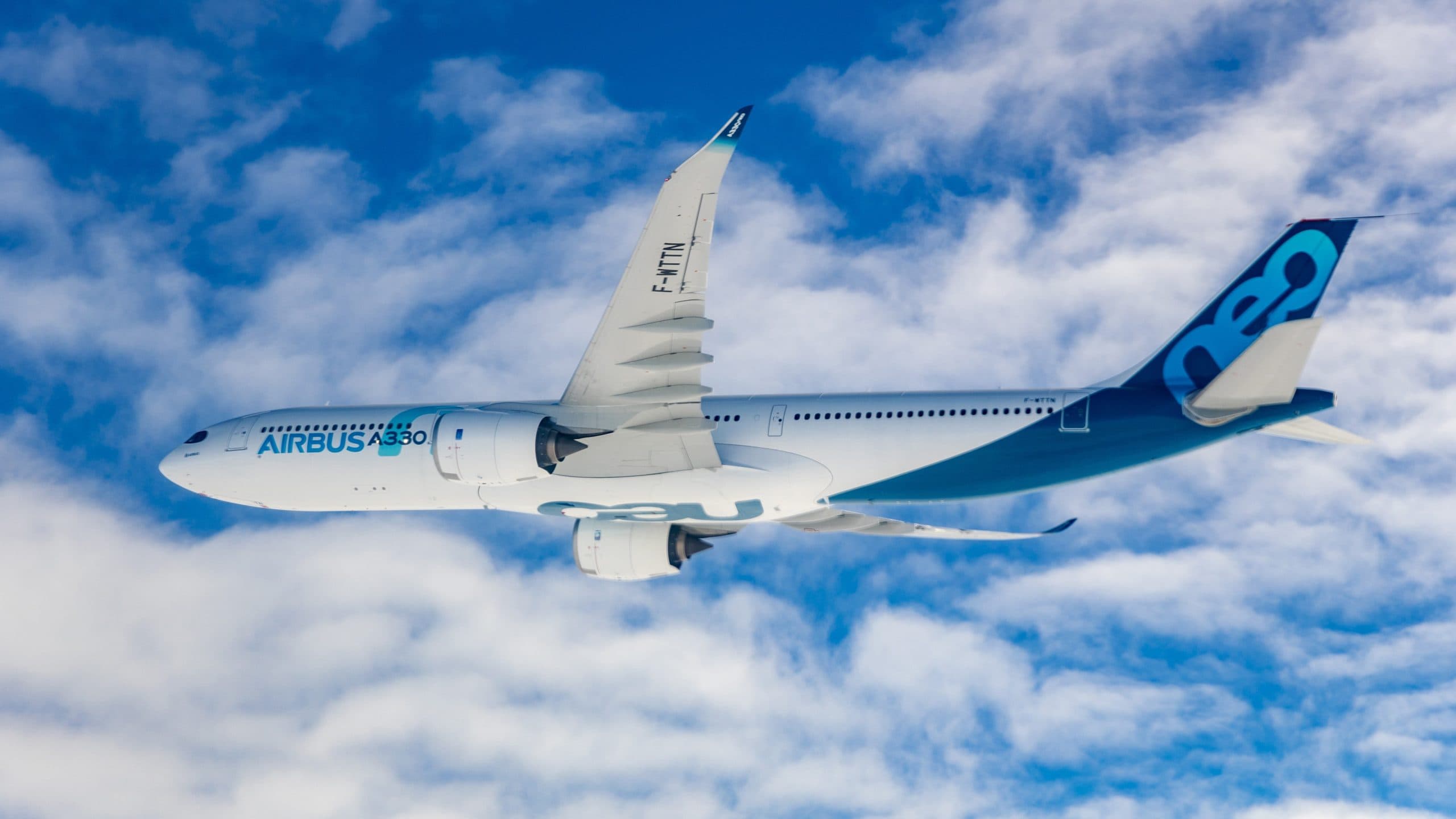
China Eastern Airlines has placed a firm order for 25 Airbus A330neo aircraft, with a list price of approximately $9.4 billion. The carrier plans to deploy these widebodies on its international network starting in the next decade. Based at Shanghai Pudong International Airport — its main long-haul hub — the airline intends to use the A330neo both to expand intercontinental capacity and to replace older aircraft, as part of a broader strategy to upgrade its product and reduce its carbon footprint. Deliveries are scheduled between 2029 and 2033.
**Why this matters for ATPL and ATC students**
For aspiring airline transport pilots, this order is a clear signal that the A330neo will become a mainstay in Chinese long-haul operations. The aircraft features the latest generation Rolls-Royce Trent 7000 engines and advanced aerodynamics, which translate into lower fuel burn and reduced noise — factors that directly affect flight planning, performance calculations, and airport compatibility. Understanding the A330neo's systems, including its fly-by-wire architecture and cockpit commonality with the A350, will be increasingly relevant for type rating preparation.
For air traffic controllers, the deployment of 25 additional widebodies at Shanghai Pudong means increased traffic complexity. The A330neo's higher payload-range capability allows for ultra-long-haul routes, which may require new oceanic procedures, ETOPS considerations, and coordination between area control centers. Controllers will also need to manage the wake turbulence category of this heavy aircraft, especially during departure sequencing and approach spacing.
**A strategic win for Airbus in China**
This order is one of Airbus' most significant widebody successes in China, following a series of narrowbody deals. It comes after high-level European diplomatic visits, including French President Emmanuel Macron in December 2025 and German Chancellor Friedrich Merz in February 2026. The deal consolidates Airbus' position against Boeing, which is trying to regain momentum with a reported Chinese commitment for 200 aircraft. However, the exact numbers remain unconfirmed by Chinese authorities.
**Financial and operational context**
China Eastern plans to finance the purchase through a mix of internal resources, bank loans, bond issuances, and other financial instruments, describing the investment as "reasonable and controllable" given its current financial structure and revenue outlook. For students, this illustrates how airline fleet planning is tightly linked to macroeconomic conditions, fuel price forecasts, and passenger demand trends — all of which are covered in ATPL subjects like Airline Management and Flight Planning.
**The bigger picture**
With this order, Airbus now has a strong foothold in both the narrowbody and widebody segments in China. For trainees, the takeaway is clear: the global aviation industry is shifting toward more fuel-efficient, longer-range aircraft, and the Asia-Pacific region — especially China — will be a key driver of demand for pilots and controllers in the coming decades.