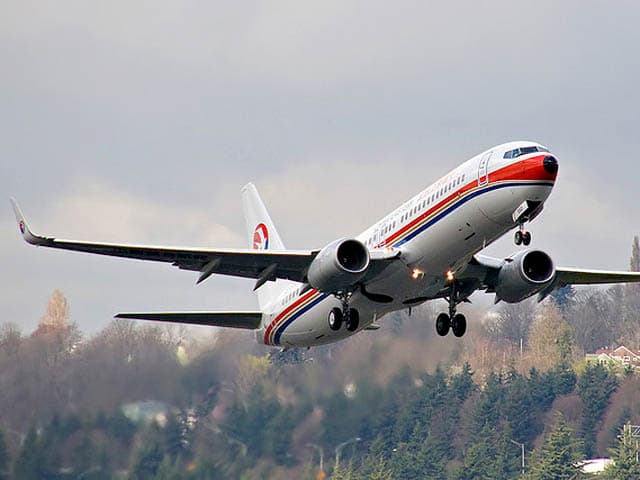
Four years after the crash of China Eastern Airlines Flight MU5735, the deadliest aviation accident in China in 30 years, newly released data from the U.S. National Transportation Safety Board (NTSB) has reignited the debate over what caused the Boeing 737-800 to plunge vertically into a mountainous region of Guangxi, killing all 132 people on board. The technical report, obtained through a Freedom of Information Act request, shows that both fuel selectors were moved from the "run" to the "cutoff" position while the aircraft was cruising at 29,000 feet. On the 737-800, these levers require a deliberate two-step action—lifting and then rotating—making accidental activation highly unlikely.
For ATPL and ATC students, this case is a textbook example of how flight data recorders (FDR) and cockpit voice recorders (CVR) are used in accident investigations. The FDR stopped recording when the generators lost power due to the fuel cutoff, but the CVR continued on backup power, capturing audio that was shared with Chinese authorities. The absence of any attempt to restore fuel flow, combined with the aircraft's extreme dive speed exceeding 1,000 km/h, points to a deliberate act rather than a mechanical failure. This highlights the critical importance of understanding cockpit systems and emergency procedures, as well as the limitations of onboard recorders.
The investigation remains opaque, with the Civil Aviation Administration of China (CAAC) denying suicide or malicious intent and refusing to release a final report, citing national security concerns. This lack of transparency contrasts with international standards set by the International Civil Aviation Organization (ICAO), which require timely publication of accident reports. For future aviation professionals, this case underscores the tension between safety investigations and national interests, and the need for robust human factors training to recognize and mitigate risks of intentional acts.
From an ATC perspective, the sudden loss of communication and the aircraft's abnormal trajectory—a near-vertical dive from cruise altitude—would have triggered immediate emergency protocols. Understanding how such events unfold can help controllers anticipate pilot actions and coordinate search and rescue efforts. The crash also raises questions about cockpit resource management and the psychological screening of flight crews, topics that are increasingly relevant in ATPL training.
In conclusion, the China Eastern Airlines crash serves as a stark reminder that aviation safety depends not only on technical reliability but also on human behavior. The NTSB data, while not conclusive, reinforces the need for thorough investigations and open sharing of findings to prevent future tragedies. For students, it is a case study in the complexities of accident analysis and the ethical dilemmas faced by investigators.