**A Historic Order with a Strategic Twist**
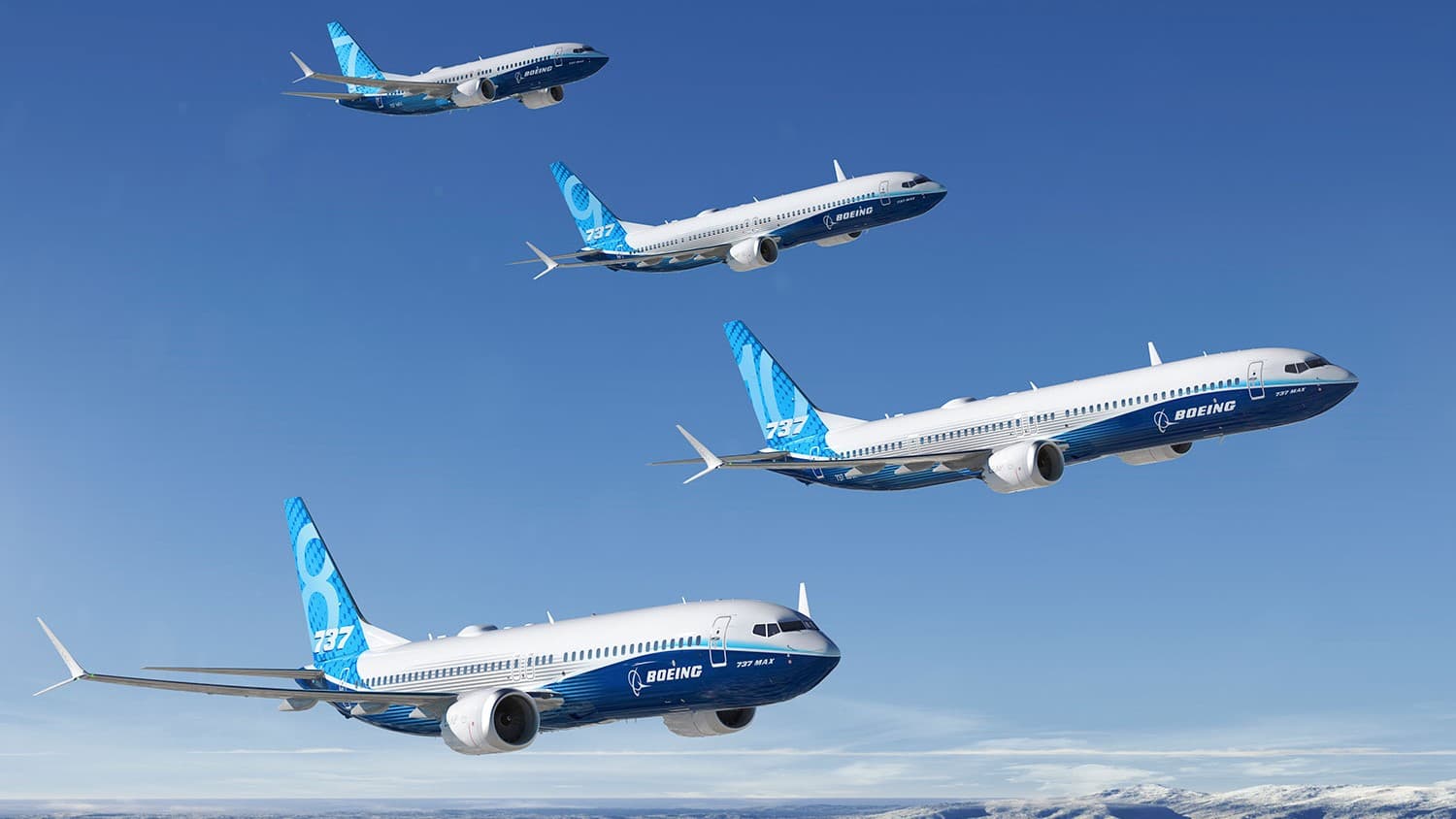
China has confirmed an order for 200 Boeing aircraft, marking the first major purchase of American commercial jets by Beijing in nearly a decade. The announcement came during President Donald Trump's visit to Beijing, but Boeing CEO Kelly Ortberg was quick to frame it as just the beginning. Speaking at a U.S. conference shortly after the trip, Ortberg described the deal as an "initial tranche" that could be followed by several hundred more aircraft, contingent on guarantees for spare parts supply. This is not just a routine sale; it represents the reopening of the Chinese market to Boeing's narrowbody jets, particularly the 737 MAX, which had been effectively frozen since 2017 due to trade tensions and the aftermath of the MAX accidents.
**Why This Matters for ATPL and ATC Students**
For those training to become airline pilots or air traffic controllers, this development has direct implications. The 737 MAX is a cornerstone of many global fleets, and its return to China—the world's second-largest aviation market—means increased demand for pilots type-rated on the MAX and for controllers managing higher traffic volumes. The order also signals a shift in fleet composition: Chinese carriers like Air China, China Eastern, and China Southern are expected to absorb these aircraft, potentially leading to new routes and increased frequencies. ATC students should note that China's airspace is already among the busiest in Asia, and a wave of new narrowbody deliveries will require careful integration into existing traffic flows, especially in hubs like Beijing, Shanghai, and Guangzhou.
**From 200 to 700 Aircraft? The Phased Approach**
While some investors were disappointed that the initial order wasn't the "mega-deal" of 500 aircraft rumored in the press, Ortberg and U.S. officials now present the 200 units as a stepping stone. President Trump suggested that purchases could rise to 750 aircraft if Boeing performs well on this first batch. A source close to the deal indicates that Beijing plans to acquire several hundred more jets, but will announce them in waves rather than all at once. The total could eventually reach around 700 aircraft, including 737 MAX narrowbodies and potentially 787 and 777X widebodies in later phases. For ATPL students, this means long-term career opportunities: a sustained order pipeline ensures that airlines will need pilots for years to come, while ATC trainees should prepare for increased traffic density as these aircraft enter service.
**The Spare Parts Leverage**
Beyond the headline numbers, the real negotiation leverage lies in spare parts and supply chain reliability. Chinese carriers have faced difficulties obtaining critical components in recent years due to trade tensions and threats of U.S. export restrictions. The Chinese Ministry of Commerce has explicitly linked the 200-aircraft order to "supply guarantees" for engine parts and structural components from the United States. This condition is described as a "key prerequisite for any additional purchases." For aviation students, this highlights a crucial operational reality: aircraft are only as good as their support network. Pilots and controllers must understand that supply chain disruptions can ground fleets, alter schedules, and impact airspace usage—a factor often overlooked in training but vital in real-world operations.
**A Competitive Landscape Reshaped**
This deal also intensifies competition between Boeing and Airbus, as well as with China's homegrown C919. For ATPL candidates, this means a more diverse future fleet environment: while the 737 MAX is central now, the C919 could eventually challenge Boeing's dominance in China. ATC students should monitor how new aircraft types affect separation standards and airport procedures. The phased nature of the order—with deliveries spread over years—gives airlines and regulators time to adapt, but it also requires careful planning. In summary, this news is not just a corporate milestone; it is a signal that the global aviation landscape is shifting, and tomorrow's pilots and controllers need to be ready for a world where China plays an even larger role.