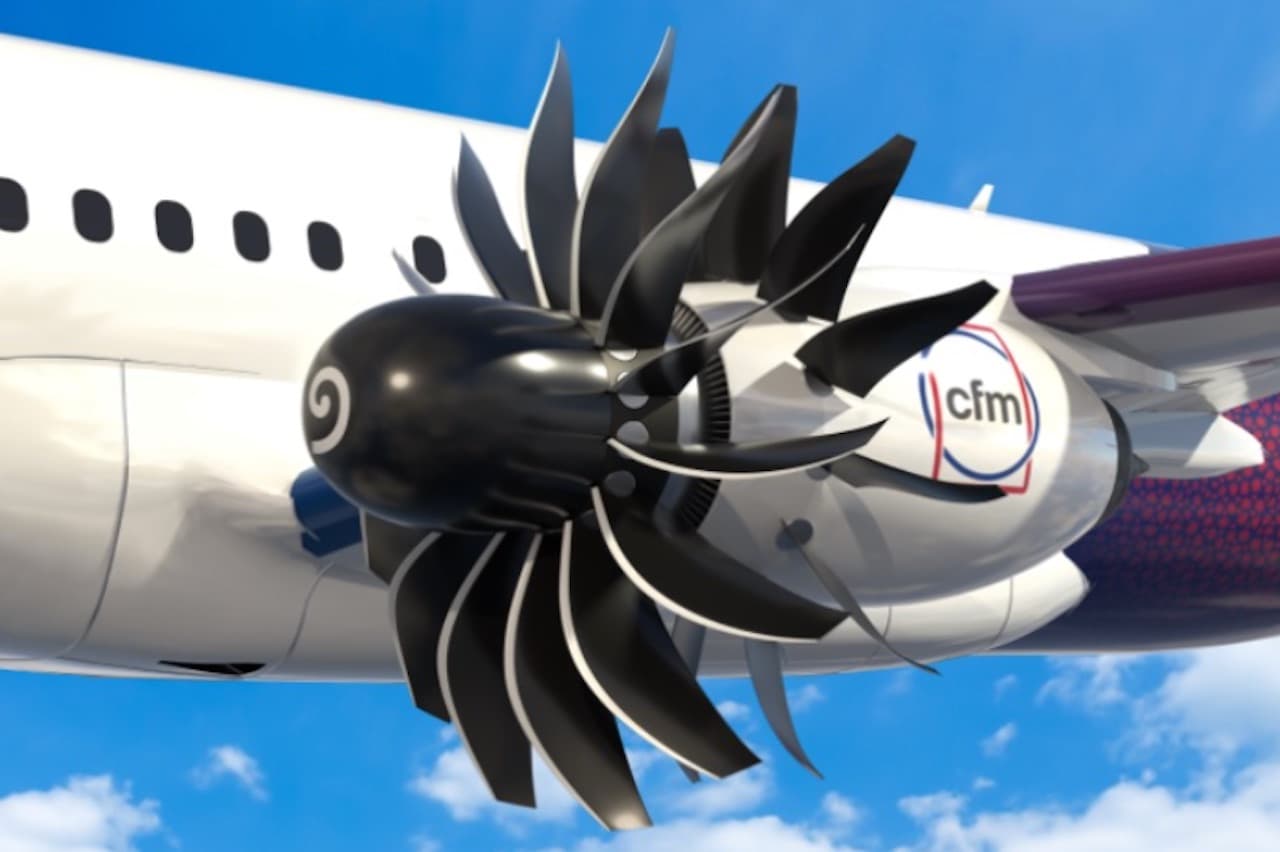
**CFM RISE Open Fan: A New Chapter in Propulsion Technology**
At the Farnborough Airshow, CFM International (a joint venture between Safran and GE Aerospace) confirmed that its RISE program has entered a new phase of technological maturation. The Open Fan architecture—the centerpiece of RISE—has passed key design reviews, with advanced durability tests and integration work paving the way for a flight demonstration by the end of the decade. For ATPL and ATC students, this marks a pivotal moment: the Open Fan, lacking a traditional nacelle, promises a 20% improvement in fuel efficiency compared to current engines, while maintaining similar cruise speeds and altitudes. This could redefine performance parameters for future single-aisle aircraft, directly impacting flight planning, fuel calculations, and noise management in air traffic operations.
**Durability and Testing: A Radical Approach**
CFM has conducted over 2,000 dust ingestion cycles on next-generation high-pressure turbine technologies, alongside 1,000 hours of testing on a fast low-pressure turbine integrated into the fan module. These tests are not just about performance—they are about ensuring reliability from the start. For ATC students, understanding the noise and aerodynamic implications of an open fan is crucial, as the absence of a nacelle alters acoustic signatures and wake turbulence characteristics. ATPL candidates will need to grasp how these changes affect engine-out procedures, climb gradients, and fuel reserves, especially as the technology targets a 20% fuel burn reduction over current LEAP engines.
**Hybrid-Electric Integration and the Compact Core**
The RISE program extends beyond the Open Fan. CFM is advancing on a compact core design, with preliminary design reviews completed, and hybrid-electric systems being tested on the ground. Safran’s PHILEAS demonstrator and GE Aerospace’s hybrid-electric engine tests highlight a broader trend: the future of aviation propulsion is increasingly electric. For ATPL students, this means new systems knowledge—battery management, electric motor performance, and integration with traditional turbofans. ATC trainees will need to consider how hybrid-electric aircraft might affect approach speeds, holding patterns, and emergency procedures, as these systems introduce new failure modes and operational constraints.
**The A380 Flight Lab: A Unique Test Platform**
Airbus and CFM have unveiled the new livery of the A380 Flight Lab, which will serve as a flying testbed for the Open Fan. The superjumbo’s size, electrical capacity, and payload margins make it ideal for instrumenting an experimental engine and measuring aerodynamic, structural, and acoustic interactions. The first conceptual review of the flight test plan has been completed, moving the project from concept to engineering preparation. For ATC students, the A380’s role highlights the importance of wake turbulence separation and noise abatement procedures—key topics in air traffic management. ATPL candidates will benefit from understanding how such a demonstrator validates engine-airframe integration, a critical aspect of aircraft performance and handling.
**Why This Matters for Aviation Training**
The RISE program is not just about a new engine; it is about preparing the next generation of aviation professionals for a radically different propulsion landscape. With CFM targeting a 2029 flight test campaign on the A380, ATPL and ATC students today will be the first to encounter these technologies in service. Understanding the Open Fan’s impact on fuel efficiency, noise, and maintenance will be essential for flight planning, airspace design, and operational decision-making. As the industry moves toward sustainable aviation, the RISE program represents a tangible step that will shape training curricula for years to come.