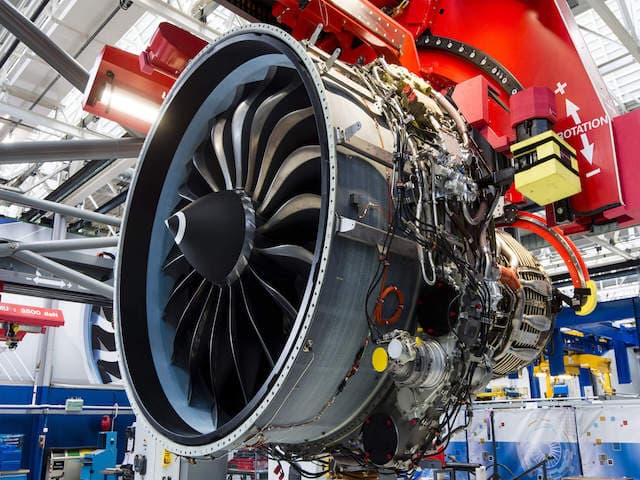
At the Farnborough Airshow, CFM International and IndiGo announced a landmark memorandum of understanding for more than 1,000 LEAP-1A engines to power 510 Airbus A320neo family aircraft. This is the largest single order ever placed for LEAP engines, according to Safran, and a record for CFM. The agreement goes beyond engine supply: it includes enhanced support for IndiGo's future MRO capability and a long-term services contract covering spare parts. The goal is to ensure high dispatch reliability, stabilize costs, and support the expansion of a fleet that already exceeds 430 aircraft.
IndiGo, India's largest airline and one of the world's fastest-growing carriers, has been a CFM customer since 2016, when it operated A320ceos powered by CFM56-5B engines. In 2019, the airline selected the LEAP-1A for its newer A320neo and A321neo aircraft. The LEAP-1A is one of two engine options on the A320neo family, competing with the Pratt & Whitney GTF. CFM highlights the engine's fuel efficiency, improved reliability, and lower cost of ownership—key factors for a high-density operator like IndiGo. The joint venture between Safran and GE Aerospace also notes that the LEAP now delivers "up to twice the time on wing" in hot and harsh environments compared to its entry into service, a critical advantage in India's demanding climate.
India is CFM's third-largest market globally, with five airlines operating over 400 LEAP-powered aircraft and 2,000 engines on order. The MRO dimension is equally significant: Safran opened its largest LEAP-dedicated MRO center in India last year, a 45,000-square-meter facility capable of 300 shop visits per year. This local capacity helps airlines secure maintenance chains in a rapidly growing market. IndiGo's fleet now exceeds 375 A320/A321 aircraft supported by CFM, confirming the depth of the partnership. This deal positions CFM strongly in India while IndiGo locks in engines and services for one of the most ambitious fleet expansions in commercial aviation today. It also confirms a broader trend: in the single-aisle battle, engine availability and MRO support now weigh as heavily as pure performance.