**A vital gateway under pressure**
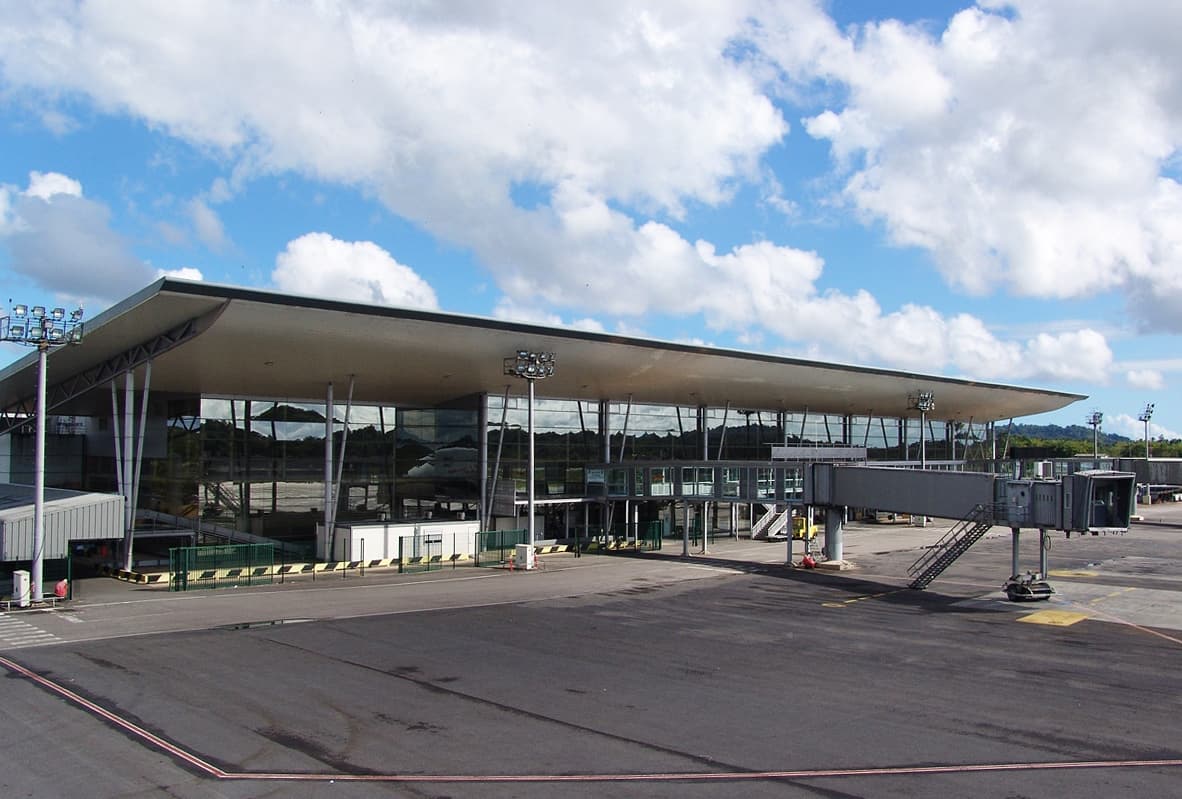
Cayenne–Félix-Éboué Airport, the main international gateway to French Guiana, is undergoing a major transformation. With nearly 540,000 passengers in 2025 and a theoretical capacity of around 600,000, the facility is approaching saturation. To address this, the Société Concessionnaire de l’Aéroport de Cayenne (SCAC), led by Egis, has launched a €85 million modernization program. The first phase, spanning 42 months, is expected to be completed by 2029, with the entire 30-year concession running from October 2025.
**What the upgrade includes**
The centerpiece is a 1,000 m² extension and reconfiguration of the passenger terminal, aimed at streamlining check-in, security, border control, and waiting areas. Commercial spaces will be reorganized to showcase local products—gastronomy, crafts, tourism—boosting non-aeronautical revenue. New facilities for airport staff, state services, and contractors will improve working conditions.
On the airside, the program includes renovating aircraft parking areas and creating a new heavy aircraft stand. This is critical for accommodating long-haul aircraft serving the Guiana Space Centre (CSG) in Kourou, reinforcing the airport's role as a logistical hub for European space activities. The airport already handles regular flights to mainland France, the Caribbean, Brazil, and Suriname, with over 6,400 commercial aircraft movements in 2024.
**Environmental and economic ambitions**
The project targets 90% decarbonized energy on the platform, leveraging LED lighting, optimized HVAC systems for tropical climates, and renewable energy sources—practices already deployed at other Egis-operated airports. Construction will rely heavily on local businesses, creating jobs and skills development. Local authorities emphasize that the airport is essential for territorial continuity with mainland France and for regional influence in the Caribbean and South America.
**Why this matters for ATPL and ATC students**
This case study illustrates how airport capacity constraints drive infrastructure investment—a key topic in airport planning and operations modules. Understanding the interplay between passenger growth, airside capacity (especially heavy aircraft stands), and environmental certification (e.g., Airport Carbon Accreditation) is directly relevant to ATPL performance and ATC operational planning. The project also highlights the strategic importance of airports supporting space launch logistics, a niche but growing area in aviation.