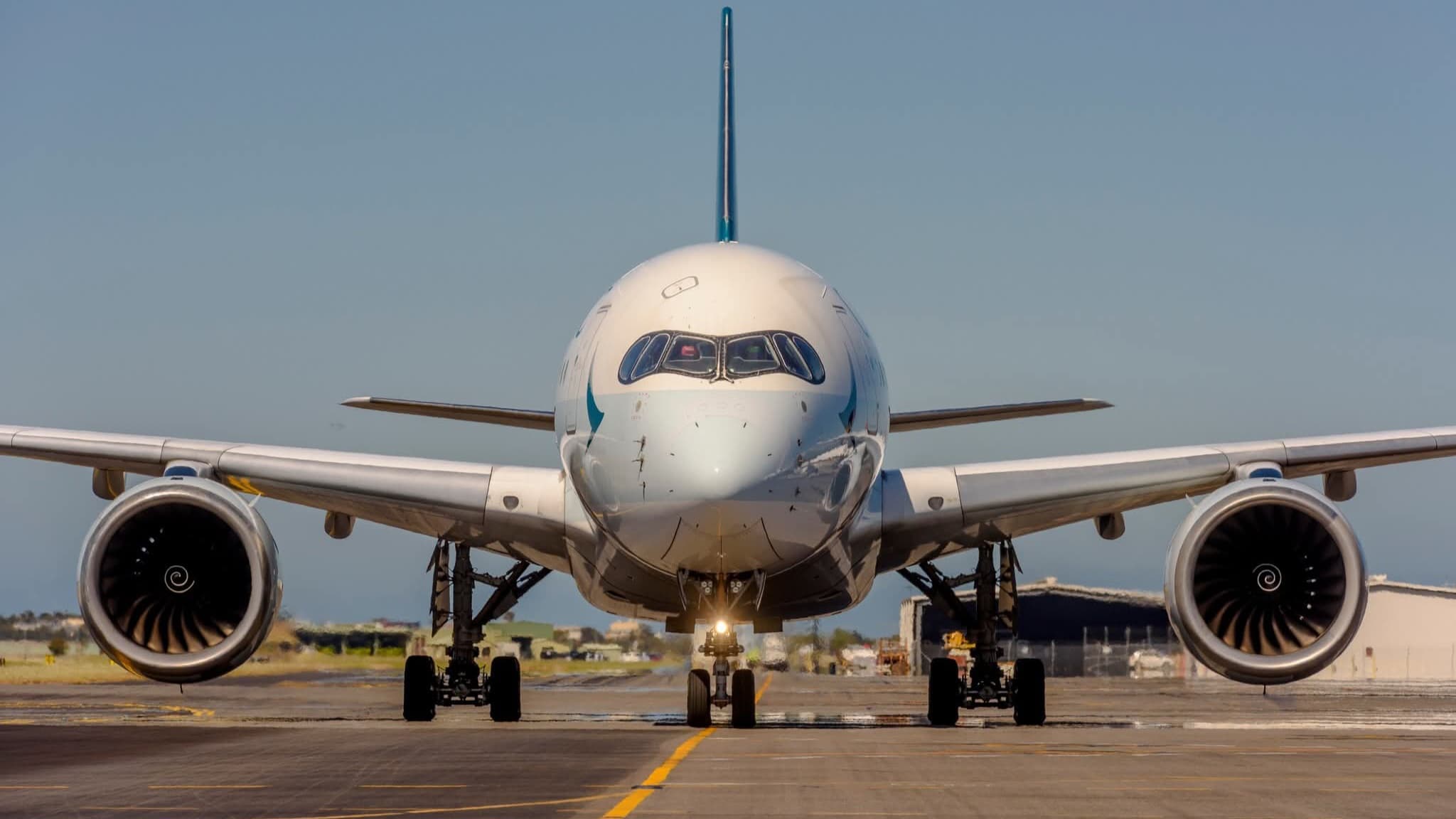
**A Record Half-Year, But Fuel Looms Large**
Cathay Pacific has reported a stellar first half of 2026, with attributable profit climbing 71% year-on-year to HK$6.243 billion (approximately US$800 million). Revenue rose 25.3% to HK$68.061 billion (US$8.73 billion), and the operating margin improved to 9.2% from 6.7%. This marks the airline's best first-half performance since 2010. However, the second quarter revealed the industry's persistent vulnerability to fuel price volatility, as net fuel costs surged 58.5% to HK$23.224 billion (US$2.98 billion), driven by a 53.2% jump in average fuel prices. Group Chairman Guy Bradley noted that fuel costs nearly doubled between Q1 and Q2, with high prices expected to persist through year-end.
**Passenger and Cargo Momentum**
Passenger traffic grew strongly: Cathay carried 16.0 million passengers, up 17.5%, with capacity (ASK) up 11.8% and load factor improving 2.7 points to 87.5%. Passenger revenue jumped 26.3% to HK$43.203 billion (US$5.54 billion), while yield improved 9.4%, reflecting robust demand and pricing power. European routes benefited from rerouting due to Middle East tensions, with increased frequencies in March and April, while flights to Dubai and Riyadh were suspended. Cargo remained a pillar: Cathay Cargo revenue rose 23.9% to HK$13.806 billion (US$1.77 billion), tonnage up 8.5% to 869,000 tonnes, and cargo yield up 18.1%, driven by high-value tech products and AI-related demand. The cargo fleet of 20 Boeing 747s will be augmented by eight new Airbus A350Fs.
**Subsidiaries and Strategic Investments**
Low-cost subsidiary HK Express narrowed its pre-tax loss to HK$73 million (US$9 million) from HK$524 million a year earlier, carrying 4.2 million passengers (+9.8%) with an 80.9% load factor. The group's profit also included a one-off gain of HK$1 billion (US$128 million) from the dilution of its stake in Air China from 15.09% to 12.85%. Excluding this, recurring profit rose a solid 44.9% to HK$5.290 billion (US$678 million). Despite fuel pressures, Cathay maintains its 2026 capacity growth target of ~10% and has committed HK$150 billion (US$19.2 billion) to fleet renewal, cabin upgrades, and digital transformation, with 150 new aircraft on order.
**Why This Matters for Aviation Students**
For ATPL and ATC trainees, this report illustrates key industry dynamics: the impact of fuel price volatility on airline profitability, the importance of yield management in passenger and cargo operations, and the strategic role of fleet planning and subsidiary performance. Understanding these financial and operational levers is essential for future roles in airline management, route planning, and air traffic management, where decisions are increasingly data-driven and sensitive to geopolitical and economic shifts.