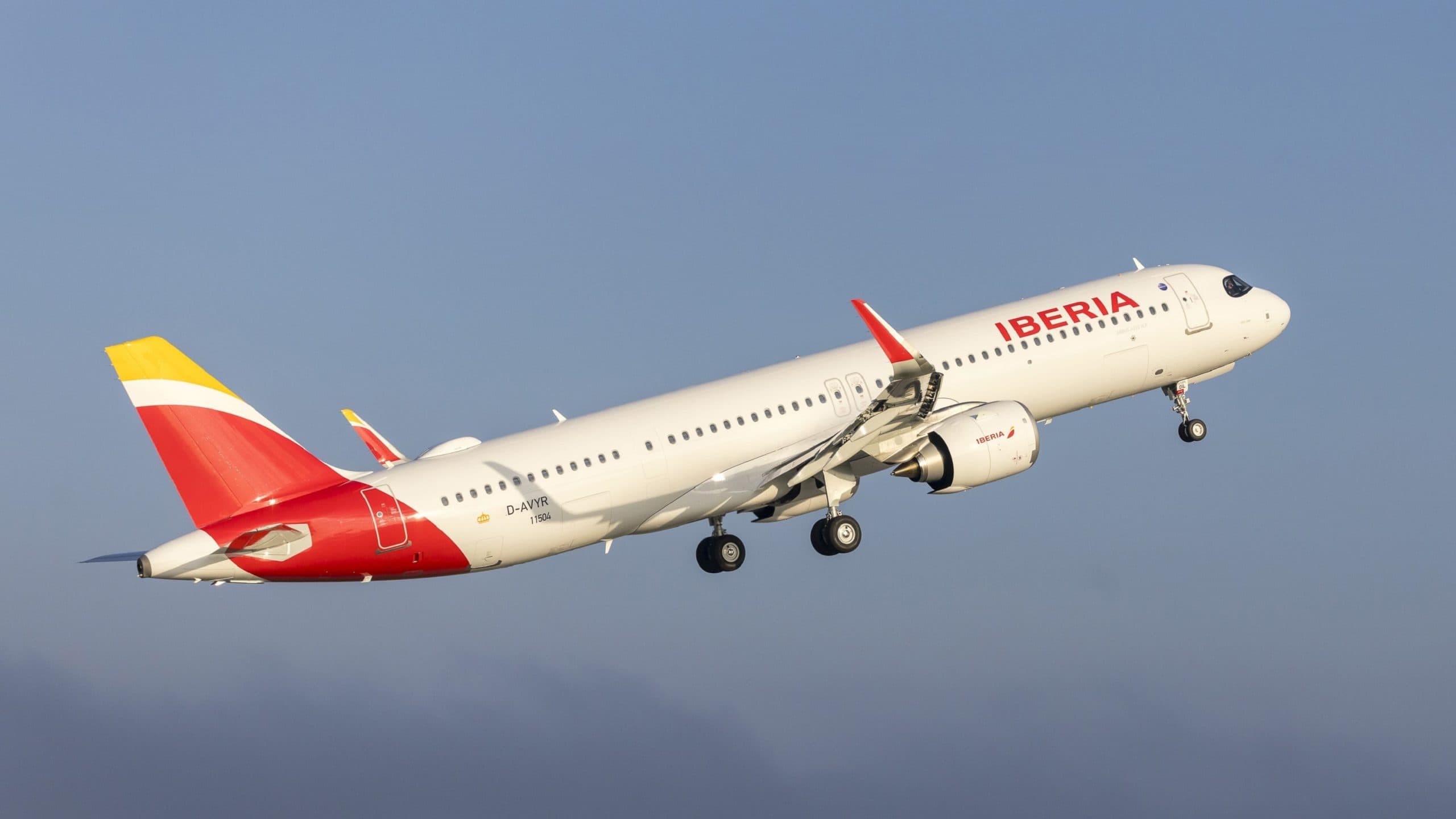
**Cathay Pacific and Iberia have announced a new codeshare agreement that will significantly expand Cathay's presence in Latin America, adding four new destinations via Madrid: Buenos Aires (Argentina), Santo Domingo (Dominican Republic), and Fortaleza and Recife in Brazil.** The move, announced on July 15, 2026, comes as Cathay Pacific also increases its Hong Kong–Madrid service to daily flights starting October 25, 2026.
**For ATPL and ATC students, this development illustrates how codeshare agreements and hub strategies shape modern airline networks.** Madrid, already a major European gateway for Latin America, becomes an even more critical connecting point between Asia and the region. Cathay Pacific currently operates the only non-stop Hong Kong–Madrid flight, using an Airbus A350-900 in three classes. The additional frequencies will operate on Mondays, Thursdays, and Saturdays, complementing the existing daily schedule on other days.
**The new codeshare destinations integrate Argentina and the Dominican Republic into Cathay's network for the first time.** Previously, Cathay served Latin America through partnerships covering Rio de Janeiro, São Paulo, Mexico City, Guadalajara, Lima, and Santiago, with connections via Europe, North America, and Oceania. A Cathay spokesperson noted that the expansion aligns with China's Belt and Road Initiative, aiming to strengthen commercial and logistics links with Latin America.
**From an operational perspective, the daily Hong Kong–Madrid service offers improved connectivity for both passengers and cargo.** The typical flight CX318 departs Madrid midday, arriving in Hong Kong early the next morning, while CX319 departs Hong Kong at night, allowing morning connections across Asia. This schedule is particularly beneficial for cargo operations, a key revenue stream for long-haul carriers.
**For students studying airline network planning, this case demonstrates how a carrier can extend its reach without additional aircraft by leveraging a partner's hub.** Cathay Pacific's strategy of using Madrid as a pivot between Asia and Latin America is a textbook example of hub-and-spoke optimization, a concept frequently tested in ATPL and ATC exams.