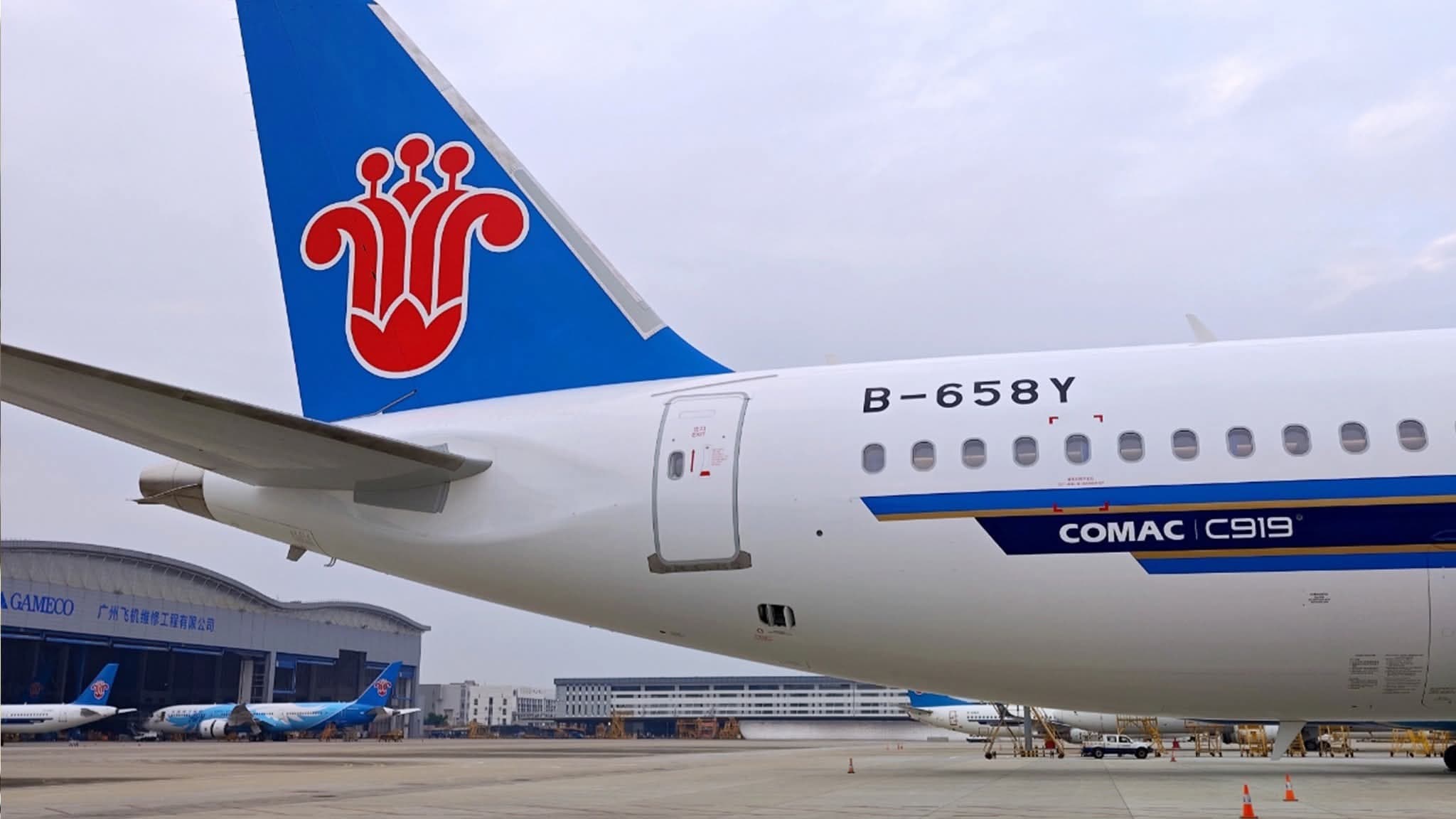
A document purportedly from China Southern Airlines' Engineering and Technology branch has been circulating since early August 2026, detailing multiple technical defects on two recently delivered COMAC C919 aircraft. The document, dated May 27, 2026, and bearing a seal, is addressed to the Chinese manufacturer COMAC. It lists issues such as oil leaks in the dry wing bay, damaged fire detection loop brackets, a detached flap panel, blocked anti-icing valves, and a burnt electrical panel in the rear galley. Some of these problems were reportedly identified during delivery tests but reappeared in commercial service. The document urges COMAC to communicate transparently about known defects and propose corrective plans.
This report, published by The Epoch Times on August 3, 2026, and picked up by other Chinese-language outlets, remains unconfirmed by Chinese authorities and COMAC. However, it fuels discussions about the C919's operational reliability as the aircraft enters wider service. The C919 is a strategic pillar of China's ambition to build an independent aviation industry, aiming to compete with the Airbus A320 and Boeing 737. Since entering commercial service in 2023, it has been a symbol of national technological progress, with Chinese leaders frequently praising its development.
China Southern Airlines, which has ordered 100 C919s with deliveries through 2031, operated about a dozen of them by end of July 2026. In late May 2026, the airline completed the first C-check (deep maintenance) on one of its C919s, which took about 20 days and nearly 6,000 work hours. Official Chinese media reported that all technical data was deemed compliant, and the aircraft quickly returned to service. Chinese operators are showing increasing daily utilization, and no airworthiness directives or groundings have been announced by the Civil Aviation Administration of China.
For aviation professionals, this situation underscores the importance of robust maintenance practices and the challenges of introducing new aircraft types. The C919's growing fleet means that ATPL and ATC students will likely encounter this aircraft in their careers, whether in operations, maintenance coordination, or air traffic management. Understanding the nuances of new aircraft reliability is crucial, as it affects scheduling, safety margins, and regulatory oversight. While the reported defects are not confirmed, they highlight the need for vigilance and transparent communication between manufacturers, airlines, and regulators—a lesson that applies to any aircraft program.
As COMAC ramps up production, facing supply chain challenges, the industry will watch closely how these issues are resolved. For students, this is a real-world case study in how safety and reliability are managed in modern aviation, reinforcing the principles taught in ATPL and ATC training.