**A strategic delay in the skies**
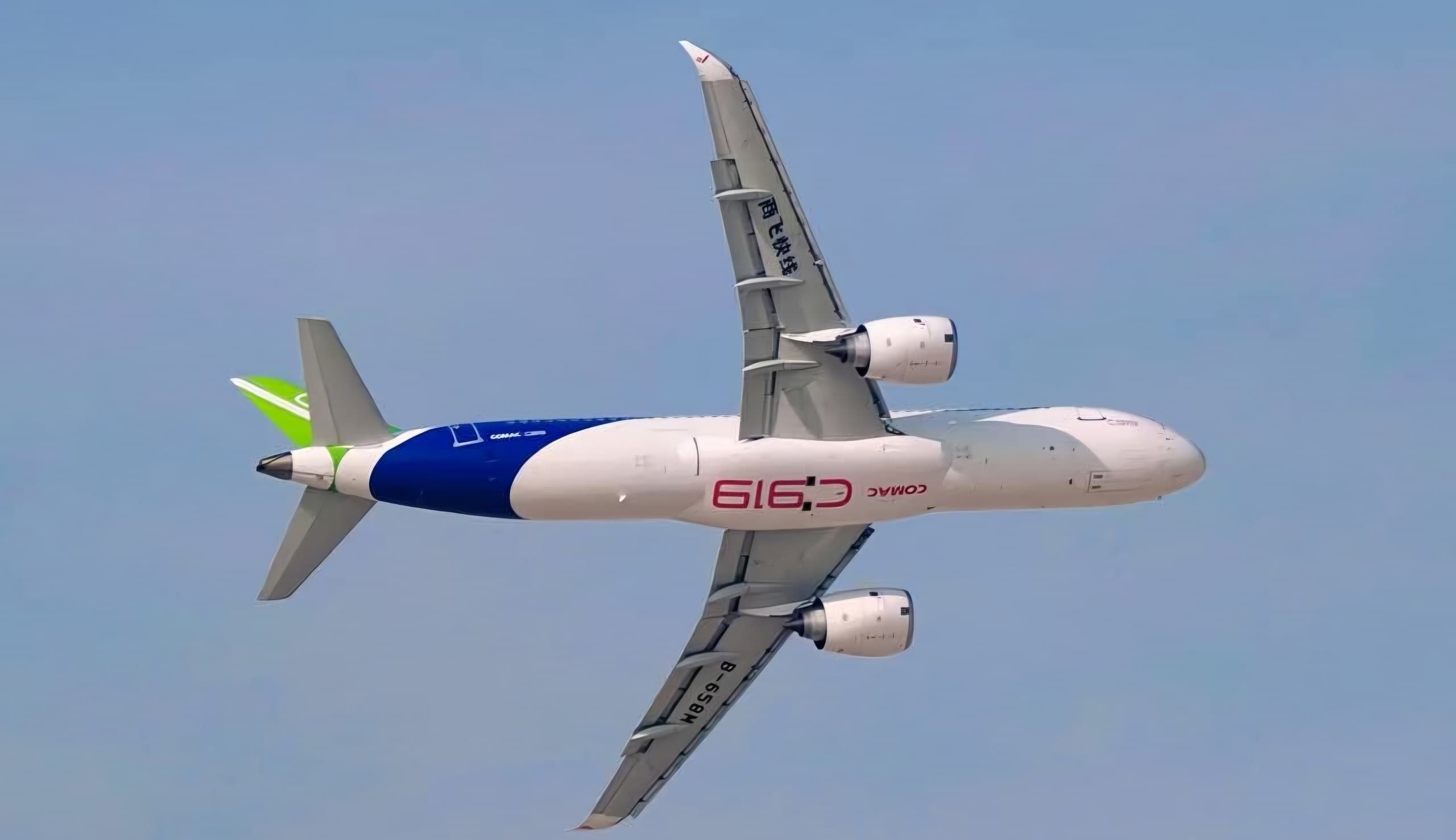
Recent reports from Bloomberg and Reuters suggest that China's Civil Aviation Administration (CAAC) is deliberately slowing down administrative approvals needed for Airbus aircraft to enter service with Chinese airlines. This is not about production or physical delivery—those continue—but about the final regulatory green light that allows an aircraft to be operated commercially. Without it, planes sit idle. The alleged goal: to pressure the European Union Aviation Safety Agency (EASA) into accelerating the certification of the COMAC C919, China's first narrow-body jetliner designed to compete directly with the Airbus A320neo and Boeing 737 MAX.
**Tangible impact on Airbus**
The consequences are already visible. In April, Airbus CEO Guillaume Faury acknowledged that an "administrative delay in China" had temporarily blocked the delivery of around 20 aircraft, contributing to the company's lowest quarterly delivery figure since 2009. CFO Thomas Toepfer added that roughly €5 billion worth of inventory had piled up—planes ready but not deliverable. Faury later stated that the issue was resolved and deliveries had resumed, but the episode underscores how certification and regulatory approvals can become geopolitical bargaining chips.
**The C919's long road to international certification**
At the heart of the matter is the COMAC C919, already flying commercially in China with China Eastern Airlines but limited to domestic routes and friendly partners. To break into Western markets—especially with leasing companies and international carriers—EASA certification is essential. EASA began evaluation flights in Shanghai in January, but Executive Director Florian Guillermet warned the process could take three to six years, far longer than the streamlined bilateral agreements that benefit Airbus and Boeing. The C919 must prove its systems integration, design robustness, and operational reliability from scratch.
**A geopolitical and industrial rivalry**
This is not just about paperwork. It reflects a broader strategic rivalry in global aviation. China aims to reduce dependence on Western manufacturers and establish COMAC as a credible global player. The narrow-body segment—dominated by the A320neo and 737 MAX—is the largest market segment, and breaking in is a massive industrial ambition. Certification has become a tool of influence and negotiation between powers. For Airbus, China remains a critical growth market, with forecasts of nearly 9,570 new aircraft needed over the next 20 years. Every delay or acceleration in certification reshapes competitive dynamics.
**What this means for ATPL and ATC students**
For future pilots and controllers, this story highlights how regulatory frameworks—EASA, FAA, CAAC—directly affect fleet planning, route availability, and operational procedures. A new type like the C919 entering service means new performance data, handling characteristics, and possibly new training requirements. Understanding the geopolitical context behind certification helps you anticipate which aircraft you might fly or control in the coming decades. The C919 is not just a Chinese project; it is a potential disruptor of the duopoly that has defined commercial aviation for decades.