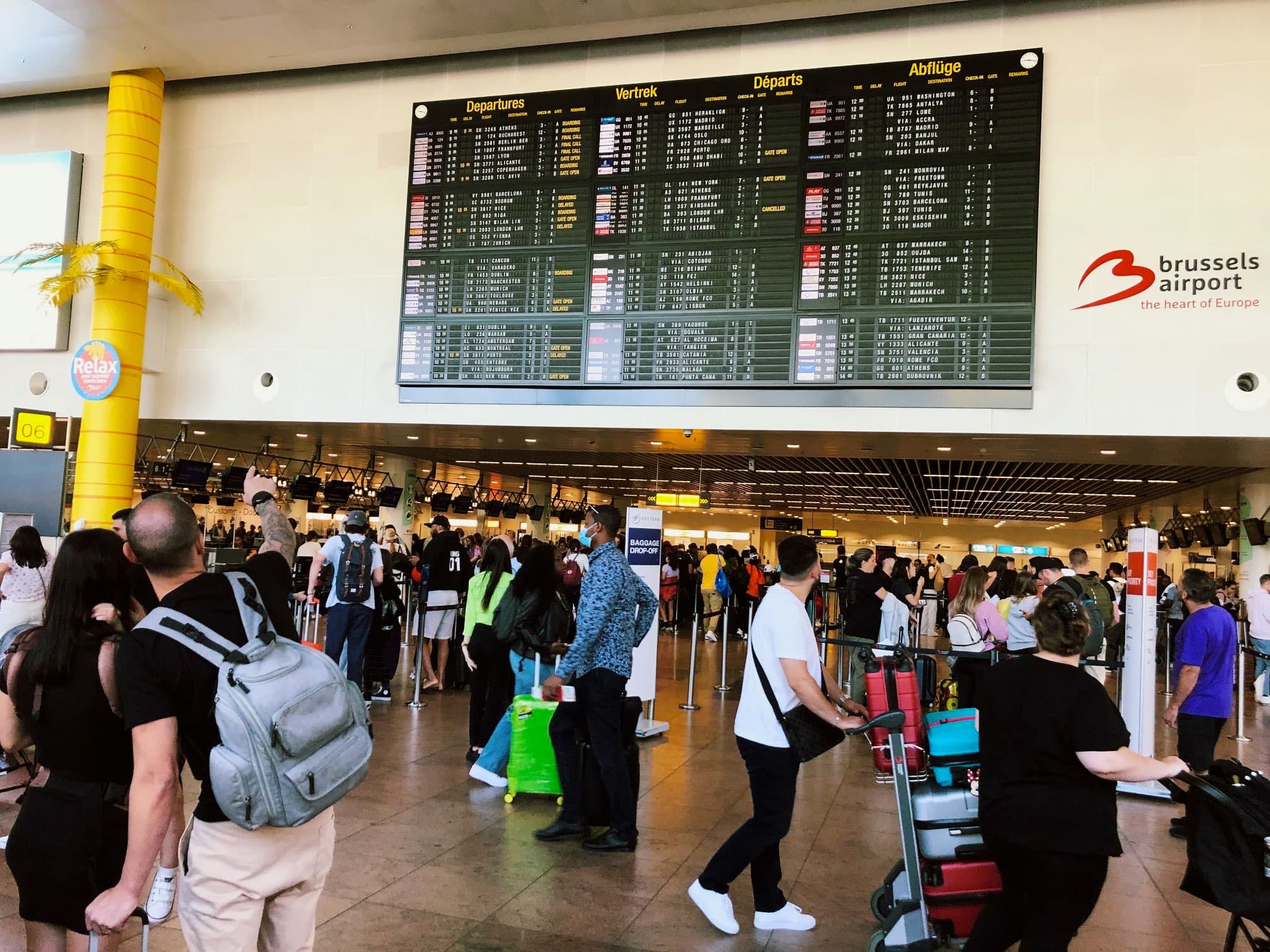
**Brussels Airport gears up for a busy summer**
Brussels Airport is expecting 5.2 million passengers in July and August 2026, a 4% increase compared to summer 2025. The first major departures begin on 26 June, with 82,000 passengers expected that day, while the peak is forecast for 20 July with over 90,000 travellers. This seasonal surge is driven by Belgian school holidays, starting 1 July for Dutch-speaking regions and 6 July for French-speaking ones.
**Expanded network and long-haul growth**
The airport now offers 180 direct destinations, reinforcing its role as a major European hub. Mediterranean hotspots (Spain, Turkey, Greece, Italy, Morocco) remain top sellers, but long-haul routes are also expanding: LATAM Airlines to São Paulo, Brussels Airlines to Kilimanjaro, and Air Canada to Halifax. Asia connectivity is recovering, with six non-stop destinations to China and Hong Kong. For ATPL students, this illustrates how network planning responds to demand and geopolitical shifts—a key concept in airline management and route economics.
**Operational upgrades and border control challenges**
To handle the influx, Brussels Airport is deploying extra staff, pop-up check-in kiosks, and extending self-bag drop to more airlines (SAS, Finnair, KLM, Transavia). A major operational focus is the EU Entry/Exit System (EES), which registers third-country nationals' entries and exits. This system is already causing longer processing times at European hubs. Brussels Airport has added two border control booths, nearly 60 pre-enrolment kiosks, and plans e-gates for non-EU passengers. For ATC students, this is a real-world example of how regulatory changes impact airport capacity and flow management—a topic covered in ATC operational procedures.
**Digital tools and passenger information**
The airport's customer service handles about 300 queries daily, mostly about flight times, gates, and check-in. Digital tools like the official app (real-time flight tracking) and chatbot BRUce (which can even analyse objects via photo) help manage the load. Standard advice remains: arrive 2 hours before Schengen flights, 3 hours before non-Schengen. Security rules are unchanged for summer 2026—liquids still limited to 100 ml per container—with new scanners expected only from 2028. For ATPL students, this reinforces the importance of passenger communication and regulatory compliance in airport operations.
**Why this matters for your training**
This news is not just about passenger numbers. It shows how airports adapt to seasonal peaks, integrate new technology, and comply with evolving EU regulations. Understanding these dynamics helps future pilots and controllers anticipate operational bottlenecks and collaborate effectively with ground staff.