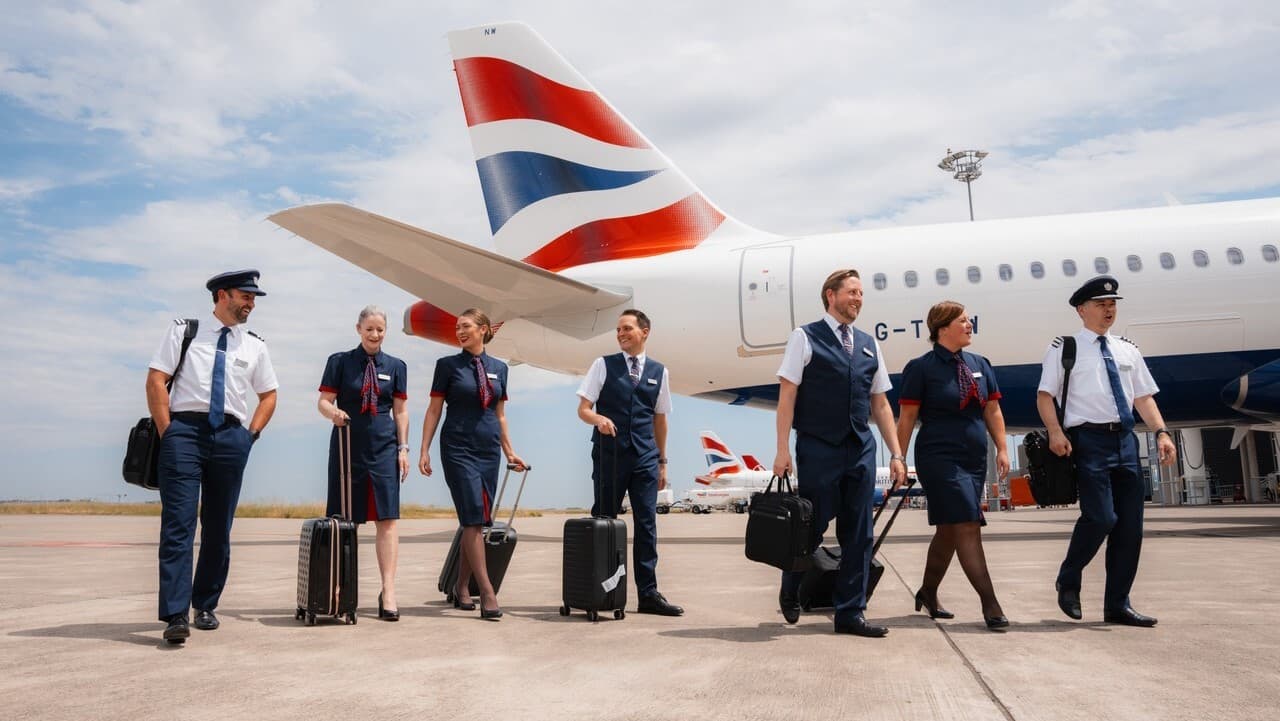
**British Airways (BA) has relaxed its dress code for staff travel passengers for the first time in seven years, allowing shorts during a new heatwave sweeping Europe and the UK.** This decision, reported by industry sources, applies specifically to employees traveling on standby tickets—known as "non-rev" or "staff travel"—who now can wear smart shorts, provided they are tailored, of appropriate length, and not sporty, cargo, or beach-style. The move aligns with BA's broader push toward a "smart casual" standard for internal travelers, while responding to extreme temperatures exceeding 30°C in London and other European cities.
For ATPL and ATC students, this news is more than a trivial policy update. It highlights how airlines manage their brand image through employee appearance, even when staff are not on duty. Understanding these nuances is crucial for future aviation professionals who may one day travel on staff tickets or interact with colleagues who do. The dress code distinction between paying passengers and staff underscores the delicate balance airlines strike between operational pragmatism and maintaining a consistent corporate identity.
**The policy also reflects broader industry trends.** United Airlines allows shorts for non-rev passengers but with a strict length limit (no more than three inches above the knee), while American Airlines is more lenient, requiring only clean and neat shorts. In contrast, Lufthansa maintains a rigid stance, banning shorts, t-shirts, and sweatshirts for staff travelers to preserve a formal image. Qatar Airways, once among the strictest, now permits neat jeans and polos but still prohibits caps and hats. These variations illustrate how different carriers interpret professionalism and adapt to climate and cultural expectations—a lesson in organizational behavior for students.
**For ATCs, the heatwave context is particularly relevant.** With health authorities issuing warnings about heat risks for ground and ramp personnel, BA's flexibility acknowledges the physical discomfort of traveling in non-air-conditioned airport environments. ATCs working in towers or approach units may face similar heat-related challenges, and understanding how airlines adapt can inform their own workplace expectations. Moreover, the policy reminds students that aviation is a service industry where perception matters: staff travelers "represent the company" and must dress accordingly, even when off-duty.
**In summary, this editorial encourages ATPL and ATC students to see dress codes as a window into airline culture and operational decision-making.** The ability to analyze such policies—considering factors like climate, brand image, and employee welfare—will serve them well in their careers, whether they become pilots managing cabin crew or controllers coordinating with airline operations. As BA continues to evolve its appearance rules toward inclusivity (e.g., allowing makeup and jewelry for all genders), students should recognize that aviation professionalism is not static but responsive to societal and environmental changes.