**Boeing's Commercial Comeback: Orders Soar, Deliveries Lag**
Between January and April 2026, Boeing recorded 284 net new orders—its strongest start to a year since 2014. The American manufacturer benefited from major contracts for the 737 MAX, 787 Dreamliner, and 777X, signaling renewed airline confidence despite ongoing industrial challenges. April alone saw 135–136 net orders, nearly doubling the first-quarter total, with a backlog reaching 6,216 aircraft. This surge reflects robust global air traffic recovery and airlines' appetite for fuel-efficient narrowbodies and widebodies.
**737 MAX and Dreamliner Lead the Charge**
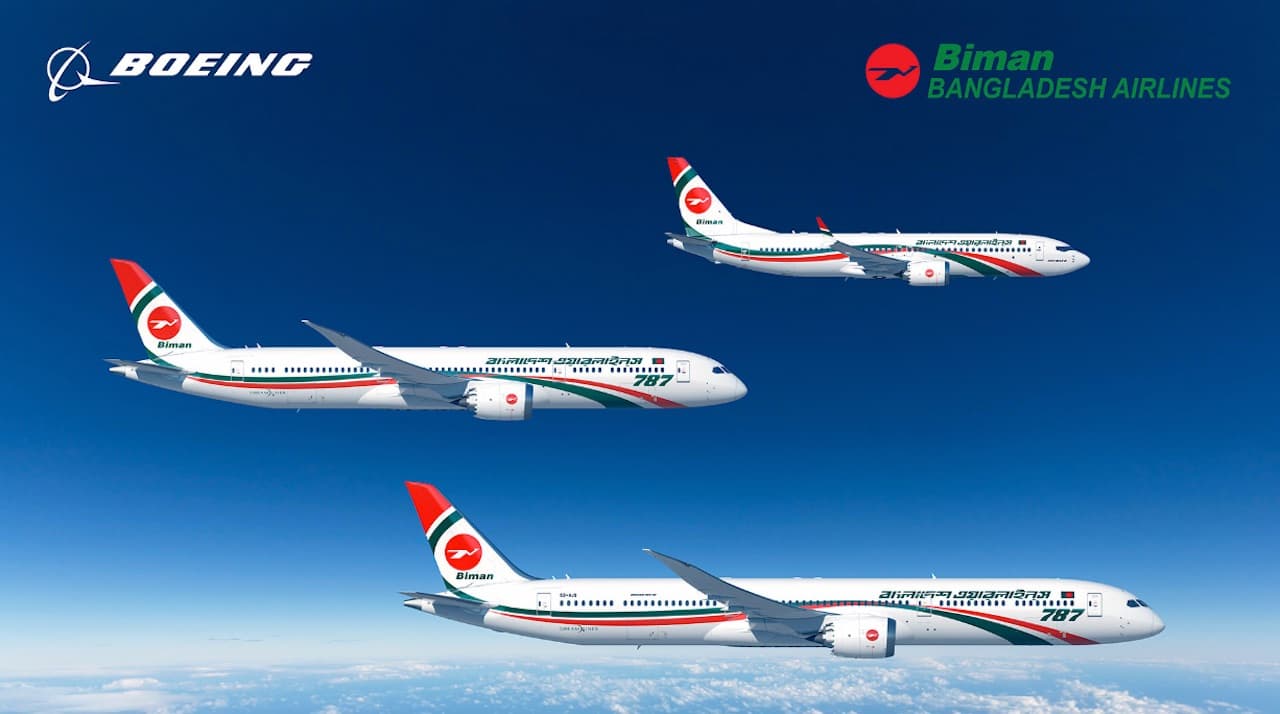
April's order breakdown underscores the central role of the 737 MAX (57 orders) and 787 family (51 orders), alongside 28 777X orders—many from undisclosed customers. Notable public deals include Biman Bangladesh Airlines' historic order for 14 aircraft (eight 787-10s, two 787-9s, and four 737-8 MAXs), marking the airline's first 787-10 acquisition. El Al and Ethiopian Airlines also placed orders, confirming the appeal of Boeing's widebodies in the Middle East, Africa, and transcontinental markets. These choices reflect strategic fleet management: 787-9s and -10s often replace older 777-200/300s, offering better per-seat efficiency and flexibility on growing long-haul routes.
**Delivery Gap: Airbus Still Ahead**
On the industrial front, Boeing delivered 47 aircraft in April (34 737 MAXs, six 787s, plus cargo and other models), up slightly from March but far behind Airbus's 67 deliveries to 39 customers. Airbus's cumulative January–April deliveries reached 181, while Boeing's total remains undisclosed. Certification delays for premium seats continue to constrain 787 deliveries, though Boeing maintains its 2026 target of 90–100 787 handovers. Airbus faces its own ramp-up challenge, needing to deliver over 85 aircraft monthly to meet its ~870-unit target for 2026.
**777X: A Symbolic Milestone**
The 777X program achieved a symbolic step with 28 orders in April and the first serial 777-9 for Lufthansa completing its maiden flight on May 7, 2026. The three-hour test flight over Washington and Oregon reached 39,000 feet, marking a shift from prototype testing to customer aircraft trials. Lufthansa, the launch customer with 20 777-9s on order, remains a key partner as Boeing works with regulators toward certification—a critical milestone for commercial entry into service.
**Asymmetric Duel: What It Means for Aviation Students**
For ATPL and ATC trainees, this Boeing–Airbus rivalry is more than corporate news. It directly impacts fleet composition, route planning, and operational training. The 737 MAX's return to favor means more pilots will need type ratings and recurrent training on this aircraft. The 787's delivery bottlenecks affect airline schedules and crew planning. The 777X's certification journey illustrates the regulatory hurdles that new aircraft face, a topic covered in ATPL modules on airworthiness and certification. Understanding these dynamics helps future pilots and controllers anticipate industry trends, from aircraft performance to maintenance demands.
**Conclusion**
Boeing's order surge shows its commercial resilience, but Airbus's delivery lead highlights the ongoing production and certification challenges. For aviation students, this real-world case study reinforces the importance of fleet management, regulatory processes, and the competitive forces that shape the skies they will operate in.