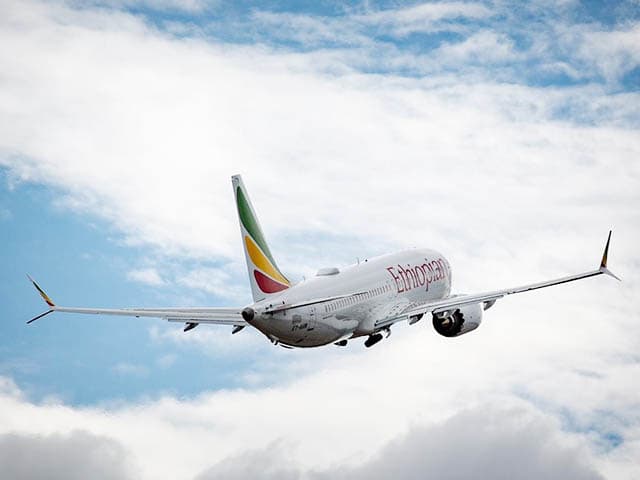
In a landmark civil verdict, a Chicago federal jury has ordered Boeing to pay $29 million to the family of Michael Ryan, an Irish engineer with the UN World Food Programme who died in the crash of Ethiopian Airlines flight ET302 in March 2019. The award, announced after a trial that began in August, is one of the largest yet in the litigation stemming from the two fatal 737 MAX accidents. It follows two other significant judgments: $28.45 million in November 2025 and $49.5 million in May 2026, both related to the same crash. These verdicts are not a uniform tariff; juries consider each victim's personal circumstances, age, career, and anticipated earnings. However, they reflect the enduring civil liability Boeing faces as it continues to grapple with the consequences of the MCAS software that played a central role in the accidents.
The Ethiopian Airlines crash occurred on March 10, 2019, just six minutes after takeoff from Addis Ababa, killing all 157 people on board. The investigation concluded that erroneous angle-of-attack (AOA) data from a left-side sensor repeatedly triggered the Maneuvering Characteristics Augmentation System (MCAS), which forced the aircraft into a nose-down attitude that pilots could not overcome. This accident, coming less than five months after the Lion Air crash in October 2018, led to the grounding of the entire 737 MAX fleet worldwide. The FAA only recertified the aircraft in November 2020 after Boeing redesigned MCAS to compare data from both AOA sensors, limit the system's authority, and prevent repeated activation. An AOA DISAGREE alert is now standard on all MAX aircraft.
For aviation students, the ET302 case is a stark reminder of how critical it is to understand automation and its failure modes. The MCAS system was designed to compensate for the 737 MAX's altered aerodynamic characteristics, but its reliance on a single sensor and its lack of redundancy proved fatal. The subsequent certification and training changes—including new simulator training requirements and enhanced procedures for handling runaway stabilizer—are now part of the ATPL syllabus. Understanding these events helps future pilots and air traffic controllers appreciate the importance of system monitoring, manual flying skills, and the ability to intervene when automation behaves unexpectedly.
The legal proceedings have also evolved. In 2021, Boeing accepted civil liability for the Ethiopian Airlines crash to streamline compensation claims. Most lawsuits have been settled confidentially, but a few remain. On the criminal side, in November 2025, a federal judge approved the dismissal of U.S. charges against Boeing in exchange for a $1.14 billion payment covering fines, family compensation, and compliance improvements. These developments underscore the broader regulatory and legal environment that shapes aviation safety, and they highlight the need for robust oversight and transparent certification processes.
For ATPL and ATC students, this case is not just a historical footnote; it is a case study in how system design, human factors, and regulatory oversight interact. It reinforces the importance of understanding the rationale behind checklists, procedures, and training requirements. As future aviation professionals, you will be expected to manage complex automated systems and respond effectively to anomalies. The lessons from ET302—about the dangers of over-reliance on automation and the need for comprehensive training—remain as relevant today as they were in 2019.