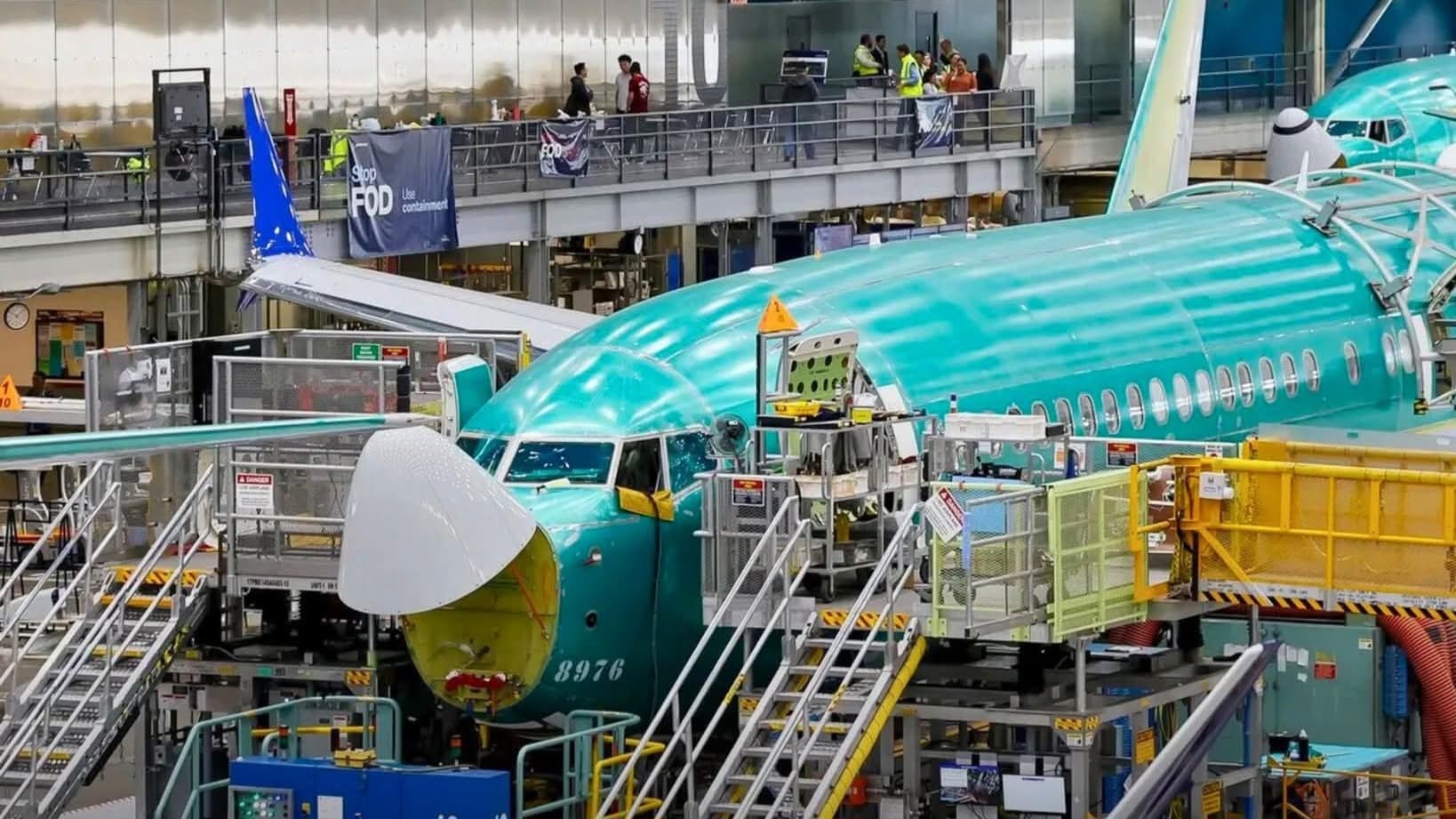
Boeing has announced a $1 billion investment over three years to modernize its Wichita, Kansas, facilities. The funds will go toward infrastructure upgrades, employee training programs, and production system enhancements. This comes as Boeing faces a record backlog of 6,100 commercial aircraft worth $695 billion.
**Why This Matters for Aviation Training**
For ATPL and ATC students, this investment is a clear signal that the industry is preparing for a significant increase in aircraft production. Boeing plans to raise 737 MAX production from 38 to 42 per month (FAA-approved in October 2025), with a target of 47 per month in 2026 and over 53 by end of 2026. More aircraft means more flights, more traffic, and greater demand for skilled pilots and controllers.
The Wichita site, which Boeing reacquired through the $4.7 billion purchase of Spirit AeroSystems in December 2025, will play a key role in this ramp-up. The investment includes a new 35,000-square-foot training center in partnership with WSU Tech, capable of training thousands of students annually. This is directly relevant to ATPL students: a stronger training ecosystem means better resources and potential job placements.
**Production Challenges and Quality Focus**
Boeing's production increase will be gradual—about five aircraft per month every six months—with strict quality oversight from the FAA. This cautious approach reflects lessons learned from the 737 MAX crisis. For ATC students, higher production rates mean more aircraft entering service, which will increase traffic density and complexity, especially in busy airspace.
**Global Implications**
Boeing CEO Kelly Ortberg is expected to accompany President Trump on a trade mission to China in May 2026, potentially securing a major order for hundreds of 737 MAX and dozens of long-haul aircraft. If realized, this would further strain production capacity and accelerate the need for trained personnel.
**What This Means for You**
As an ATPL or ATC student, you should watch these developments closely. The industry is gearing up for a production surge that will create thousands of new jobs in aviation—from pilots to maintenance technicians to air traffic controllers. The emphasis on training infrastructure in Wichita is a model that could be replicated elsewhere, improving access to quality aviation education.