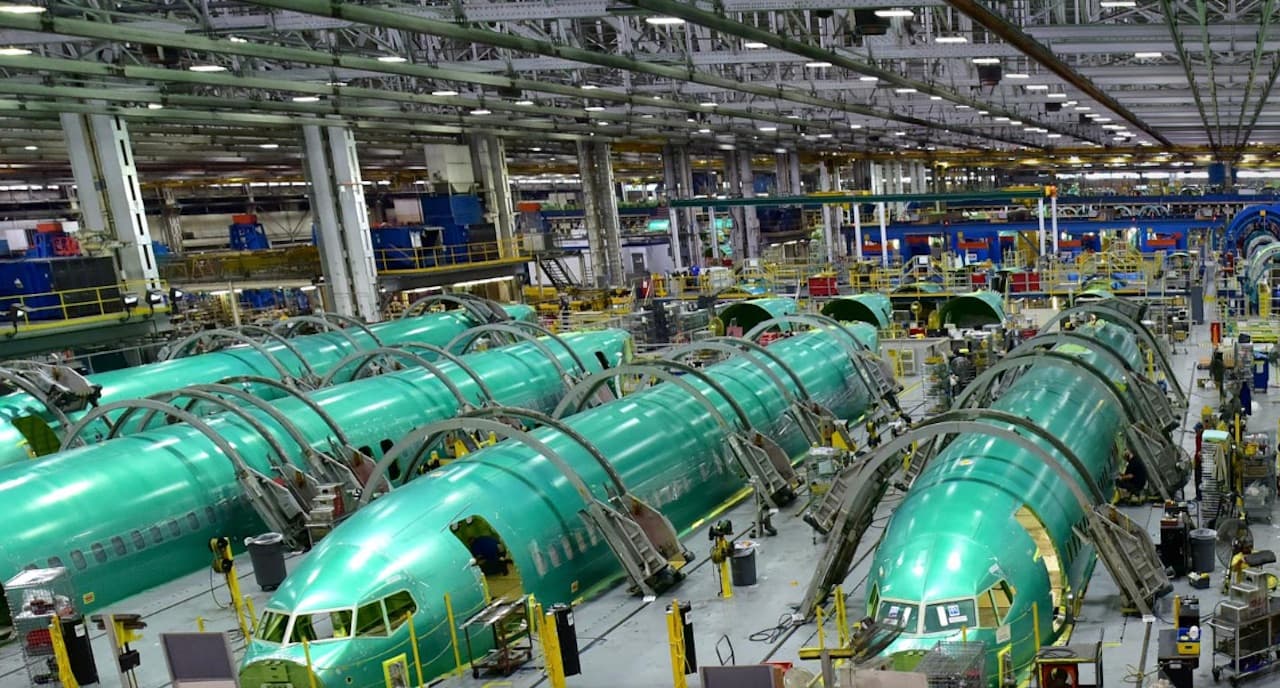
**Boeing has received FAA approval to increase 737 MAX production to 47 aircraft per month**, marking a significant milestone in the manufacturer's post-crisis recovery. CEO Kelly Ortberg confirmed during a Bernstein conference that the company has passed the FAA's "capstone" review, a prerequisite for the rate increase, and has already begun aligning assembly lines to the new target. Current production stands at around 42 units per month, up from the 38-unit cap imposed by the FAA in 2024 after a serious in-flight incident on an Alaska Airlines 737 MAX.
**The ramp-up will be gradual**, with Ortberg noting that "a few months of stabilization" are needed before the 47-per-month rate is fully achieved. Boeing had previously indicated it aimed for this rate by summer 2025. Beyond this threshold, the manufacturer is eyeing a further increase to 52 aircraft per month, a step that could require at least six months after the 47 rate is consolidated, pending formal FAA approval expected in July or August. Ortberg emphasized that "the whole world is watching" Boeing's ability to sustain these rates, underscoring the importance of industrial reliability for airlines, regulators, and financial markets.
**The current rate remains far below pre-crisis peaks**. Before the 737 MAX grounding and subsequent incidents, Boeing had reached 57 MAX aircraft per month and even considered higher volumes. However, Ortberg acknowledged that 57 is no longer sustainable under today's stricter safety and quality requirements. The long-term goal is 63 aircraft per month, a level the CEO believes is compatible with global demand for fuel-efficient narrowbodies, but he admitted that "more work" is needed before that target becomes feasible.
**For ATPL and ATC students, this news is a real-world case study** in how regulatory oversight (FAA) directly shapes production decisions and, ultimately, fleet availability and operational planning. Understanding the link between manufacturing quality, certification processes, and safety culture is essential for future pilots and controllers who will operate and manage these aircraft. The 737 MAX saga also illustrates the importance of crew training and procedural compliance, topics central to ATPL and ATC curricula.
**The FAA's role remains central**. After the two fatal crashes of Lion Air and Ethiopian Airlines, and the 2024 Alaska Airlines door plug incident, the regulator has tightened its grip on Boeing's production and certification processes. The gradual lifting of production caps signals that corrective measures are bearing fruit, but Boeing remains under intense scrutiny. This dynamic highlights how safety oversight evolves in response to incidents—a key lesson for aviation professionals in training.