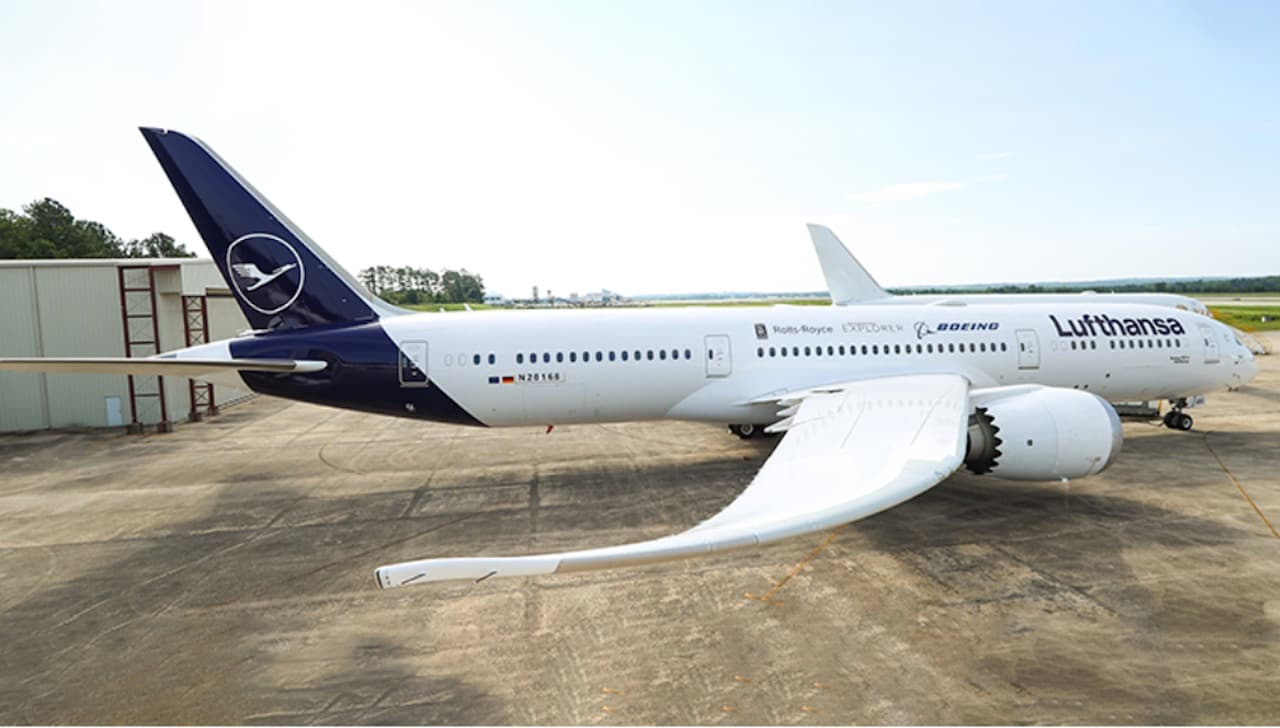
Boeing, Lufthansa, and Rolls-Royce are launching a new flight test campaign on a Boeing 787-9 ecoDemonstrator based in Glasgow, Montana. The campaign, running from late July to mid-August, will evaluate a shortened engine inlet and algorithm-optimized flight profiles under the FAA’s CLEEN III program. This is the third phase of the Continuous Lower Energy, Emissions and Noise initiative, which funds and supports the development of quieter, more fuel-efficient technologies for commercial aircraft.
The aircraft chosen is a 787-9 Dreamliner fitted with Rolls-Royce Trent 1000 engines, configured for Lufthansa and destined to join the group’s long-haul fleet. It will operate as Boeing’s “2026 ecoDemonstrator Explorer,” continuing a program that has tested over 260 technologies since 2012. The tests cover safety, energy efficiency, emissions, and passenger experience.
At the heart of the campaign is the “Next Generation Inlet,” a shorter engine intake with advanced acoustic treatments. Boeing says this geometry could allow future aircraft to integrate more efficient engines while reducing length, weight, and drag without compromising acoustic performance. Rolls-Royce’s Trent 1000 XE, the production standard for future 787 deliveries, has been optimized for durability, time on wing, and efficiency, benefiting operators like Lufthansa.
Alongside the hardware test, the partners will fly modified departure and arrival procedures based on “Intelligent Operations” trajectories generated by algorithms. These profiles use multiple data sources to identify margins for fuel and noise savings by adjusting altitude, thrust, and flight configurations in the terminal area. For communities near airports, the goal is to reduce perceived noise on the ground, especially during initial climb and descent.
For ATPL and ATC students, this campaign is a concrete example of how future aircraft will combine aerodynamic refinements with smart flight management to meet environmental targets. Understanding these technologies is key for pilots who will fly next-generation aircraft and for controllers who will manage optimized arrival and departure procedures. The CLEEN program’s public-private partnership model also illustrates how regulatory frameworks drive innovation in aviation.