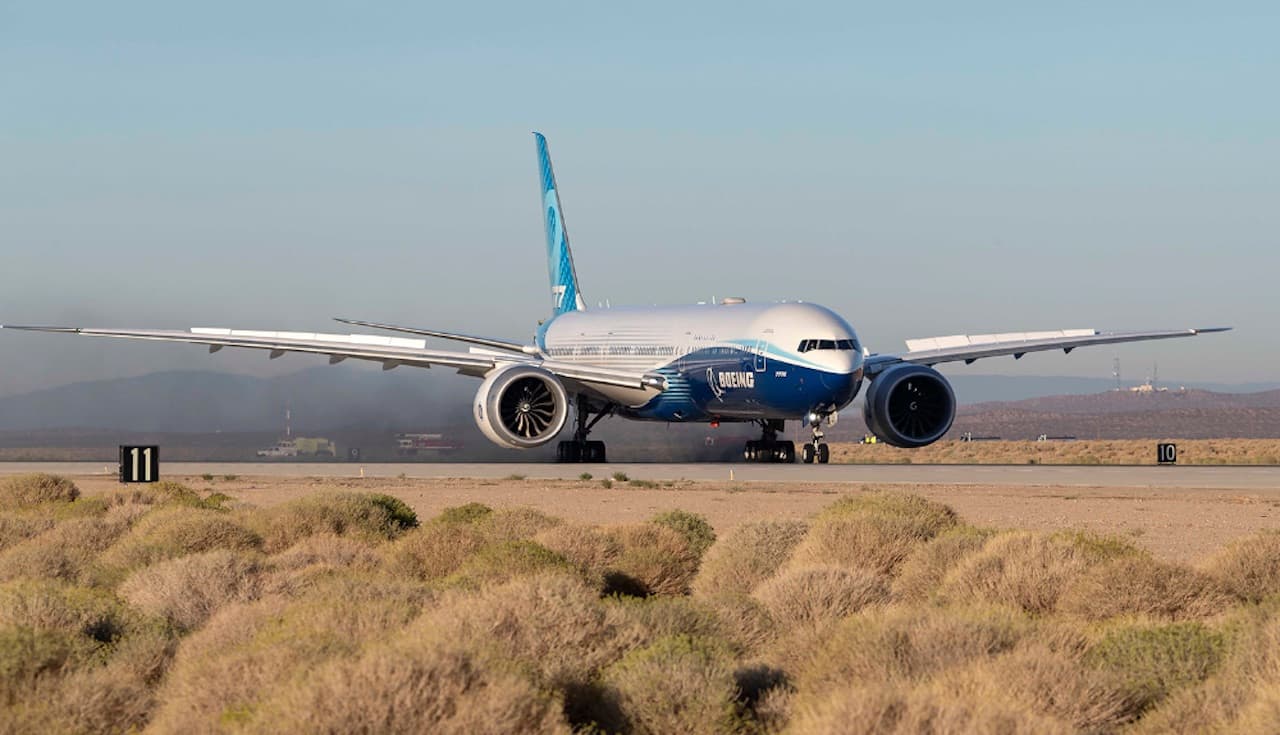
The Boeing 777X program has reached a pivotal moment. The Federal Aviation Administration (FAA) has granted Type Inspection Authorization (TIA) Phase 4B for the 777-9, the first model in the 777X family. This authorization, confirmed by Boeing Commercial Airplanes President and CEO Stephanie Pope at the IATA Annual General Meeting in Rio de Janeiro in early June, opens the most significant remaining phase of regulatory flight testing. "This is a real turning point for the program," Pope told Air Transport World on June 6. "This authorization allows us to tackle the largest portion of remaining work with the FAA."
Phase 4B is among the most demanding stages of the TIA process. It involves direct FAA participation in flight tests to validate avionics systems, stability and control, abnormal procedures, and cockpit human factors. According to Aviation Week, this phase represents the largest block of remaining tests before certification. Boeing had previously obtained the more limited Phase 4A. Pope emphasized the intensity of the work required: "Each authorization depends on a high level of rigor and coordination with the regulator."
The timeline for the 777-9 remains under close scrutiny. The program has faced years of delays, originally targeting entry into service in 2020. FAA Administrator Bryan Bedford recently stated at the CAPA Americas Summit that certification could come "early next year," though the agency's priority remains certifying the 737 MAX 7 and MAX 10 by late 2026. Boeing now aims for 777-9 certification by late 2026, with first deliveries in early 2027.
A critical issue remains ETOPS (Extended-range Twin-engine Operational Performance Standards) certification, essential for long-haul operations. Boeing CEO Kelly Ortberg indicated that flight testing could be completed by year-end, "except for ETOPS." As he acknowledged, "most airlines will require ETOPS validation before any delivery." This is crucial for customers like Emirates, Qatar Airways, and Lufthansa, which plan to use the 777-9 for high-capacity long-haul routes.
The 777-9, the world's largest twin-engine jet, aims to strengthen Boeing's position in the high-density long-haul segment against the Airbus A350-1000. It features new GE9X engines, a folding composite wing, and fuel efficiency improvements promising about 10% lower consumption than previous 777 generations. However, successive delays—partly due to stricter certification requirements following the 737 MAX crises—have eroded customer confidence. Pope confirmed that certifying the 777-9, alongside the 737 MAX 7 and 10, is Boeing's top priority for 2026. "Our teams' progress exceeds my expectations," she said, expressing confidence in meeting targets. For Boeing, the stakes are twofold: achieving technical certification and restoring its industrial and regulatory credibility after years of turbulence.