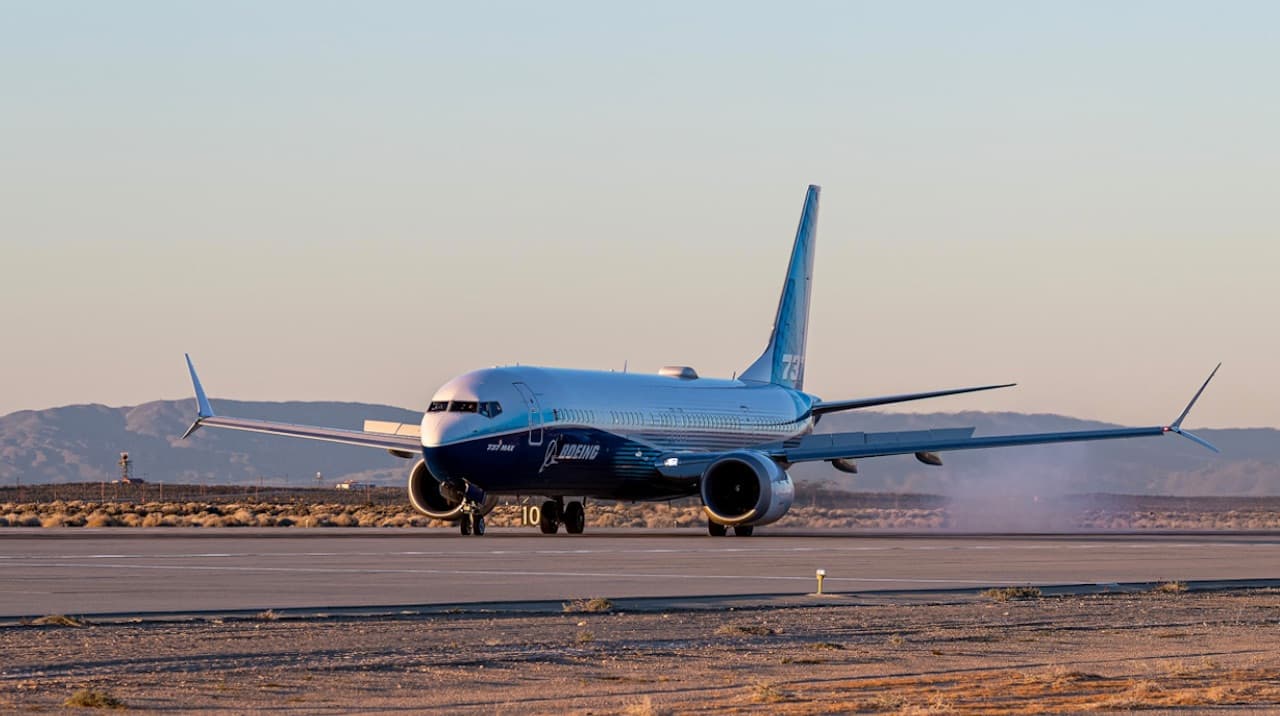
Boeing has cleared a critical hurdle in the certification of its largest 737 MAX variant, the MAX 10, by passing the Maximum Brake Energy (MBE) test at Edwards Air Force Base in California. This spectacular demonstration—stopping an aircraft at maximum takeoff weight from over 200 mph using only worn brakes—brings both the 737-10 and the 737-7 closer to their anticipated certification in late 2026.
During the test, a 737-10 weighing 197,900 pounds (89.8 tonnes) accelerated to 180 knots (333 km/h) before the test pilots cut the throttles and applied only the wheel brakes. The aircraft came to a halt in approximately 11,000 feet (3.3 km) on the 15,000-foot runway, leaving a comfortable safety margin. The test was conducted with worn brakes to simulate the worst-case scenario, as required by certification rules. After stopping, the crew held the aircraft stationary for five minutes—the regulatory reaction time for airport rescue services—during which brake temperatures exceeded 2,500°F (1,370°C). Thermal fuses in the wheels melted as designed, gradually releasing tire pressure to prevent explosive failure.
To handle the increased mass and longer fuselage of the MAX 10, Boeing reinforced the braking system with a fifth rotor and an extended torque tube, providing greater clamping force and shorter stopping distances. According to design engineer Evan Preston, "This is clearly the most powerful brake we have ever installed on a 737." The improvements come from suppliers like Safran Landing Systems and Collins Aerospace, and the dual-supplier strategy required two separate MBE tests—one for each brake set—both of which met or exceeded performance predictions.
For airlines, the enhanced braking performance translates into operational benefits. Certification engineer Colston Polly explained, "Every gain in performance can translate into a benefit for our customers, for example the ability to carry more passengers or more cargo." The 737-10 is designed to seat up to 230 passengers, about ten more than the 737-9, positioning it to compete directly with the Airbus A321neo in the high-capacity single-aisle segment.
This successful test is a significant step for Boeing as it works to restore confidence in the 737 MAX family following earlier crises. For ATPL and ATC students, the MBE test highlights the critical interplay between aircraft performance, regulatory requirements, and real-world operational limits—a topic that will appear in performance and certification modules.