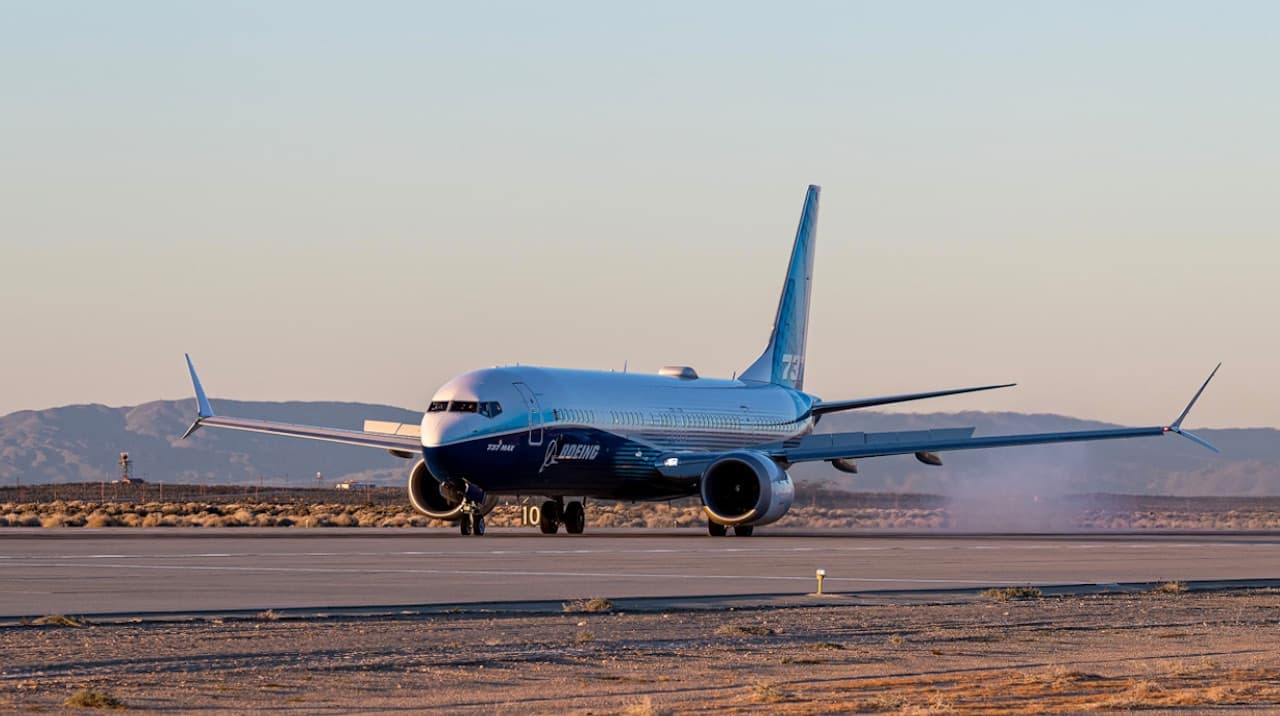
Boeing has been conducting extensive crosswind landing tests on the 737 MAX 10 at Midland International Air and Space Port in Texas, as part of the certification campaign for the MAX 7 and MAX 10 variants. The goal is to demonstrate that the aircraft's autoland system can safely handle strong crosswinds and gusty conditions, a key requirement for FAA certification expected by the end of 2026.
Unlike controlled laboratory environments, Boeing's test team relied on real weather conditions, staying on standby for weeks to catch favorable wind windows. Test pilots and engineers monitored forecasts closely, ready to deploy within 48 hours when crosswinds exceeded certification thresholds. The autoland system was tested in gusty, turbulent winds rather than steady laminar flow, ensuring robustness in real-world operations. Boeing claims the software has been tuned to provide consistent handling characteristics across the MAX family, which is important for airlines and flight crews transitioning between variants.
Crosswind certification is crucial because it defines the maximum wind limits under which airlines can operate the autoland system, especially at airports prone to severe weather. These limits are published in flight manuals and operational procedures, directly affecting dispatch planning and pilot decision-making. For ATPL students, understanding these limitations is essential for flight planning and risk assessment. For ATC trainees, crosswind limits influence runway selection and approach sequencing, particularly during low-visibility operations.
In parallel, Boeing completed maximum brake energy tests at Edwards Air Force Base, California. The aircraft was accelerated to over 180 knots at maximum takeoff weight, then brought to a full stop using only brakes—no thrust reversers—with brakes worn near the end of their service life. This scenario simulates a rejected takeoff under worst-case conditions, validating that the landing gear and high-capacity braking system can absorb extreme kinetic energy and temperatures without failure. The MAX 10 features a reinforced landing gear and an additional carbon rotor in the brakes to handle its increased maximum takeoff weight.
The certification of the MAX 7 and MAX 10 has faced multiple delays due to heightened FAA scrutiny following the two fatal MAX crashes and the January 2024 door plug incident on a MAX 9. Boeing is now finalizing documentation on engine anti-ice modifications, autopilot, and autothrottle systems. The MAX 10 entered the TIA-2 phase in spring 2026, the final stage of certification flight testing. Boeing aims to receive type certificates by end of 2026, with commercial entry into service expected in 2027 for customers like Southwest, WestJet, and Ryanair, positioning the MAX 10 to compete with the Airbus A321neo in the high-capacity single-aisle segment.
For ATPL and ATC students, these tests highlight the rigorous validation behind aircraft performance limits. Understanding crosswind and brake energy certification helps future pilots and controllers appreciate the safety margins built into flight operations and the importance of adhering to published limitations.