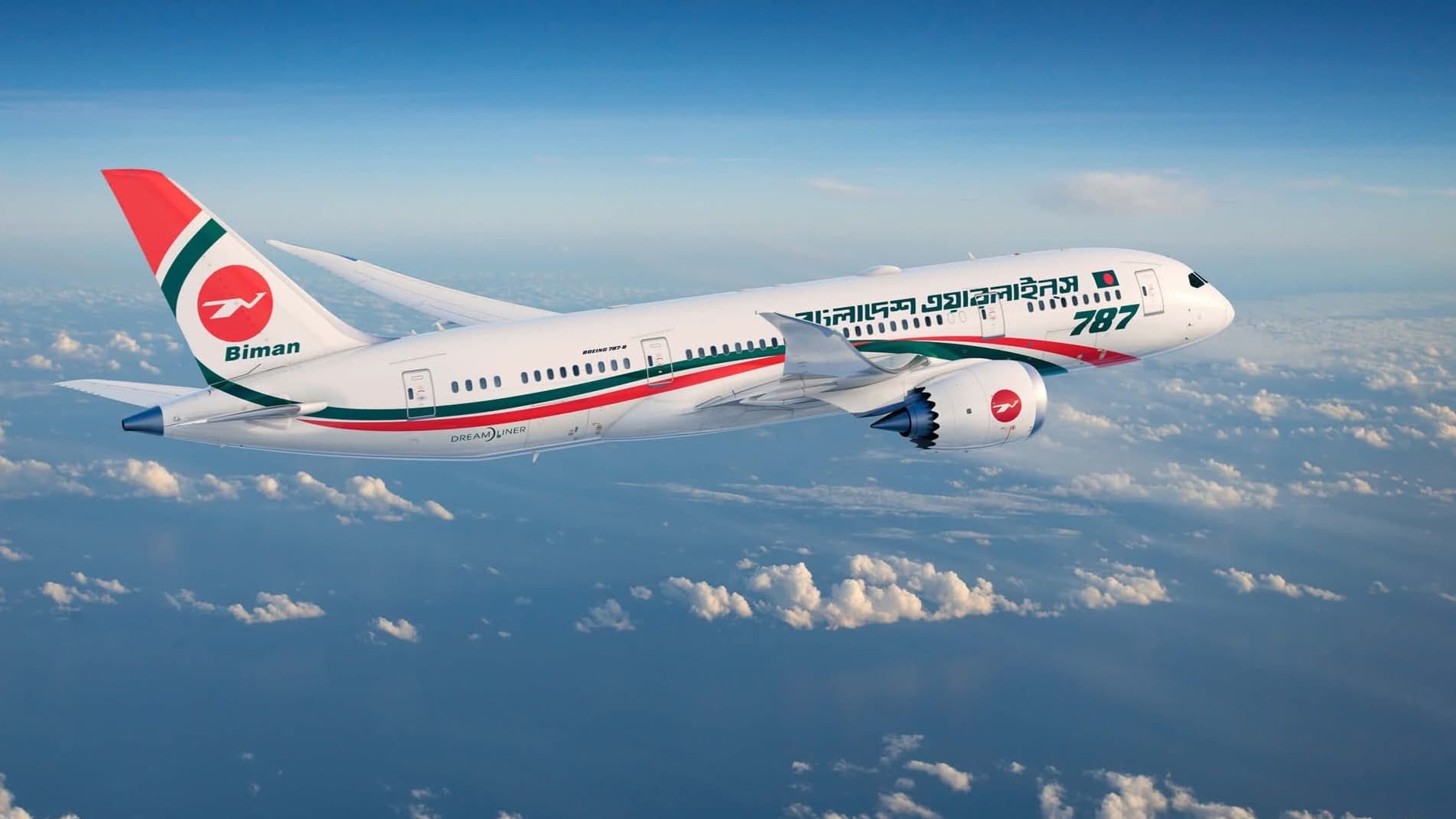
On April 30, 2026, Biman Bangladesh Airlines announced its largest aircraft order in history, signing a firm contract for 14 Boeing aircraft: eight 787-10 Dreamliners, two 787-9s, and four 737 MAX 8s. The deal, finalized in Dhaka, is designed to modernize the carrier's fleet, reduce fuel consumption, and support traffic growth between Bangladesh and key markets in the Middle East, Asia, Europe, and North America.
For aviation students, this order is a textbook example of fleet planning and the strategic use of aircraft families. By operating all three variants of the 787 (the -8, -9, and now -10), Biman will benefit from significant commonalities in maintenance, crew training, and operations. The 737 MAX 8, meanwhile, marks the airline's first entry into the MAX family, replacing older 737-800s on regional routes. Boeing claims a 20–25% fuel efficiency improvement for both families over the aircraft they replace, a key factor for any airline's operating costs and environmental footprint.
The 787-10, the largest Dreamliner variant, offers the lowest seat-mile cost in the widebody segment, making it ideal for high-density routes to Gulf hubs like Dubai and Doha. Biman's existing long-haul fleet already includes four 787-8s and two 787-9s, serving destinations such as London, Toronto, Jeddah, and Kuala Lumpur. The addition of eight 787-10s will boost capacity on these busy routes while maintaining a common type rating for pilots—a critical operational advantage that ATPL students should understand when studying airline fleet strategies.
On the medium-haul side, the four 737 MAX 8s will begin replacing the airline's aging 737-800s and complement its Dash 8-400 turboprops on domestic and regional services. The MAX 8's range and fuel efficiency will allow Biman to better compete on routes to India, Southeast Asia, and the Middle East, while also feeding its long-haul network. This dual-fleet strategy—787 for long-haul, 737 for medium-haul—simplifies operations and reduces costs, a concept often discussed in ATPL modules on airline management and economics.
For ATC students, this order signals potential changes in traffic patterns at Dhaka's Hazrat Shahjalal International Airport and other regional hubs. Increased frequencies and larger aircraft types may require adjustments in slot coordination, airspace management, and ground handling. The order also reflects broader industry trends: the shift toward more fuel-efficient aircraft, the growing importance of the Bangladesh market, and the competitive dynamics between Boeing and Airbus in South Asia. Understanding these strategic moves helps future aviation professionals anticipate operational and regulatory challenges.