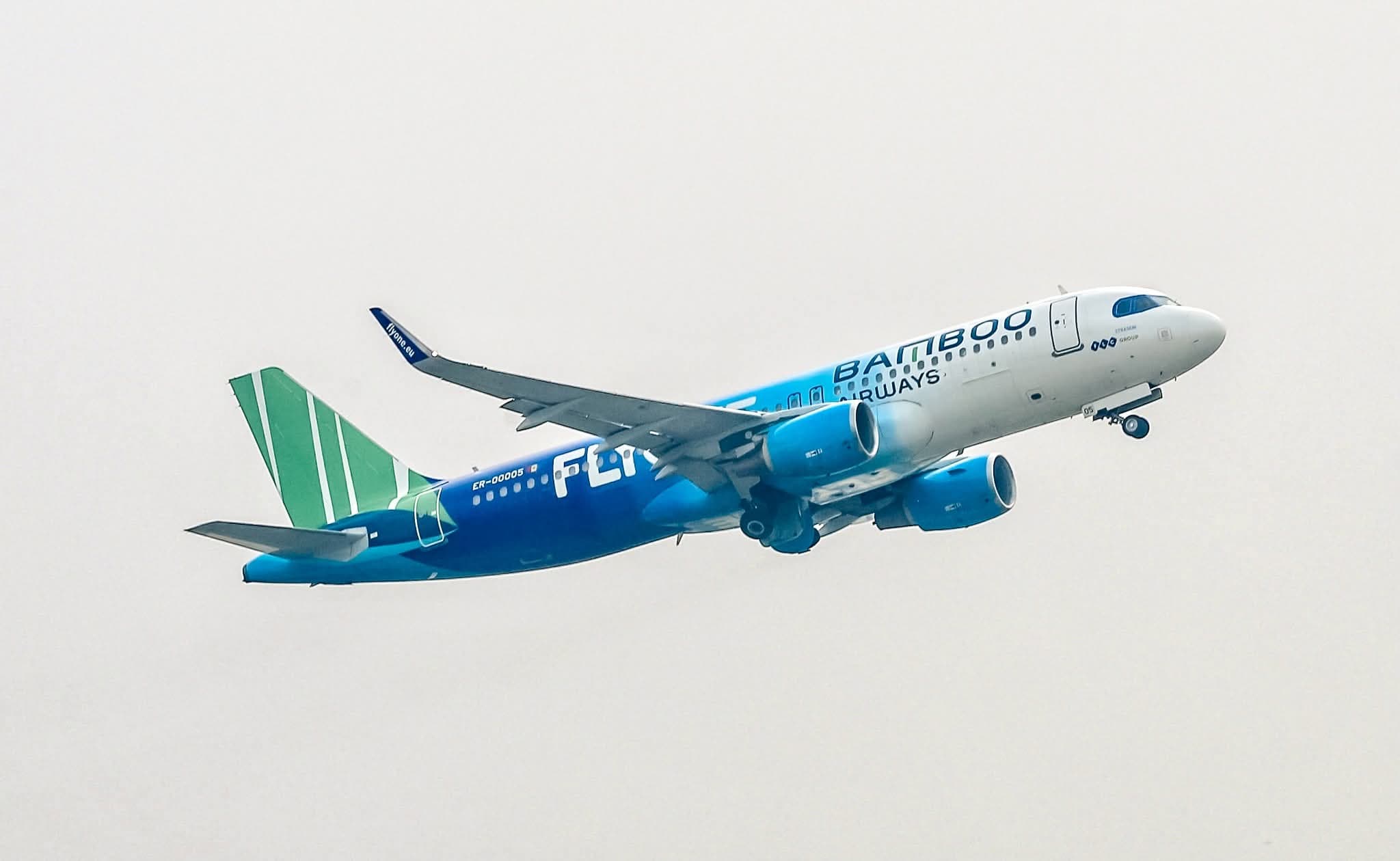
**Bamboo Airways: A Carrier Grounded by Financial Turmoil**
Bamboo Airways, once a rising star in Vietnam's aviation market, has effectively ceased regular commercial operations. Since August 1, its reservation system shows no flights on major domestic routes like Ho Chi Minh City–Hanoi, Hanoi–Da Nang, or Ho Chi Minh City–Da Nang, returning only "no flights found" messages. The airline now operates solely on a charter basis, with aircraft leased to tour operators for group travel, leaving individual passengers without options.
**Fleet Shrinkage and Operational Paralysis**
The airline's fleet has dwindled to just three aircraft—an Airbus A321ceo, an A320neo, and an A320ceo—according to Planespotters data. However, an insider reveals that only one aircraft is actually in use, with the other two grounded. This is a stark contrast to the 44 aircraft Bamboo Airways operated at its peak before the 2022 restructuring, which included Boeing 787-9 Dreamliners for long-haul routes. The gradual reduction reflects a deep financial crisis that has eroded the airline's capabilities.
**Passenger Fallout and Regulatory Scrutiny**
Passengers are facing significant difficulties: long wait times on customer service lines, delayed refunds, and a lack of communication about future flights. The airline issued a statement on July 30 apologizing for "operational disruptions" and citing a surge in refund requests as the cause of delays. Meanwhile, the Civil Aviation Authority of Vietnam (CAAV) reported that in June, Bamboo Airways had a 33% on-time performance rate, with 241 of 725 flights delayed, making it one of the least punctual carriers domestically. The CAAV convened a meeting with the airline and airport authorities, but no resolution was reached, with Bamboo requesting more time to address its issues.
**A Tumultuous History and Uncertain Future**
Founded in 2017 and launching operations in 2019, Bamboo Airways aimed to become a major player in Vietnam and beyond. After the FLC Group's initial ownership, a new investor group took control in a 2022 restructuring plan. However, in September 2025, FLC Group resumed management, citing the investors' inability to handle the airline's financial and administrative burdens. The shareholders' meeting ended the restructuring plan and tasked FLC with developing a new strategy for 2026–2030. Despite no official suspension of its license, the airline's current state suggests a de facto hibernation of its regular services.
**Implications for Aviation Training**
For ATPL and ATC students, this case illustrates the fragility of airline business models and the importance of operational resilience. It highlights how financial distress can rapidly degrade safety margins, punctuality, and customer service—factors that pilots and controllers must navigate in real-world operations. Understanding such dynamics is crucial for future aviation professionals who will manage or regulate airlines.