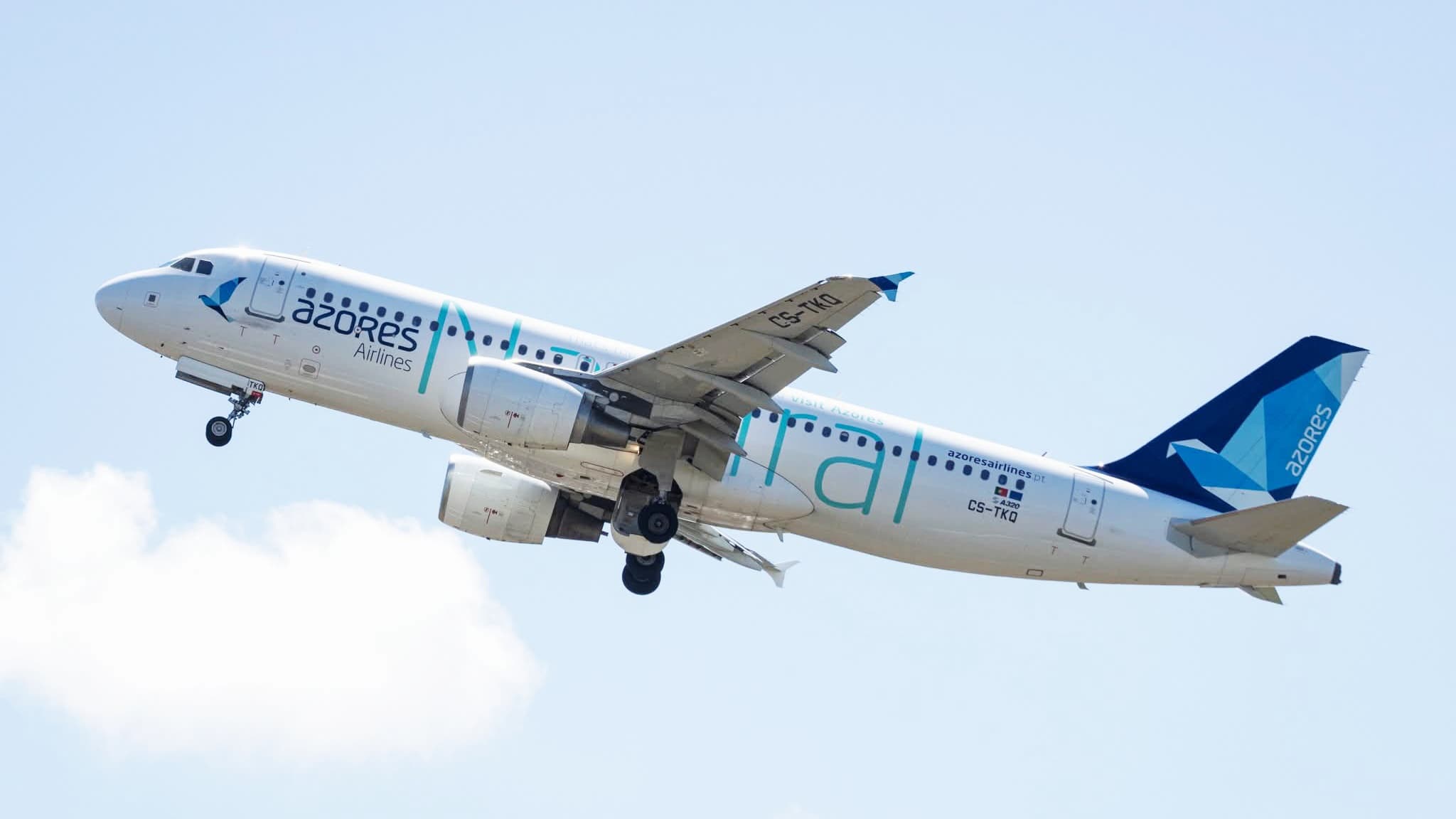
The privatization of Azores Airlines, the long-haul carrier of the public SATA group, has entered a new phase after the failure of a first attempt in 2023. According to regional authorities, several aviation players—including Binter Canarias and Icelandair—have expressed interest, highlighting the strategic importance of this operator in the North Atlantic.
**A relaunch under European pressure**
The regional government of the Azores has restarted the privatization process, with between six and eight potential investors already having shown interest. This new timeline is part of commitments made to the European Commission, which approved a €453 million state aid package in 2022 to restructure the SATA group. In return, Brussels requires a majority stake sale by December 31, 2026. "We will soon receive the new privatization conditions," said Tiago Santos, regional secretary for Finance, as quoted by Portuguese media. The process now abandons the traditional tender in favor of direct negotiations with candidates. The sale will cover at least 51% of the capital, with the possibility of a larger stake to ensure strategic control for the selected investor.
**The failure of a first attempt**
This relaunch follows an aborted first process. In 2023, the Atlantic Connect Group consortium offered €17 million for 85% of Azores Airlines but failed to provide the required financial guarantees. This failure highlighted the company's financial fragility and the complexity of a case mixing economic, political, and territorial issues.
**Binter, a natural partner**
Among the most credible candidates is Binter Canarias. The Spanish airline, a specialist in inter-island links in the Canaries, already has close ties with Azores Airlines through a codeshare agreement. The two carriers cooperate on certain routes between the Azores and the Canaries, giving Binter valuable operational knowledge of the regional Atlantic market. According to several sources, Binter might favor a minority stake of around 20%, in a logic of strengthened partnership rather than full control. Such an alliance would help structure a coherent regional network between Atlantic archipelagos, with operational and commercial synergies.
**Icelandair eyes a transatlantic hub**
Another heavyweight candidate is Icelandair. The Icelandic carrier sees Ponta Delgada airport as a natural extension of its Keflavík hub model, connecting Europe and North America. In this perspective, the Azores could become a complementary platform to capture transatlantic flows, especially on niche or seasonal markets. This strategy fits the logic of optimizing long-haul routes and diversifying entry points in the North Atlantic.
**An attractive long-haul fleet**
One of Azores Airlines' main assets is its modern fleet of three Airbus A321LRs and two A321neos, particularly suited for low-density transatlantic routes. These aircraft efficiently serve Boston, New York, or Toronto—key markets due to the large Azorean diaspora in North America. Their range and capacity offer valuable flexibility to develop point-to-point routes without going through congested hubs. The privatization timeline is expected to unfold in several phases: expressions of interest, non-binding offers, then firm offers. A race against time is underway to meet the EU deadline.