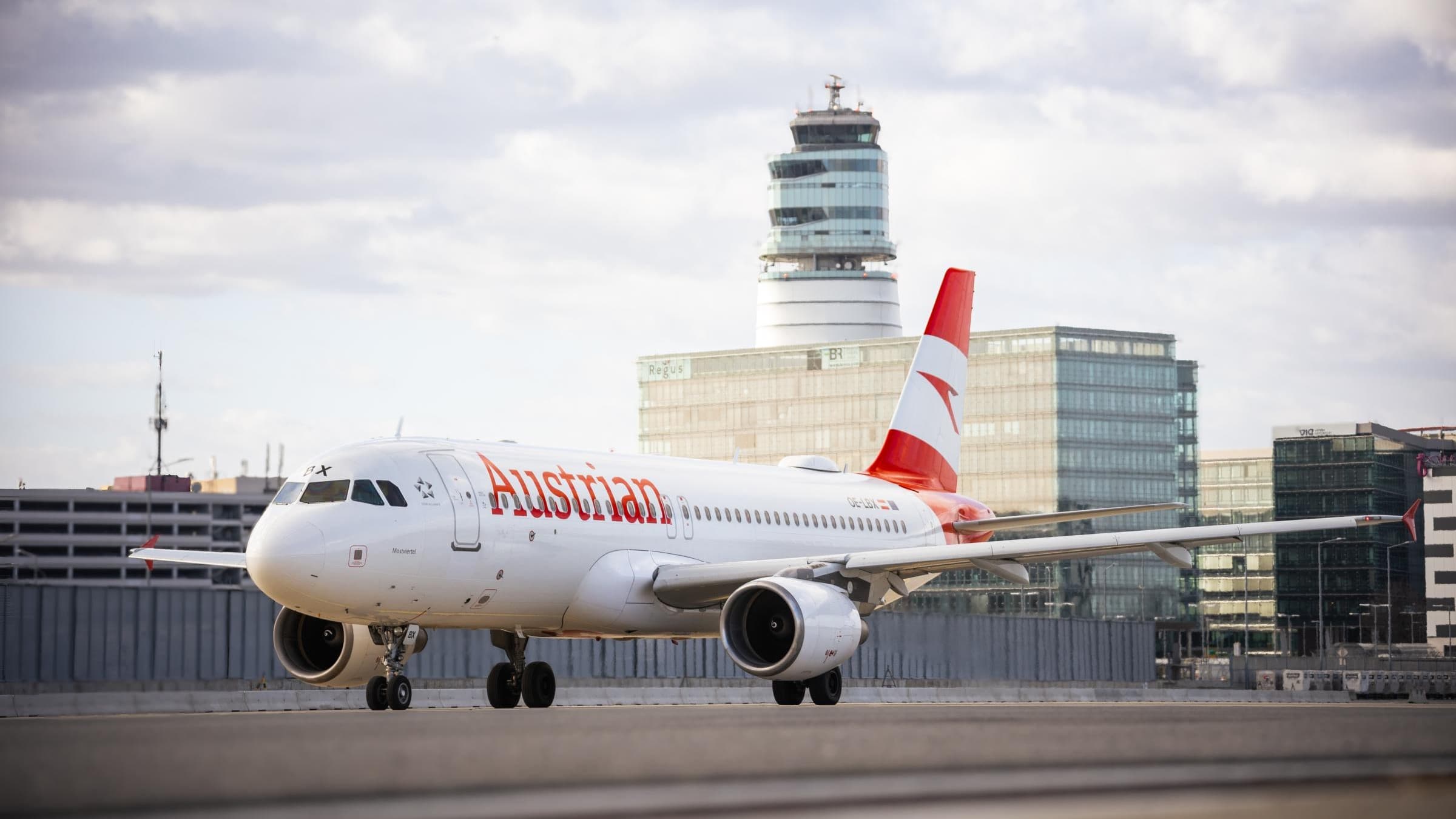
Austrian Airlines has reported an adjusted operating loss of €93 million for the first half of 2026, a deterioration of €50 million year-on-year. The carrier attributes the red ink to soaring jet fuel prices and the forced suspension of several Middle East routes, which wiped out the gains from an otherwise robust passenger demand. This financial turbulence offers a real-world case study for ATPL and ATC trainees on how geopolitical events and fuel costs ripple through an airline's operations.
The Middle East crisis has hit Austrian Airlines twice. Beyond the fuel bill, the closure or restriction of airspace, along with security imperatives, led to the temporary suspension of services to Amman, Erbil, Tel Aviv, and Tehran. These cancellations alone cost tens of millions of euros in lost revenue. The episode underscores the vulnerability of Vienna's hub model: routes to the Levant, Iraq, and Iran feed both local traffic and connections between Central Europe, the Middle East, and Asia. Moreover, imposed detours on remaining flights lengthen block times, increase fuel burn, and complicate crew scheduling—a perfect illustration of the operational knock-on effects that ATPL students study in performance and flight planning modules.
Despite the losses, demand remains strong. Austrian carried 6.96 million passengers from January to June, up 6% year-on-year, while revenue grew 4% to €1.22 billion. The load factor improved by 3.4 points to 80.6%, with capacity nearly flat at 13.53 billion seat-kilometres. Operational regularity stayed high at 98.8%. The airline redeployed capacity freed by the Middle East suspensions, adding around 800 extra flights to European leisure destinations such as Palma de Mallorca, Dubrovnik, Barcelona, Nice, and Malaga. This shows how airlines dynamically reallocate resources—a key concept in network planning and revenue management.
To restore margins, Austrian will adjust its winter 2026-2027 schedule. The domestic Vienna-Graz route, structurally loss-making, will be discontinued, though Graz retains 46 weekly frequencies to Lufthansa Group hubs (Frankfurt, Munich, Zurich) and rail links via AIRail. The carrier will also temporarily suspend Tbilisi, Keflavík, and Porto, and end overnight aircraft and crew positioning at Klagenfurt, Copenhagen, Warsaw, and Krakow. These moves highlight the delicate balance between network connectivity and cost efficiency, a theme central to airline strategy discussions in aviation management courses.
On the fleet front, Austrian is not abandoning its renewal plan. Two additional Boeing 787-9 Dreamliners are expected by year-end, bringing the fleet to five, and an Airbus A320neo with Starlink connectivity is on the way. The industrial strategy is a simplification play: exiting five aircraft families (Embraer, A320, 767, 777, 787) to converge on two—A320 family for short/medium-haul and 787-9 for long-haul. Four Embraers have already left in 2026, with full exit by end-2028 and the Dreamliner as sole long-haul type by 2028-2029. This rationalization cuts maintenance, training, and crew planning costs while improving fuel efficiency. For ATPL students, this is a textbook example of fleet commonality benefits, a topic often covered in aircraft general knowledge and airline operations.
Management remains confident of a full-year profit, buoyed by summer peak season and fare adjustments. The story illustrates how airlines absorb shocks, adapt networks, and invest in fleet renewal—essential knowledge for future pilots and controllers who will operate within such evolving systems.