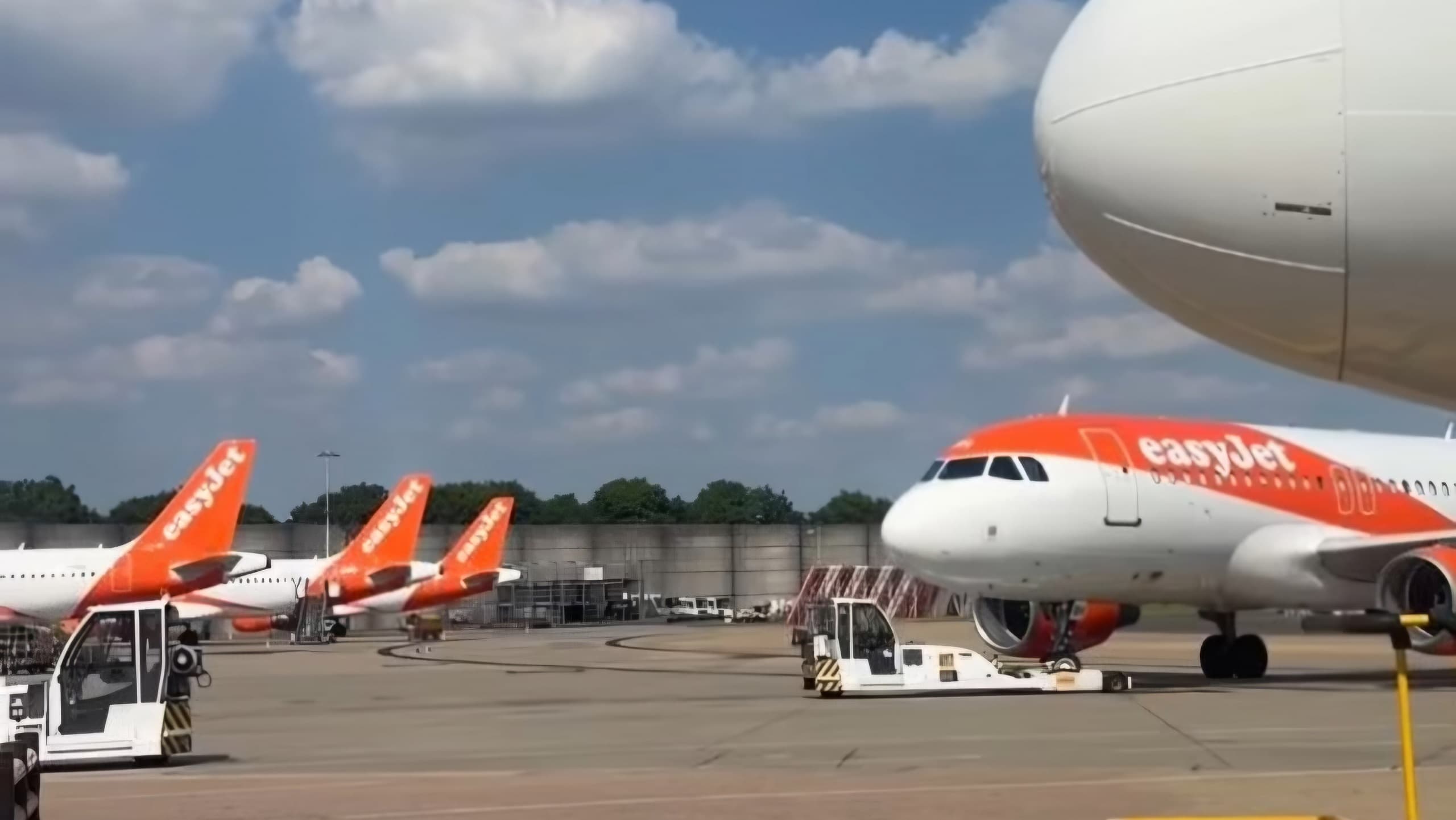
EasyJet has selected Apollo Global Management as its preferred suitor, announcing a new "agreement in principle" on a £5.7 billion takeover bid that it considers more attractive than the previous offer from Castlelake. The British low-cost carrier, already weakened by soaring fuel costs linked to the Middle East conflict, now faces strong opposition from its French pilots, who view the takeover by investment funds as "purely financial" and opaque regarding social implications.
**A Bidding War for a Strategic Low-Cost Carrier**
The board of EasyJet announced on July 10 that it had reached an agreement in principle with Apollo Global Management for a cash offer of £7.15 per share, valuing the company at approximately £5.7 billion (€6.7 billion). This offer surpasses Castlelake's last proposal of £6.90 per share, which EasyJet had previously agreed to but now no longer recommends. The board stated unanimously that Apollo's financial terms are at a level that would make it willing to recommend the offer to shareholders, provided a firm bid is submitted by the August 7 deadline. This shift comes less than a week after EasyJet had announced a first agreement in principle with Castlelake on July 5, following four earlier rejections of Castlelake's approaches, one of which was deemed "highly opportunistic" given the temporarily depressed share price due to the Middle East war.
**Fuel Costs and Financial Fragility**
The takeover battle unfolds against a backdrop of deteriorating financial results for EasyJet. For the first half of its fiscal year ending March, the airline reported a pre-tax loss of £552 million, at the upper end of its guidance range, primarily due to a sharp increase in fuel costs linked to the conflict between the US, Israel, and Iran. Kerosene prices surged over 80% since late February, driven by disruptions in maritime traffic through the Strait of Hormuz, adding approximately £25 million to EasyJet's fuel bill for the half-year. Despite a 6% increase in passenger numbers, a 90% load factor, and a 12% rise in revenue to £3.95 billion, the company warns that its second half will remain impacted by the Middle East conflict, with higher fuel costs and short-term demand uncertainty.
**Strategic Value and Fleet**
Apollo's interest is partly driven by EasyJet's strategic position in the European market and its potential for growth through ancillaries and holidays. EasyJet Holidays, the package holiday division, saw customer numbers rise 22% in the first half, offering higher margins and resilience. The airline operates a fleet of 356 aircraft, mainly Airbus A320ceo and A320neo, serving over 150 destinations. It also has a significant order book of nearly 280 aircraft, representing a major asset for any buyer. However, French pilots have expressed strong reservations, fearing that a purely financial takeover could prioritize short-term returns over long-term operational stability and employee welfare.
**What This Means for ATPL and ATC Students**
For ATPL students, this case illustrates how macroeconomic factors like fuel price volatility and geopolitical events can directly impact airline profitability and ownership structures. Understanding these dynamics is crucial for career planning, as takeovers can affect fleet plans, base closures, and employment conditions. ATC students should note that such financial turbulence can lead to network adjustments, potentially affecting traffic flows and slot allocations at major European hubs like London Gatwick, Paris Orly, and Geneva.