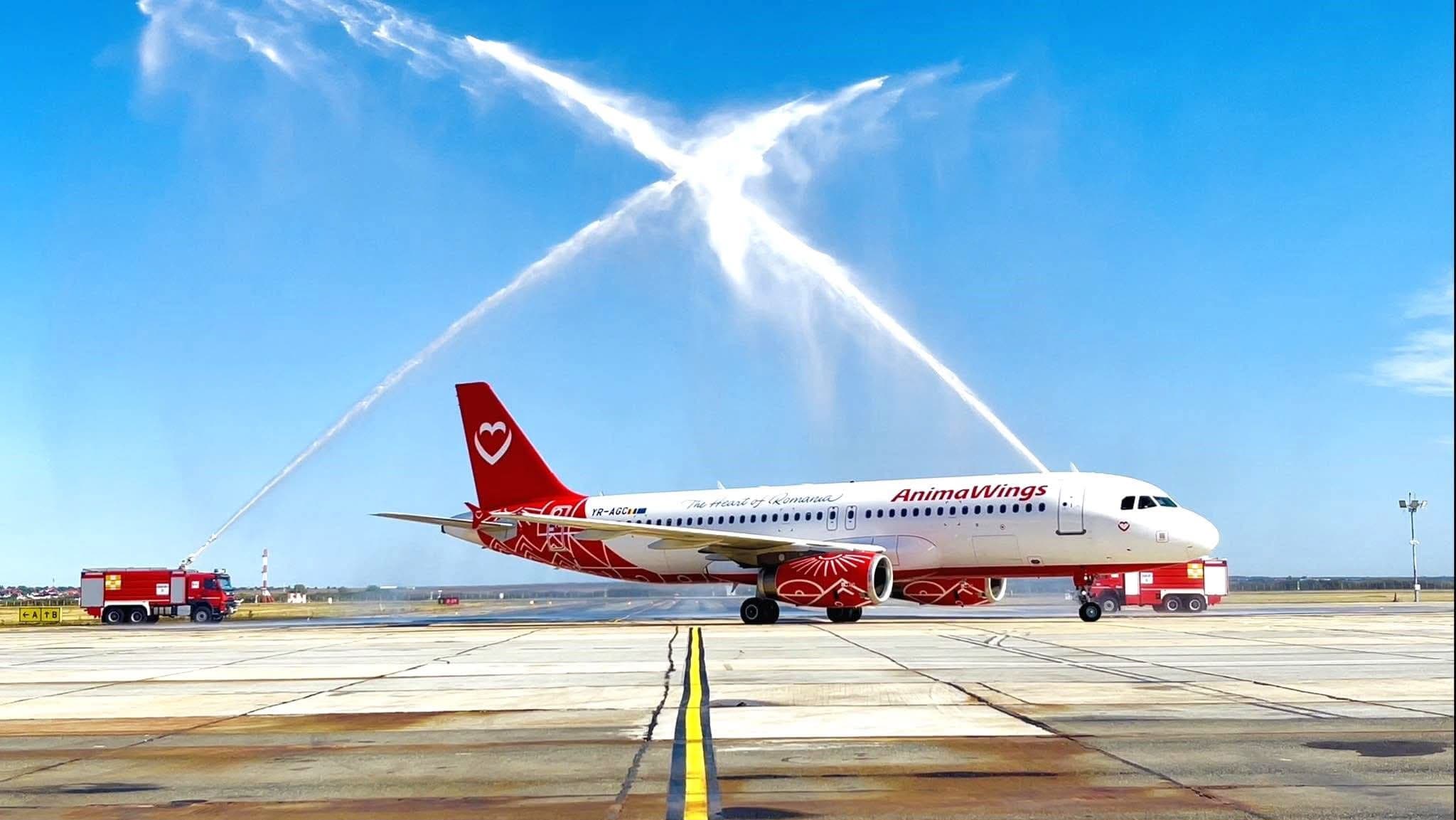
**AnimaWings Launches Strasbourg–Bucharest Route with Airbus A220: A Case Study for Aviation Students**
On August 17, 2026, Romanian airline AnimaWings will inaugurate a new regular service between Strasbourg and Bucharest, operated twice weekly (Mondays and Thursdays) with an Airbus A220-300. This route marks the carrier's third French destination, after Paris-Charles de Gaulle and Nice, and underscores its rapid European network expansion. For ATPL and ATC students, this development offers a practical illustration of how airlines evaluate route profitability, fleet allocation, and seasonal demand.
**Network Strategy and Fleet Modernisation**
AnimaWings currently operates a fleet of seven Airbus aircraft—five A220-300s and two A320s—making it one of the youngest fleets in Romania. The airline plans to grow to 14–18 aircraft by 2027, with additional A220 deliveries scheduled for 2026. This aggressive expansion is a textbook example of fleet planning and capacity management, topics central to ATPL performance and flight planning modules. The choice of the A220-300, known for its fuel efficiency and passenger comfort (2+3 seating, USB ports, reduced noise), reflects modern trends in short- and medium-haul operations that students must understand for future airline roles.
**Full-Service Positioning in a Low-Cost Market**
Unlike many new entrants in the European regional market, AnimaWings adopts a full-service model: free seat selection, an 8 kg cabin bag, and a 4 kg personal item are included in the fare. This strategic differentiation is relevant for ATPL students studying airline economics and marketing, as it demonstrates how carriers can compete on service rather than price alone. ATC students may note the operational implications—higher passenger expectations can influence turnaround times and ground handling procedures.
**Impact on Strasbourg Airport and Regional Connectivity**
Strasbourg, home to the European Parliament and other EU institutions, generates steady traffic from officials, business travellers, and the Romanian diaspora. The new direct link will facilitate economic and cultural exchanges, boosting the airport's connectivity to Central and Eastern Europe. For ATC trainees, this route adds to the complexity of managing traffic at a regional airport that also handles institutional flights, requiring careful slot coordination and airspace integration.
**What This Means for ATPL and ATC Students**
This case study illustrates real-world airline network planning, fleet modernisation, and competitive positioning. ATPL students can analyse route profitability factors such as aircraft utilisation, load factors, and yield management. ATC students can consider the operational challenges of integrating new routes into existing airspace and airport infrastructure, especially at a city like Strasbourg with unique institutional traffic patterns.