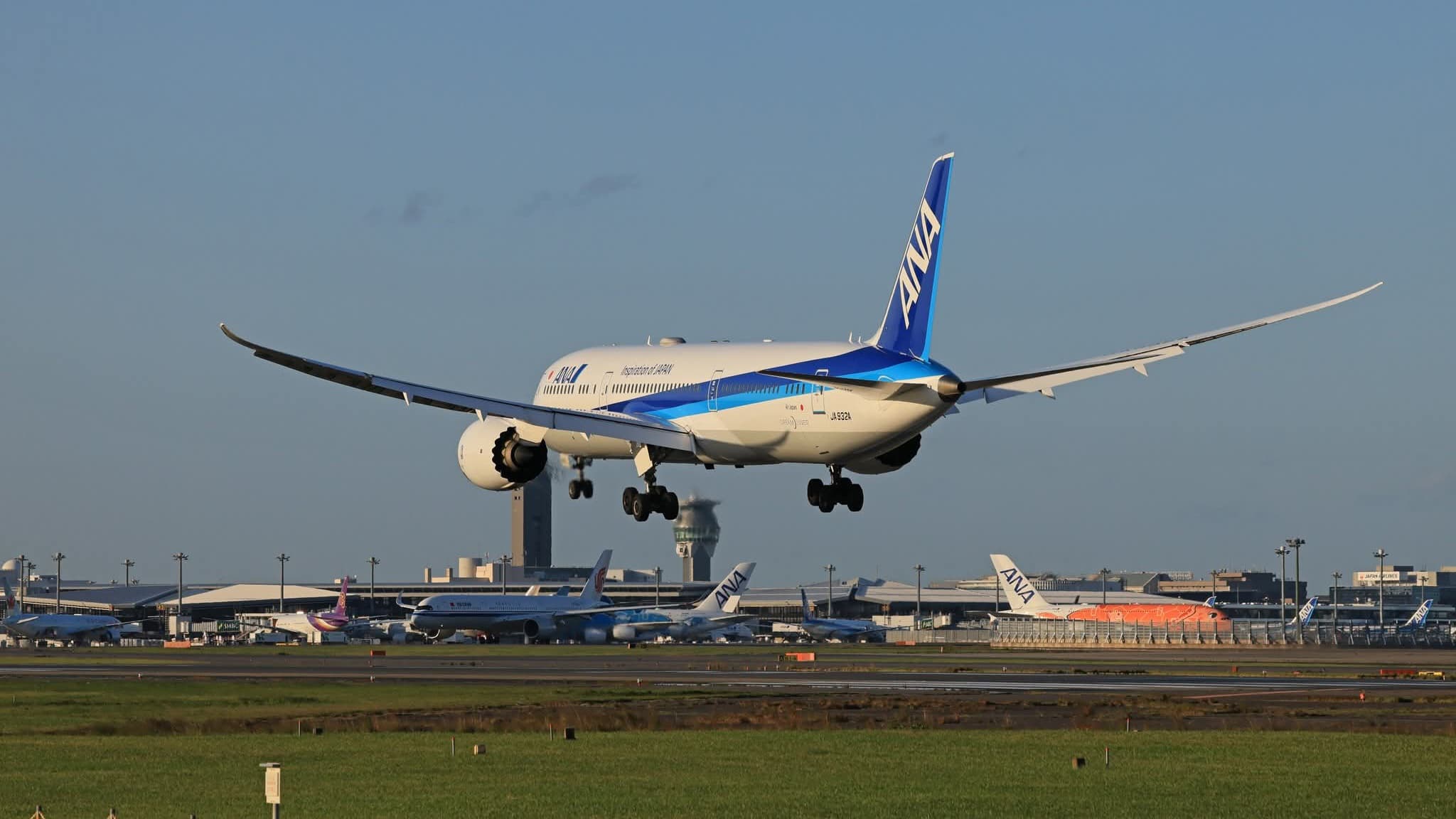
All Nippon Airways (ANA) has confirmed it will retire its final three Boeing 777-300 aircraft by March 31, 2027, ending nearly three decades of service for the type on Japan's domestic network. These 777-300s, delivered between 1998 and 1999, have been the backbone of high-density routes connecting Tokyo Haneda with Sapporo, Osaka, Fukuoka, and Naha. Configured with 514 seats in a two-class layout, they were among the highest-capacity jets ever deployed on domestic routes worldwide.
For ATPL students, this retirement is a textbook example of how airlines manage fleet lifecycles. The 777-300 (non-ER) has a maximum takeoff weight (MTOW) of around 299,370 kg and a range of about 7,370 km, but on short domestic sectors its fuel burn per seat is relatively high compared to modern twins. ANA's decision to replace them with the 787-10, which offers similar capacity (up to 336 seats in a high-density layout) but with 20-25% better fuel efficiency and lower CO₂ emissions, illustrates the economic pressures driving fleet renewal. ATC trainees should note that the 787's lower noise footprint and improved climb performance can affect departure procedures and noise abatement profiles at airports like Haneda, which has strict curfews and noise regulations.
ANA's strategy goes beyond the 777 phase-out. The airline is standardizing its domestic fleet around the 787 family (including the -8, -9, and -10 variants) and the Boeing 737 MAX 8 for shorter routes. Twenty 737 MAX 8s are on order, with first deliveries expected in fiscal 2026-2027, replacing aging 737-800s. This dual-family approach reduces maintenance complexity, spare parts inventory, and pilot training requirements—key concepts in airline operations management that ATPL candidates study under "fleet commonality."
The financial context is strong: ANA Holdings reported a record operating profit of ¥217.4 billion (about $1.38 billion) on consolidated revenue of ¥2,539.2 billion, up 13% year-on-year. This profitability funds the transition and highlights how fleet modernization is often tied to financial performance. For students, this is a reminder that aircraft selection is not just about technical specs but also about balance sheet health and market demand.
In summary, ANA's move away from the 777-300 to an all-787 domestic fleet is a live case study in fleet planning, operational efficiency, and environmental compliance. ATPL and ATC trainees should follow this transition to understand how real-world airlines apply the principles taught in their courses.