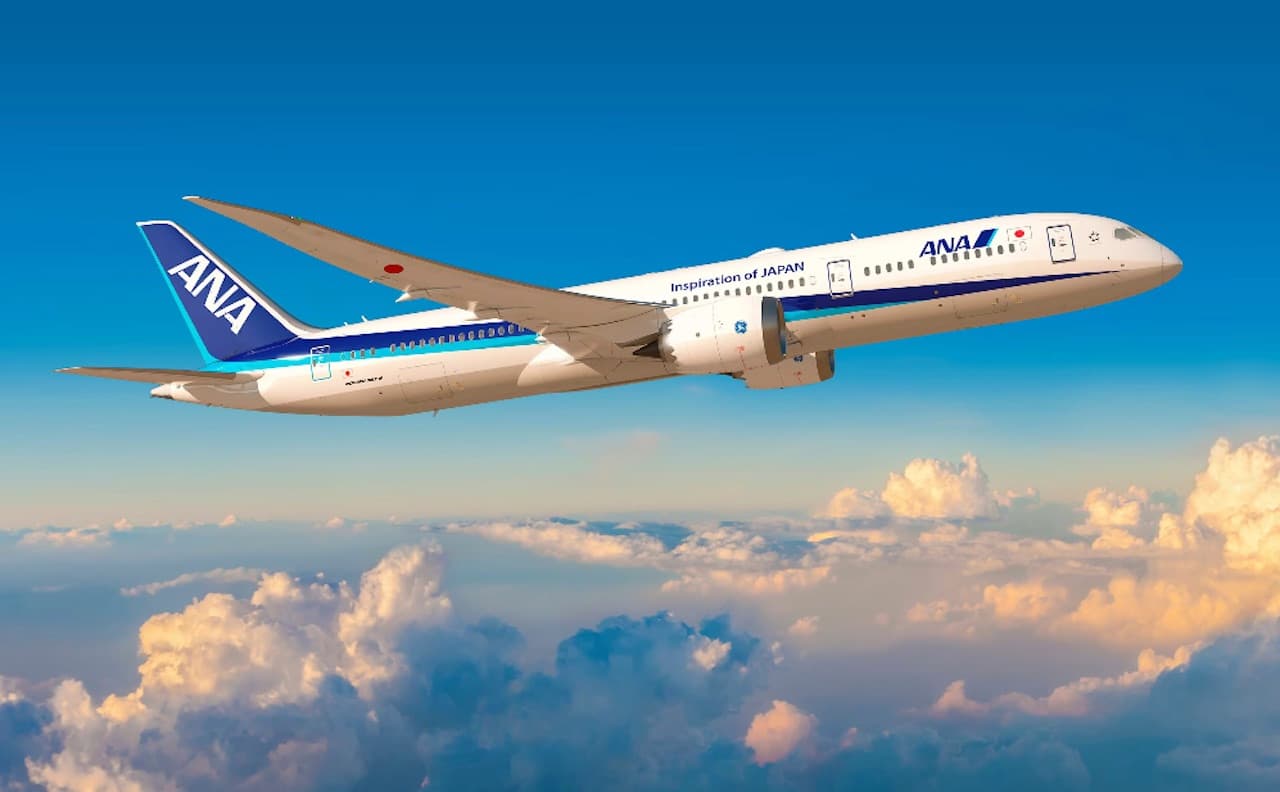
All Nippon Airways (ANA) is evaluating the feasibility of launching nonstop flights between Tokyo and Panama City, a route that would be the first direct air link between East Asia and Central America. If realized, the service would rely on a codeshare or partnership with Copa Airlines, which operates its "Hub of the Americas" at Tocumen International Airport, connecting nearly 90 destinations across North, Central, and South America, plus the Caribbean.
**Why this matters for ATPL and ATC students**
For ATPL candidates, this project illustrates how airlines assess new ultra-long-haul routes: bilateral traffic rights, aircraft performance (the Boeing 777-300ER is the candidate), runway capacity, and hub connectivity. ANA's delegation, accompanied by Boeing technicians, inspected Tocumen's infrastructure to ensure the 777-300ER could operate safely and efficiently. This is a textbook case of route planning, where operational constraints (runway length, terminal capacity, security protocols like "One Stop Security") must align with commercial strategy.
**The role of Copa Airlines**
Copa Airlines is central to the plan. ANA already has a loyalty partnership with Copa, and a Tokyo–Panama flight would allow passengers to connect seamlessly to destinations such as Mexico City, Buenos Aires, Bogotá, Lima, and Santiago with just one stop. This reduces reliance on traditional hubs in North America (Los Angeles, San Francisco) or the Middle East (Dubai, Doha). For ATC trainees, understanding hub-and-spoke dynamics is essential: Panama's Tocumen is a prime example of a geographic hub that funnels traffic between two continents.
**Current state of Asia–Latin America connectivity**
Direct flights between Asia and Latin America remain scarce. Currently, only Mexico has nonstop service to Japan: ANA flies Tokyo–Mexico City, and Aeromexico operates Monterrey–Tokyo. A Tokyo–Panama route would fill a significant gap, especially for passengers heading to Central America and the Southern Cone. The project also reflects broader diplomatic efforts: a Panamanian delegation visited Tokyo in 2025 to advance bilateral aviation talks.
**What this means for students**
For ATPL students, this case study highlights the importance of bilateral agreements, aircraft range/payload trade-offs, and partnership strategies. For ATC students, it underscores how hub airports manage international transfer flows, security protocols, and slot coordination. The route is not yet confirmed—it depends on traffic rights and commercial viability—but it represents a real-world example of how airlines expand networks in underserved markets.