**ANA Doubles Down on Regional Efficiency**
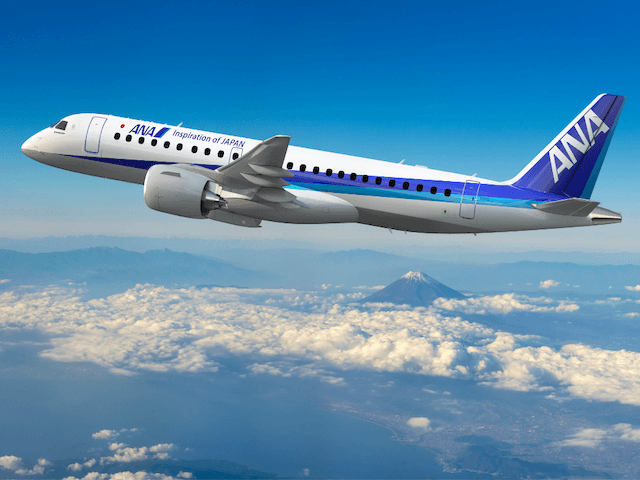
All Nippon Airways (ANA) has confirmed an additional order for eight Embraer E190-E2 regional jets, bringing its total commitment to 28 aircraft of the E2 family. The announcement, approved by ANA Holdings' board, underscores the carrier's strategy to modernize its domestic fleet and enhance connectivity across Japan's regional routes. The new aircraft, valued at approximately 105 billion yen (US$642 million), are scheduled for delivery between 2029 and 2032, complementing the initial batch arriving from 2028.
**Bridging the Gap in Regional Operations**
The E190-E2 is positioned to fill the void between ANA's turboprop fleet and its larger narrowbody aircraft, offering around 100 seats—an ideal capacity for many domestic routes. This aircraft type is celebrated for its fuel efficiency, with Embraer claiming significant consumption reductions compared to previous generations, as well as one of the lowest noise levels in its category. The cabin layout, featuring no middle seat in business class, is a commercial advantage aimed at improving passenger comfort.
**Strategic Partnership with IBEX Airlines**
In parallel with the order, ANA has signed an ACMI (aircraft, crew, maintenance, and insurance) agreement with regional carrier IBEX Airlines. Under this arrangement, ANA will handle marketing and maintenance, while IBEX will operate the E190-E2s, starting in fiscal year 2029. IBEX will phase out its CRJ700 fleet and transition to a pure ACMI operator, a move both airlines say will optimize resources, sustain regional routes, and improve operational efficiency.
**Implications for the Japanese Aviation Market**
This expansion makes ANA the first Japanese operator of the E2 family, a significant milestone for Embraer in the Asia-Pacific region. The decision reflects a broader trend among legacy carriers to right-size their regional networks, balancing capacity with demand while prioritizing sustainability. For ANA, the E190-E2s are not just about fleet renewal; they are a tool to build a resilient domestic network that can adapt to changing passenger patterns and economic pressures.
**Why This Matters for Aviation Students**
For ATPL and ATC trainees, this development offers a real-world example of fleet planning and airline strategy. Understanding how airlines like ANA evaluate aircraft types based on route economics, environmental performance, and partnership models is crucial for future pilots and controllers who will operate within such frameworks. The ACMI model, in particular, highlights the growing complexity of airline operations, where ownership and operation are increasingly separated.