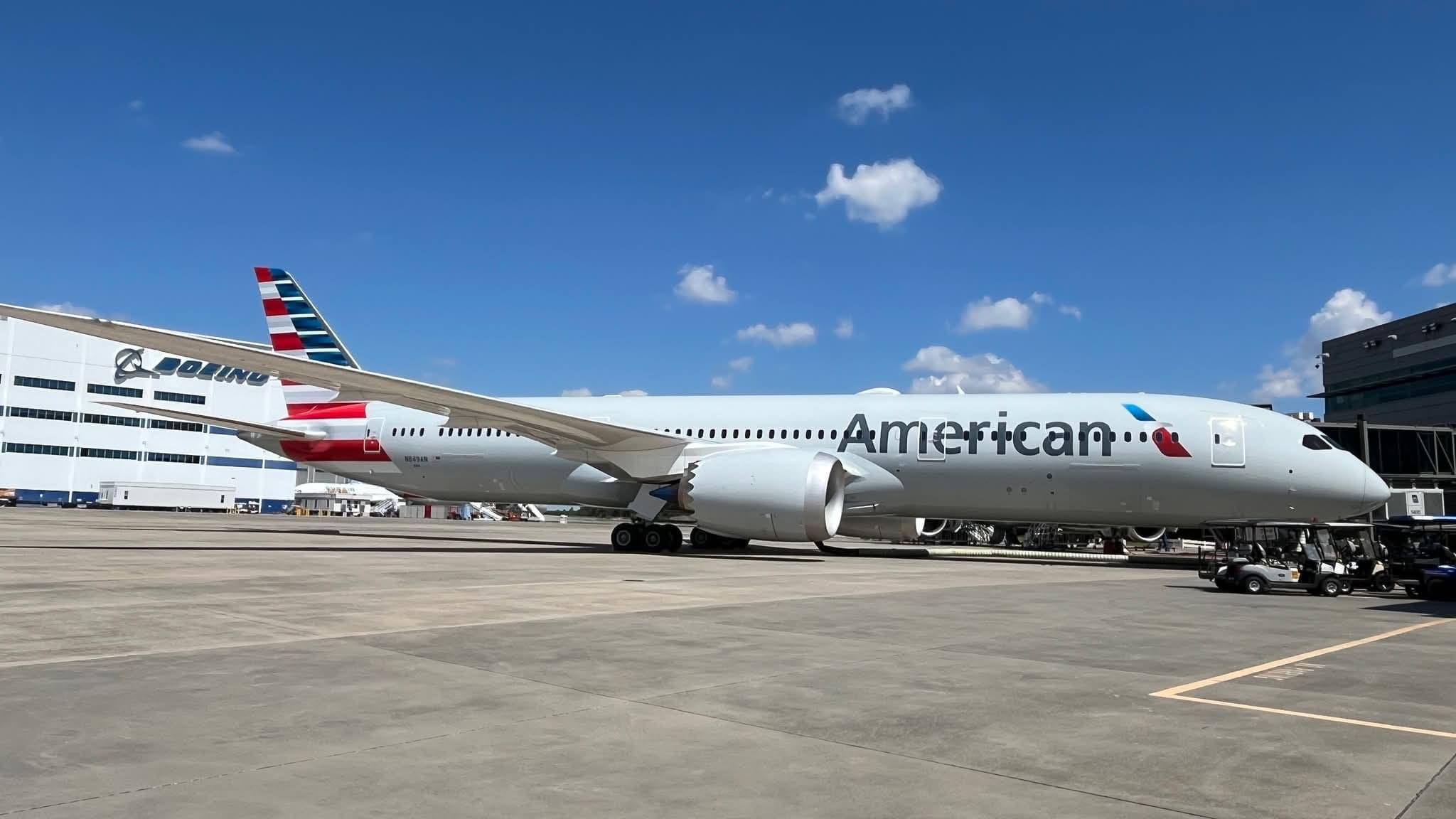
American Airlines has officially confirmed the return of a daily nonstop service between Chicago O'Hare (ORD) and Tokyo Narita (NRT), set to launch on March 27, 2027. The route, suspended since early 2020 due to the pandemic, will be operated with a Boeing 787-9 under the transpacific joint business agreement with Japan Airlines (JAL). This move re-establishes a historic link for American and positions Chicago as a key gateway to Asia.
The announcement followed a clever teaser on American's Instagram account on June 30, which featured a blurred image of the Osaka Garden in Chicago's Jackson Park. Aviation enthusiasts quickly decoded the hint, pointing to Japan rather than Osaka itself, and speculation centered on a Tokyo route. The official confirmation came on July 1 during an event at O'Hare, validating those predictions and marking the end of a seven-year hiatus.
From an ATPL and ATC perspective, this development is significant for several reasons. First, the route covers approximately 6,274 miles (10,097 km), making it American's longest from Chicago. The flight times—12 hours 55 minutes westbound and 12 hours 30 minutes eastbound—require careful fuel planning, crew scheduling, and consideration of prevailing winds. The Boeing 787-9 will be configured with 30 Flagship Business seats, 21 premium economy seats, and standard economy, a balanced setup that avoids the ultra-premium layouts seen on some other long-haul routes. This configuration choice reflects a strategic decision to cater to both business and leisure demand without overcommitting to premium capacity.
The schedule is designed to optimize connections at Narita: AA153 departs Chicago at 12:35 p.m., arriving in Tokyo at 3:30 p.m. the next day, while AA154 leaves Narita at 5:50 p.m., landing in Chicago at 4:20 p.m. the same day. These timings align with JAL's network to destinations like Bangkok, Singapore, Taipei, and Ho Chi Minh City, offering seamless onward travel for passengers. For ATC, the integration of this flight into the Pacific Joint Business means coordinated slot management and potential adjustments to arrival/departure flows at both O'Hare and Narita.
When American's service begins in spring 2027, it will join a crowded Chicago–Tokyo market already served by up to six daily flights: two JAL flights (one to Narita, one to Haneda), two ANA flights, and one United flight to Haneda. The addition of American's daily Narita service brings the American–JAL partnership to three daily rotations between Chicago and Tokyo, intensifying competition and offering more flexibility for travelers. For ATPL students studying airline network planning, this case illustrates how joint ventures enable carriers to expand reach without overextending their own fleets. ATC trainees can note the operational complexity of managing multiple daily services between two major hubs, especially with distinct airports (Narita and Haneda) in Tokyo.
Overall, this route resumption underscores the recovery of transpacific demand and the strategic importance of Chicago O'Hare as a hub. American now operates 11 long-haul routes from ORD, reinforcing its position against United's strong presence there. For aviation students, this real-world example ties together concepts of network economics, fleet utilization, and regulatory coordination under joint ventures.