**A New Low-Cost Powerhouse**
On May 13, Allegiant Travel Company announced the completion of its acquisition of Sun Country Airlines Holdings, a deal valued at approximately $1.5 billion including debt. The union creates a dominant US leisure-focused carrier with a combined fleet of 195 aircraft, over 650 routes, and service to nearly 175 cities. For aviation students, this merger is a textbook case of how consolidation reshapes the competitive landscape, particularly in the low-cost segment where operational efficiency and route optimization are critical.
**Complementary Business Models**
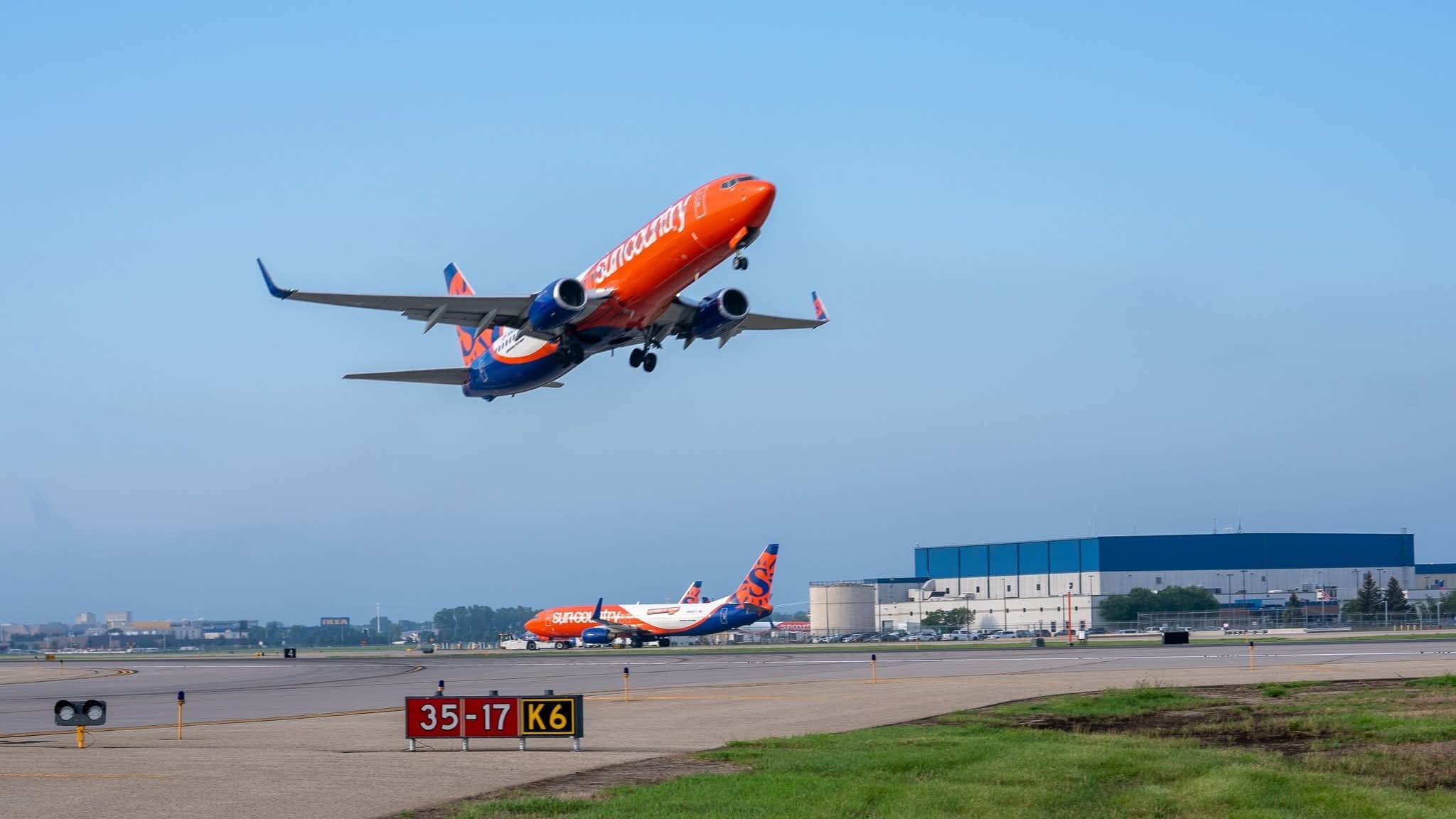
Allegiant, headquartered in Las Vegas, has long specialized in point-to-point leisure travel, connecting small and mid-sized cities to major vacation destinations. Its ultra-low-cost model relies heavily on ancillary revenue. Sun Country, based in Minneapolis–St. Paul, operates a hybrid low-cost model blending leisure and VFR (visiting friends and relatives) traffic, charter flights, and a significant cargo operation for Amazon Prime Air, which accounts for about 20% of its revenue. The combination brings together two distinct but complementary approaches: Allegiant’s pure leisure focus and Sun Country’s diversified revenue streams, including cargo and charters. This diversification is expected to reduce seasonality risks, a key lesson for ATPL students studying airline business models.
**Regulatory Clearance and Integration Plans**
The transaction received antitrust clearance from the Department of Justice, early termination of the Hart-Scott-Rodino waiting period, and a temporary exemption from the Department of Transportation. Shareholders of both companies also approved the deal. Allegiant CEO Gregory Anderson called it "a defining moment" that expands affordable travel options for underserved communities. In the near term, both airlines will operate under their own brands, with loyalty programs remaining separate. However, the company expects $140 million in annual synergies within three years through fleet optimization, economies of scale, and consolidated purchasing. For ATC students, the integration of two networks—each with its own route structure and operational patterns—offers a real-world example of the challenges in harmonizing schedules, slot coordination, and airspace utilization.
**Fleet and Network Implications**
The combined fleet of 195 aircraft, plus 30 firm orders and 80 options, provides significant flexibility. Allegiant’s fleet is predominantly Airbus A320-family aircraft, while Sun Country operates Boeing 737-800s. Managing this mixed fleet will require careful maintenance planning and crew training—a practical consideration for ATPL students studying fleet management and operational reliability. The expanded network targets approximately 22 million passengers annually, serving secondary markets outside major hubs. This strategy avoids direct competition with legacy carriers, a classic low-cost tactic that students should analyze in terms of route profitability and market positioning.
**Cargo and Charter Diversification**
Sun Country’s cargo contracts with Amazon Prime Air, along with charters for casinos, sports teams, and the Department of Defense, will complement Allegiant’s existing charter business. This diversification is a strategic move to smooth out the seasonal fluctuations typical of pure leisure traffic. For ATPL students, understanding how airlines use cargo and charter operations to improve load factors and revenue stability is essential for mastering airline economics. ATC students, meanwhile, should note how cargo operations impose different demands on airspace and airport infrastructure compared to passenger flights.
**What This Means for Students**
This merger is more than a corporate transaction; it’s a case study in strategic growth, network planning, and operational integration. ATPL candidates will benefit from examining how fleet commonality (or lack thereof) affects maintenance costs and crew scheduling. ATC trainees can analyze how a combined network of 650 routes might impact traffic flow management and slot allocation at secondary airports. The emphasis on leisure and VFR traffic also highlights the importance of understanding demand patterns in non-business travel segments.