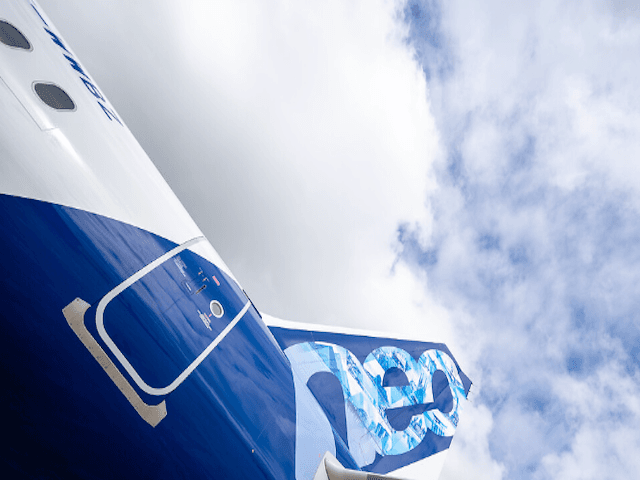
**Airbus expands A320 production capacity**
On June 15, 2026, Airbus inaugurated a second final assembly line (FAL) for the A320 family at its Jean-Luc Lagardère site in Toulouse, repurposing the former A380 assembly hall. The ceremony was led by Airbus CEO Guillaume Faury and Lars Wagner, head of commercial aircraft, with French Transport Minister Philippe Tabarot in attendance. This new line is a key step in Airbus's ramp-up plan to produce 75 single-aisle aircraft per month by the end of 2027, driven overwhelmingly by the A321neo, which represents nearly three-quarters of the A320 family order book.
**A global network of ten assembly lines**
With this addition, Airbus now operates ten A320 family FALs worldwide: four in Hamburg (Germany), two in Mobile (USA), two in Tianjin (China), and two in Toulouse (France). This distributed industrial footprint is designed to secure the ramp-up to 70–75 aircraft per month by late 2027, with a stabilization at 75. However, the ramp-up remains contingent on the supply chain's ability to keep pace, particularly engine manufacturers.
**A state-of-the-art digital assembly line**
The new FAL is located in the vast Jean-Luc Lagardère hall, originally built for the A380 between 2002 and 2004. The hall measures 490 meters long, 250 meters wide, and 46 meters high, covering 122,000 square meters—equivalent to about 500 tennis courts. Airbus highlights the integration of digital controls, automated logistics, and robotic systems to optimize workflows and improve ergonomics. This "next-generation" FAL is part of a broader standardization strategy across all A320 lines, harmonizing processes and tooling to boost productivity and quality.
**Workforce and industrial transformation**
The first A320 FAL at Toulouse already employs around 700 people. The second line will gradually ramp up, eventually bringing total employment on the site to nearly 1,500. This conversion of the former A380 facility into a single-aisle plant illustrates the deep transformation of Toulouse's industrial landscape, now driven by the A320 family and especially the A321neo. It also provides Airbus with a capacity reserve on a site with heavy existing infrastructure, reducing civil engineering investments compared to building entirely new plants.
**A321neo as the growth engine**
The decision to double assembly capacity in Toulouse is directly linked to the commercial success of the A320 family, particularly the A321neo. As of May 2026, the A320 family order book stands at 7,499 aircraft, including 5,615 A321neos and 1,864 A320neos. The A321neo alone accounts for nearly three-quarters of the backlog, confirming the market shift toward larger-capacity, longer-range variants favored by airlines for dense medium-haul and some transcontinental routes.