Airbus delivered 67 commercial aircraft in July, exactly the same number as in the same month last year. With 418 aircraft handed over to 82 customers since the start of 2026, the European manufacturer must significantly increase its pace over the final five months of the year to meet its target of approximately 870 deliveries. In parallel, the group recorded 204 orders during the month, notably thanks to the confirmation of Chinese contracts and a spectacular order from lessor SMBC Aviation Capital.
**A cadence to be raised by December**
Airbus concluded July on a mixed note: commercial activity remains solid, but production must still gain fluidity. The 67 aircraft delivered to 39 customers represent stability year-on-year, but also a decline compared to the 89 aircraft handed over in June. Since January, Airbus has totaled 418 deliveries, against 373 at the same period in 2025. To reach the annual target of "around 870" commercial aircraft, confirmed during the half-year results at the end of July, the manufacturer must now deliver 452 aircraft between August and December. This implies an average slightly above 90 aircraft per month. Such a level requires a particularly strong end of year. Airbus has already demonstrated its ability to concentrate a significant portion of its fleet deliveries in the final quarter, a crucial period for recognizing revenue in the aerospace industry. However, the exercise remains dependent on the availability of engines, cabin equipment, and the entire supply chain.
**Target of 870 deliveries: a pressured end of year**
In the first half, Airbus delivered 351 aircraft, including 271 from the A320 family, 44 A220s, 10 A330s, and 26 A350s. The second quarter alone reached 237 deliveries, a quarterly record for the April-June period. The group aims for approximately 870 aircraft delivered in 2026, compared to 793 last year. This target would surpass the previous historical record of 863 aircraft achieved in 2019, before the health crisis. This ambition relies heavily on the single-aisle A320neo and A321neo, which form the core of Airbus's volumes. It also depends on the gradual improvement in the situation at engine manufacturers, particularly Pratt & Whitney. During its second-quarter results, the group expressed more confidence in its ability to manage engine supply constraints, without eliminating the industrial risks weighing on production rates.
**China confirms its weight in the order book**
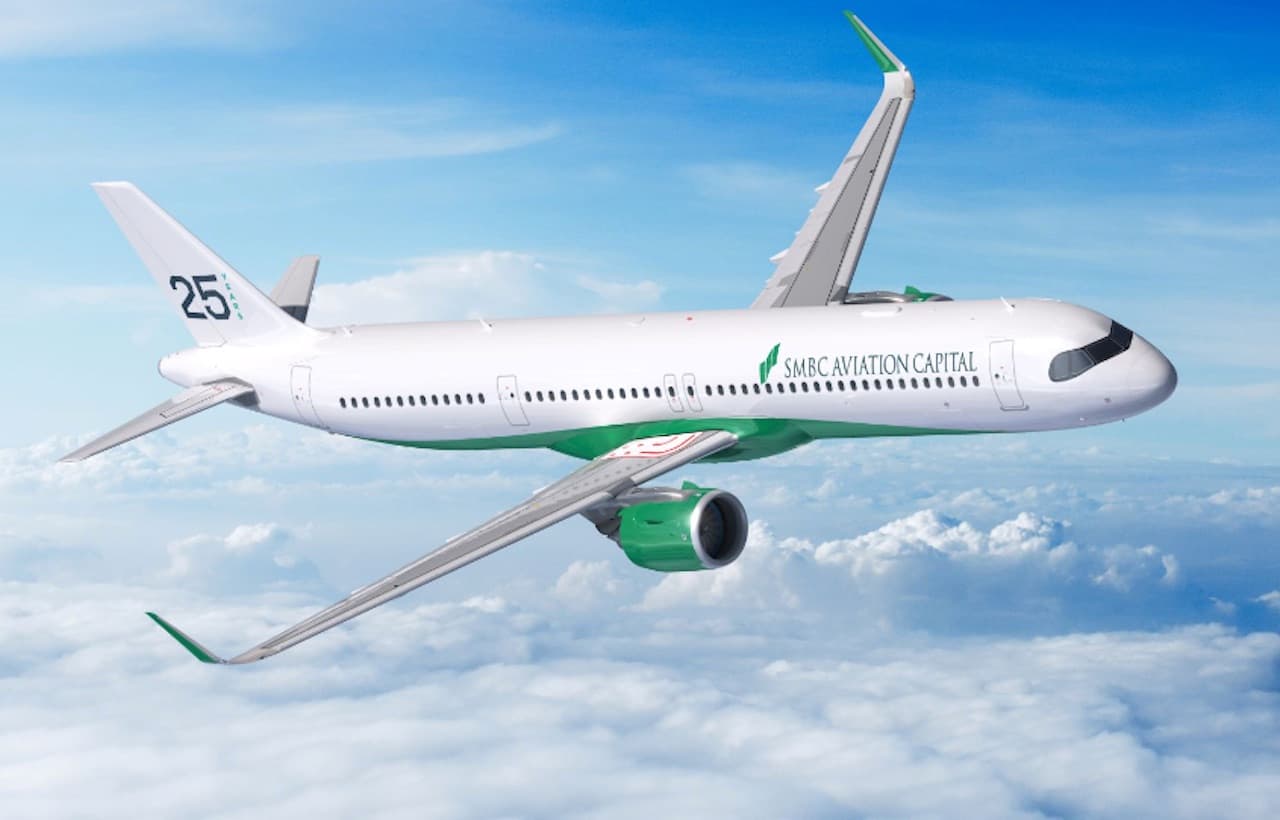
On the commercial front, Airbus recorded 204 gross orders in July. Over the first seven months of the year, the total reaches 1,090 gross orders and 1,024 net orders, after accounting for 66 cancellations. The month notably allowed the manufacturer to integrate previously announced Chinese contracts. Hainan Airlines ordered 40 A320neo, with deliveries expected between 2028 and 2032. Meanwhile, China Eastern Airlines signed for 25 A330neo, to be delivered from 2029 to 2033. For China Eastern, this wide-body order is strategic. The Shanghai-based airline plans to use these aircraft to develop its international capabilities and renew part of its long-haul fleet. The schedule calls for four deliveries in 2029, then five in 2030, six in 2031, seven in 2032, and three in 2033. This dual sequence illustrates the importance of the Chinese market for Airbus (which has two final assembly lines in Tianjin dedicated to the A320 family, the second of which is intended to support the production ramp-up of the A320neo and A321neo). The group is well positioned there to secure outlets simultaneously in the single-aisle segment, dominated by the A320neo family, and in the wide-body segment with the A330neo. Another notable event: Airbus officially booked the firm order for 100 A320neo family aircraft placed by SMBC Aviation Capital at the Farnborough Airshow. The agreement covers 65 A321neo and 35 A320neo.
**A solid commercial order book, an intact industrial challenge**
The July report thus confirms the robustness of demand for Airbus, driven by Chinese airlines as well as major international lessors. The cancellation of 15 A330neo by AirAsia X, as part of a broader agreement including 150 A220, does not prevent the manufacturer from maintaining a net order level above a thousand aircraft since the start of the year.