**Airbus deliveries accelerate in April despite Pratt & Whitney engine shortages**
Airbus delivered 67 commercial aircraft to 39 customers in April 2026, a notable increase from the 60 delivered in March. This acceleration, while positive, still leaves the European manufacturer slightly behind its year-to-date pace. Over the first four months of the year, Airbus has delivered 181 aircraft, representing just over 20% of its ambitious annual target of 870 deliveries.
The April performance is seen as a "positive signal" by the market after a first quarter hampered by supply chain disruptions, particularly regarding Pratt & Whitney GTF engines that power a portion of the A320neo family. Despite the uptick, deliveries from January to April are down about 6% compared to the same period in 2025. Airbus attributes the lag to ongoing engine shortages and known inspection issues on certain fuselage panels.
**Stock of "gliders" remains high**
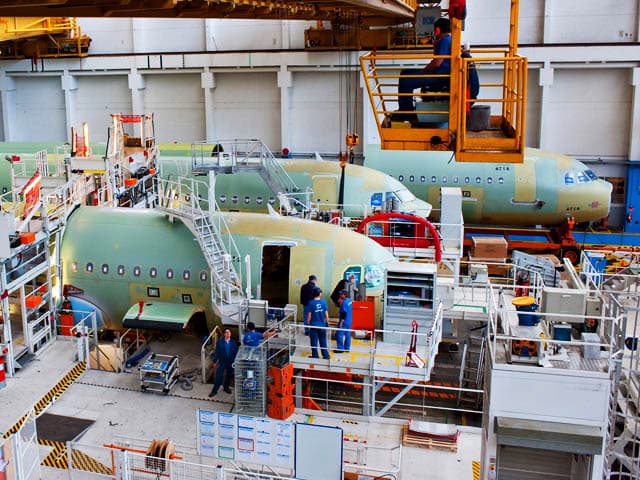
A significant bottleneck remains in the form of completed aircraft awaiting engines. Airbus currently holds approximately 72 flyable aircraft in inventory, plus nearly 50 "gliders" — fully assembled airframes without engines. This stock has grown from 64 flyable units and about 60 gliders at the end of March, indicating that the engine supply problem is not easing quickly.
**Pressure on Pratt & Whitney**
Airbus has adopted a firmer stance toward its engine supplier. The manufacturer states that delivery volumes for 2026 are "firm" but remain "well below previous commitments" made by Pratt & Whitney. Discussions for 2027 are ongoing, but Airbus is seeking compensation for missed deliveries. Executive Chairman Guillaume Faury acknowledged "significant disagreements with Pratt & Whitney on the number of engines to be delivered" and did not rule out taking the matter to court if an amicable solution cannot be reached.
**2026 target maintained despite headwinds**
Despite these constraints, Airbus is holding to its goal of 870 commercial aircraft deliveries in 2026, a figure that would surpass its 2019 record of 863 units. "Global demand for commercial aircraft supports the continued ramp-up of our production, which we manage while facing significant Pratt & Whitney engine shortages," Faury said. The manufacturer plans to reach a production rate of 70 to 75 single-aisle A320neo family aircraft per month by the end of 2027, then stabilize at 75 monthly. This ramp-up trajectory, however, depends heavily on engine suppliers' ability to keep pace.
**Limited impact from Middle East crisis**
When asked about the potential effects of the Middle East conflict and rising energy prices, Airbus stated it has seen "no direct operational disruption" to its production lines or deliveries. The company remains vigilant about some energy-intensive suppliers that could be weakened by persistently high energy costs, but for now "there are no signs" of production stoppages among subcontractors. Airbus believes the logistical challenges linked to the geopolitical context "can be overcome."