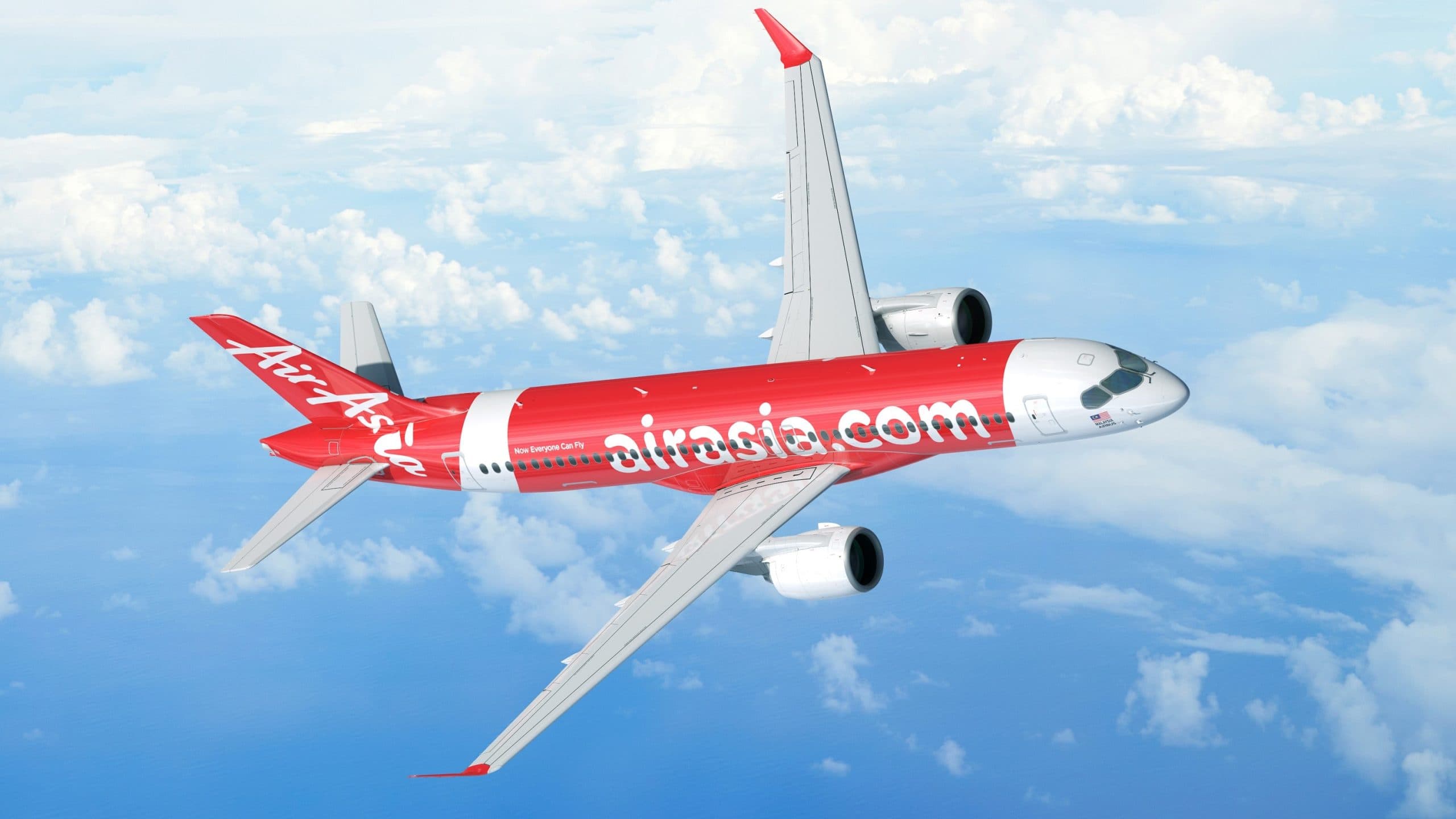
**Airbus has confirmed that studies for a stretched version of the A220, commonly referred to as the A220-500, have accelerated in 2026, with a target capacity of up to 185 seats.** The manufacturer has promised to maintain the distinctive five-abreast 2-3 cabin layout, a key differentiator that has contributed to the aircraft's commercial success, including a historic order for 150 A220-300s from AirAsia. This editorial examines what this development means for aviation training, focusing on aircraft performance, cabin configuration, and engine reliability.
**The A220-500 project involves a simple fuselage stretch of the A220-300, adding approximately five to six rows of seats while retaining the wing, systems, and Pratt & Whitney PW1500G engine.** This approach aims to minimize development risks and costs. The typical two-class capacity would rise to around 165–180 seats, with high-density configurations reaching about 185. However, the increased takeoff mass would reduce range by roughly 13% compared to the A220-300. For ATPL students, this trade-off between capacity and range is a classic design consideration that affects route planning and operational flexibility. ATC students should note that the A220-500's performance characteristics, such as climb rates and runway requirements, may differ from the current model, impacting traffic sequencing and airport planning.
**Airbus has explicitly ruled out moving to a six-abreast configuration, emphasizing that the 2-3 layout with 18.5-inch-wide seats remains non-negotiable.** This decision is driven by high passenger satisfaction scores, as measured by Net Promoter Scores, which are above average for the A220 fleet. The airline AirAsia, which ordered 150 A220-300s, has also expressed interest in a 185-seat A220-500, with its CEO Tony Fernandes suggesting a potential follow-on order of 150 more aircraft. For aviation students, understanding cabin layout choices is crucial, as they directly impact passenger comfort, boarding efficiency, and emergency evacuation procedures—topics covered in ATPL and ATC training.
**The engine reliability of the PW1500G is a critical factor for the A220-500's success.** Pratt & Whitney has been addressing durability issues, including powder metal defects that caused significant groundings. Improvements in life-limited parts and hot-section components, along with expanded MRO capacity, aim to bring time-on-wing to five to six years by 2027. Airbus and Pratt & Whitney are working to reduce spare engine shortages to near zero by late 2026. For ATPL students, engine reliability directly affects dispatch reliability and maintenance planning, while ATC students must consider the impact of groundings on airspace capacity and slot management.
**A final decision on launching the A220-500 is expected by the end of 2026, with a formal announcement unlikely at the Farnborough Airshow but possible later in the year.** Airbus is carefully evaluating the range penalty and industrial investment required, including potential expansion of the Mirabel final assembly line. This timeline gives aviation students a real-world case study of how market demand, technical feasibility, and supplier relationships shape aircraft development programs—a topic that appears in ATPL and ATC syllabi under aircraft design and operational considerations.