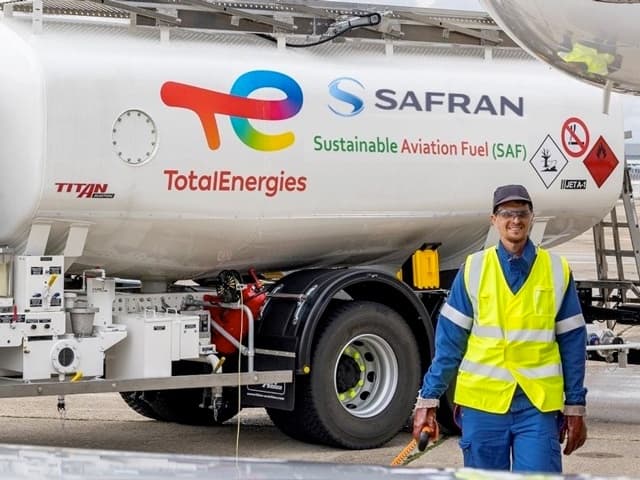
Airbus and Safran have joined forces with sugar cooperative Tereos and engineering firm Technip Energies to develop a large-scale sustainable aviation fuel (SAF) production unit in Dunkirk, northern France. The project, named Rebound, will use the Alcohol-to-Jet (AtJ) technology to convert advanced ethanol—derived from beet, wheat, and agricultural residues—into synthetic kerosene. The partners aim to produce approximately 160,000 tonnes of SAF annually, making it one of the largest facilities of its kind in Europe. A final investment decision is expected after engineering studies and regulatory approvals, targeted for the second half of 2026.
For ATPL and ATC students, this development is highly relevant. SAF is currently the most immediate lever for reducing aviation's carbon footprint, and understanding its production pathways, certification, and operational implications is becoming essential knowledge. The Rebound project illustrates how industrial-scale SAF production can be integrated into existing fuel supply chains, a topic that will increasingly appear in ATPL exams and ATC briefings on environmental regulations. Moreover, the use of advanced ethanol from agricultural residues rather than dedicated crops addresses concerns about food vs. fuel competition, a nuance that future aviation professionals must grasp.
The project aligns with both ICAO's and the European Union's strategies to decarbonize aviation. France has set a target of 50% bio-kerosene in aircraft tanks by 2050, and Rebound is a concrete step toward that goal. However, challenges remain: SAF production costs are still significantly higher than fossil kerosene, and the supply chain for biomass collection and processing needs to be structured. For students, this means that future pilots and controllers will operate in an environment where fuel types, availability, and cost may vary, affecting flight planning, fuel management, and even ATC procedures related to emissions.
In summary, the Rebound project is not just an industrial milestone; it is a real-world case study of the technological and logistical hurdles that the aviation industry must overcome to achieve its environmental targets. ATPL and ATC students should follow such developments closely, as they will shape the regulatory and operational landscape of their careers.