Airbus has taken a significant step toward decarbonizing commercial aviation with the launch of LEIA (Large scale Integration demonstrator of hybrid electrical Architecture), a European project under the Clean Aviation program. Unlike earlier efforts focused on all-electric flight, LEIA aims to mature hybrid-electric systems for short- and medium-range (SMR) aircraft, with a ground demonstration scheduled for 2027. The project has a budget of €35 million and runs from December 2025 to December 2027.
LEIA builds on the SWITCH project, which validated hybrid-electric subsystems. Collins Aerospace completed integrated lab tests in July, paving the way for aircraft-level integration at Airbus's STEP laboratory in Ottobrunn, Germany. Here, teams will validate battery interfaces, energy management systems, and advanced electrical components such as scalable motor-generators, next-generation electronic controllers, and power distribution equipment. The goal is to reach Technology Readiness Level (TRL) 5 by the end of 2027.
The core challenge is not just propulsion but the entire electrical architecture. Airbus highlights difficulties in high-voltage networks aboard aircraft: grid stability, power quality, protection against partial discharges and electrical arcs, and thermal management. The project also explores replacing pneumatic and hydraulic functions with electrical systems without increasing weight or degrading performance. This shift from component to system-level integration is what makes LEIA industrially valuable.
LEIA is a collaborative effort involving partners across the European Union, the United Kingdom, and the United States. The consortium includes AVL, Collins Aerospace, EASN, Fraunhofer, Liebherr Aerospace, Lynxeo, NLR, Safran, Saft, the University of Warwick, and the University of Wroclaw. This value-chain approach is critical because aircraft electrification depends on specialized suppliers for converters, cabling, batteries, power electronics, supervision software, and thermal systems. Airbus aims to strengthen the European industrial base while leveraging American and British expertise amid growing international competition in low-carbon technologies.
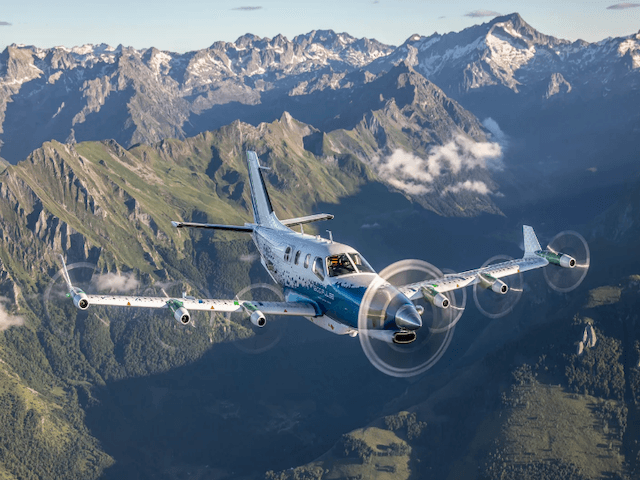
Airbus's electric roadmap has evolved from the E-Fan to EcoPulse and now to Clean Aviation projects. EcoPulse, developed with Daher and Safran, completed its test campaign in late 2024, providing insights into distributed propulsion, batteries, aerodynamics, and flight controls. Airbus estimates that hybrid-electric propulsion can improve energy management and reduce fuel consumption by up to 5% compared to standard flights. LEIA represents a crucial step, not an end point, in the journey toward more sustainable aviation.