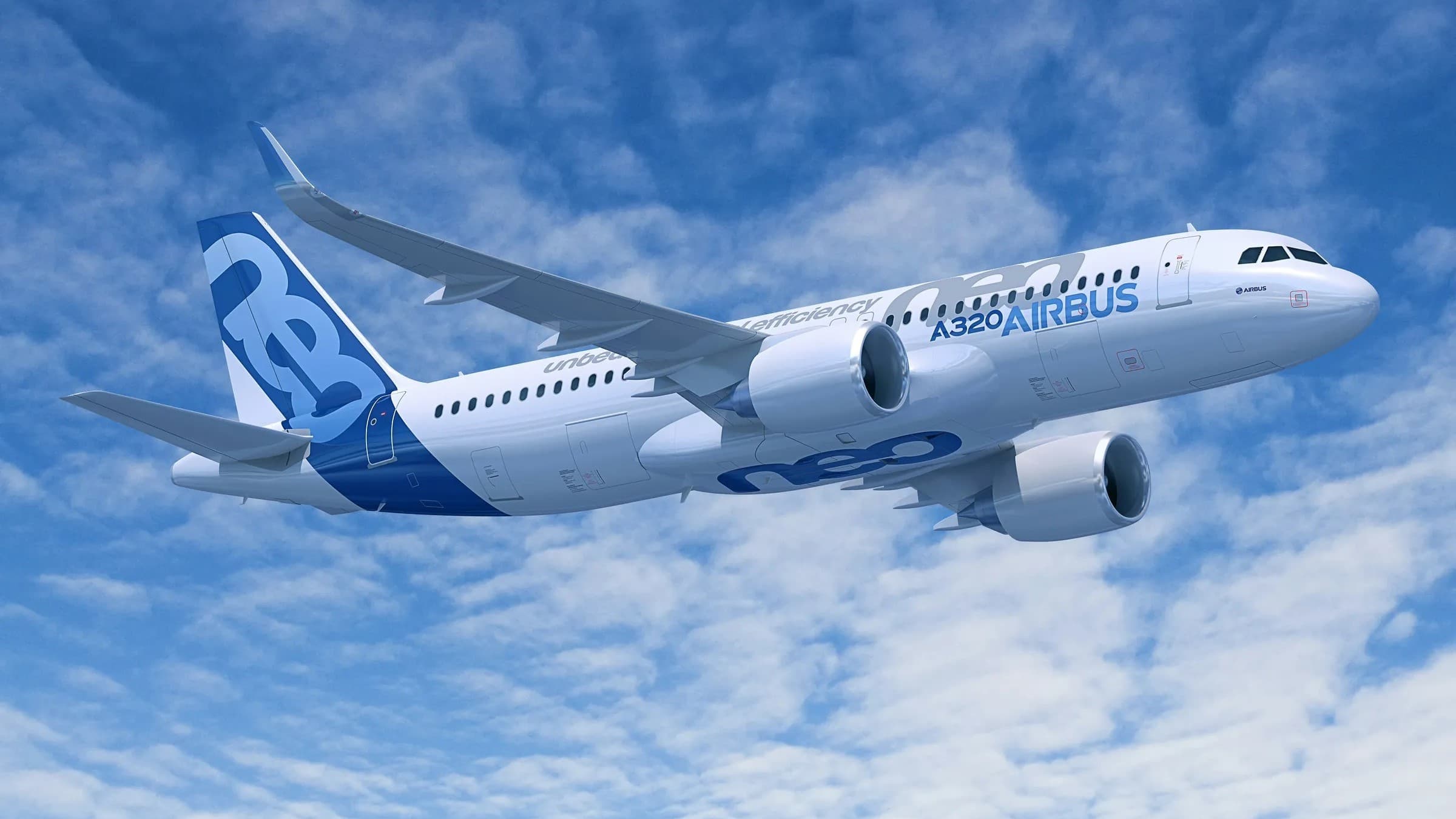
Airbus has crossed a symbolic threshold, surpassing 20,000 firm orders for its A320 family as of May, according to the latest data. This milestone was fueled by 207 new orders in May alone, including a significant commitment from China Southern Airlines for 102 A320neo-family aircraft (79 A321neo and 23 A320neo), plus 35 A321neo for Xiamen Airlines and 70 from an undisclosed customer. The total now stands at 20,169 aircraft since the program's launch in 1981 with Air France's initial letter of intent for 25 A320s.
**Why this matters for ATPL and ATC students:** The A320 family is the backbone of global short-to-medium-haul aviation. Understanding its market dominance helps future pilots and controllers anticipate fleet compositions, route networks, and operational patterns. The A321neo's long-range variants (LR/XLR) are increasingly used on transatlantic and regional routes, meaning ATC may see more of these aircraft on oceanic crossings or at secondary airports. For pilots, the A320 family is a primary type-rating target, and knowing its order book gives insight into hiring trends and fleet planning.
**Asian momentum and the A321neo's rise:** China's role is pivotal. The country's airlines have placed massive orders, partly due to trade tensions affecting Boeing 737 MAX certifications. The A321neo, especially the LR and XLR versions, offers airlines flexibility to open thinner long-haul routes or increase capacity on dense regional ones. This trend means ATPL students should familiarize themselves with the A321neo's performance characteristics, including its higher MTOW and fuel efficiency, which affect takeoff calculations and flight planning.
**Mixed results in long-haul and cargo:** While the A320 family thrives, Airbus saw contrasting fortunes elsewhere. Lufthansa ordered 10 additional A350-900s, and cargo variants (A350F) gained orders from Cathay Pacific and Air China Cargo, bringing the A350F backlog to 107. However, AirAsia X definitively canceled its remaining 15 A330-900 orders, ending a once-strategic relationship. This highlights the volatile nature of widebody demand post-COVID, a reality ATC students must grasp when studying traffic flows and airport slot allocation.
**Production and delivery outlook:** Airbus delivered 198 A320-family aircraft by end-May, up from the same period in 2025, and 262 aircraft overall. Despite supply chain challenges, the ramp-up signals confidence in the market. For ATC trainees, this means more A320-family movements in controlled airspace, requiring familiarity with their performance envelopes and noise abatement procedures.