**Record Traffic, Deeper Losses: The airBaltic Paradox**
Latvian carrier airBaltic has started 2026 on a mixed note. While the first quarter confirms solid traffic and activity growth, with several seasonal records, financial results remain penalized by an unfavorable economic environment. During an investor conference, CEO Erno Hildén and CFO Vitolds Jakovļevs presented unaudited results marked by revenue and volume growth, but also by a widening net loss.
**Revenue and Traffic Soar**
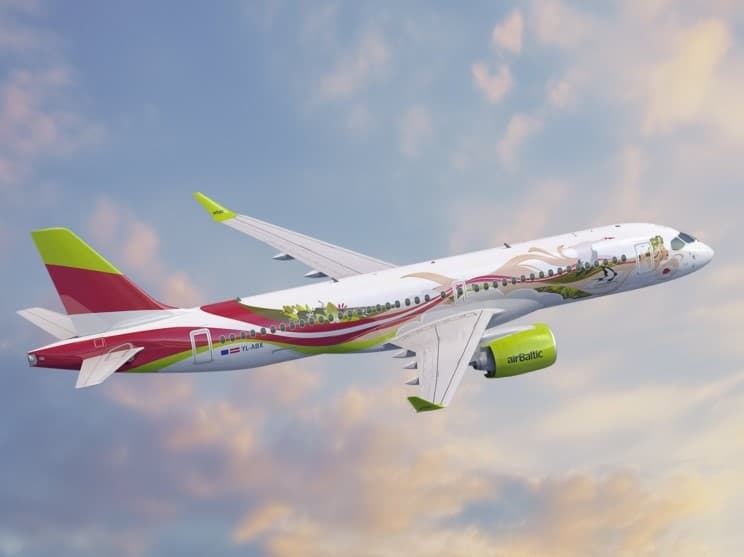
Over the first three months of the year, airBaltic recorded revenue of €149.1 million, up 12.3% from the same period in 2025 — the highest Q1 revenue ever. This growth was driven by higher passenger numbers, increased flight activity, improved commercial performance, and the ramp-up of ACMI (Aircraft, Crew, Maintenance, and Insurance) operations. The airline now operates a homogeneous fleet of Airbus A220-300s, which it leases to other European carriers during fleet shortages.
Traffic figures also set records: 1.044 million passengers on its own network (up from 995,000), and 1.5 million including ACMI operations (up from 1.3 million). Total flights reached 15,100 (13,600 in Q1 2025), with 10,700 on its own network and 4,400 in ACMI — again a first-quarter record. However, the load factor slipped 1.1 points to 74.8%, indicating capacity growth outpaced demand on some routes.
**Operational Improvement, But Net Loss Widens**
Despite the traditionally weaker winter season, airBaltic improved its adjusted EBITDAR to +€7.0 million, compared to -€4.3 million a year earlier. This improvement came from higher revenue, better passenger yield, and increased fleet utilization. Yet the net loss ballooned to €70.1 million, far worse than the €29.3 million loss in Q1 2025. The airline attributes this to adverse exchange rates, reduced commercial support, and continued cost inflation in maintenance, personnel, and airport charges.
**What This Means for ATPL and ATC Students**
For aspiring pilots and air traffic controllers, airBaltic's results offer a real-world lesson in airline economics. The shift toward a hybrid model — combining scheduled services with ACMI leasing — shows how carriers manage seasonality and maximize aircraft utilization. Understanding these financial pressures helps ATPL students appreciate why airlines optimize schedules, negotiate slots, and sometimes cancel flights. For ATC trainees, the growth in ACMI operations means more diverse traffic patterns, with aircraft operating under different call signs and flight rules, requiring flexible coordination.
**Outlook and Strategy**
CEO Hildén emphasized operational stability and a focus on revenue quality, cost discipline, and fleet optimization for 2026. The airline's all-A220 fleet is a strategic asset, but exposure to macroeconomic and currency risks remains. For aviation students, this case underscores the delicate balance between operational success and financial sustainability in a competitive industry.