**Industry Context: Why This Matters for Aviation Training**
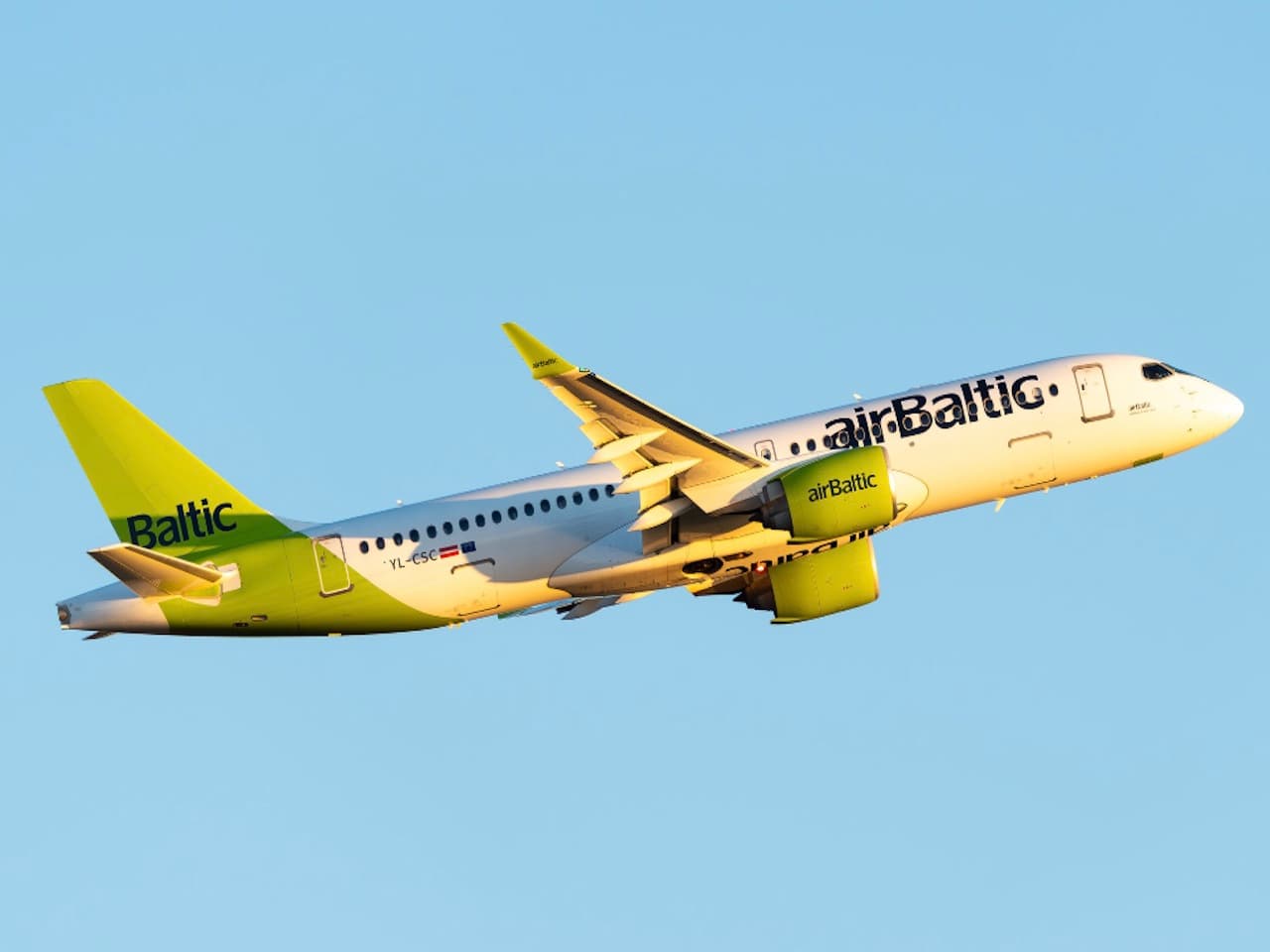
On May 3, airBaltic inaugurated a new seasonal direct route between Vilnius and Zurich, connecting Lithuania's capital with Switzerland's primary intercontinental hub. This move comes as Lithuanian airports experience record traffic, surpassing historical levels in the first quarter of 2026. For ATPL and ATC students, this development is more than a simple route addition—it exemplifies the strategic decisions airlines make to tap into high-demand markets, the role of financial hubs in shaping air traffic patterns, and the operational challenges of managing growing passenger volumes.
**The Route and Its Strategic Significance**
The Vilnius–Zurich service will operate twice weekly in May, increasing to three weekly frequencies through the end of the summer season in October. Zurich Airport is not only Switzerland's largest airport but also its sole intercontinental hub, handling about three-quarters of the country's air freight. Zurich itself is a global financial center, with its financial sector generating nearly half of Switzerland's financial value added—around CHF 30 billion and nearly 100,000 full-time jobs. For Lithuanian businesses, this direct link provides easier access to decision-makers, while Swiss investors gain a simplified connection to the Baltic market. This route replaces what was previously a market dominated by connections via other European hubs, highlighting the shift toward point-to-point services that reduce travel time and increase convenience.
**Traffic Growth and Operational Implications**
Lithuanian Airports (LTOU), managing Vilnius, Kaunas, and Palanga, reported a record 7.1 million passengers in 2025, surpassing Riga Airport for the first time in over two decades. In March 2026 alone, the network served over 542,000 passengers, a 6.7% year-on-year increase, with Vilnius seeing a 7.8% rise to over 377,000 passengers. This sustained growth, with first-quarter 2026 figures already exceeding the previous record set in Q1 2025, presents real-world case studies for ATPL students on capacity planning, slot coordination, and ATC workload management. ATC students can analyze how increased traffic at secondary hubs like Vilnius affects airspace management and coordination with larger hubs like Zurich.
**MyATPS Angle: Concrete Learning Points**
For ATPL candidates, this news ties directly to syllabus topics such as route planning, airline economics, and the impact of business travel on network design. Understanding why airBaltic chose Zurich—a financial hub—over other European cities reinforces the importance of demand forecasting and market analysis. ATC students can explore the operational aspects: how does a twice-weekly frequency affect ATC slot allocation? What are the implications of seasonal versus year-round routes on staffing and airspace management? These are practical questions that bridge theory and real-world operations.
**Conclusion**
airBaltic's Vilnius–Zurich route is a textbook example of how airlines respond to economic drivers and traffic growth. For aviation students, it offers a lens into the interplay between financial centers, hub connectivity, and operational planning. As Lithuanian airports continue to break records, the lessons from this route will remain relevant for anyone preparing for a career in aviation.