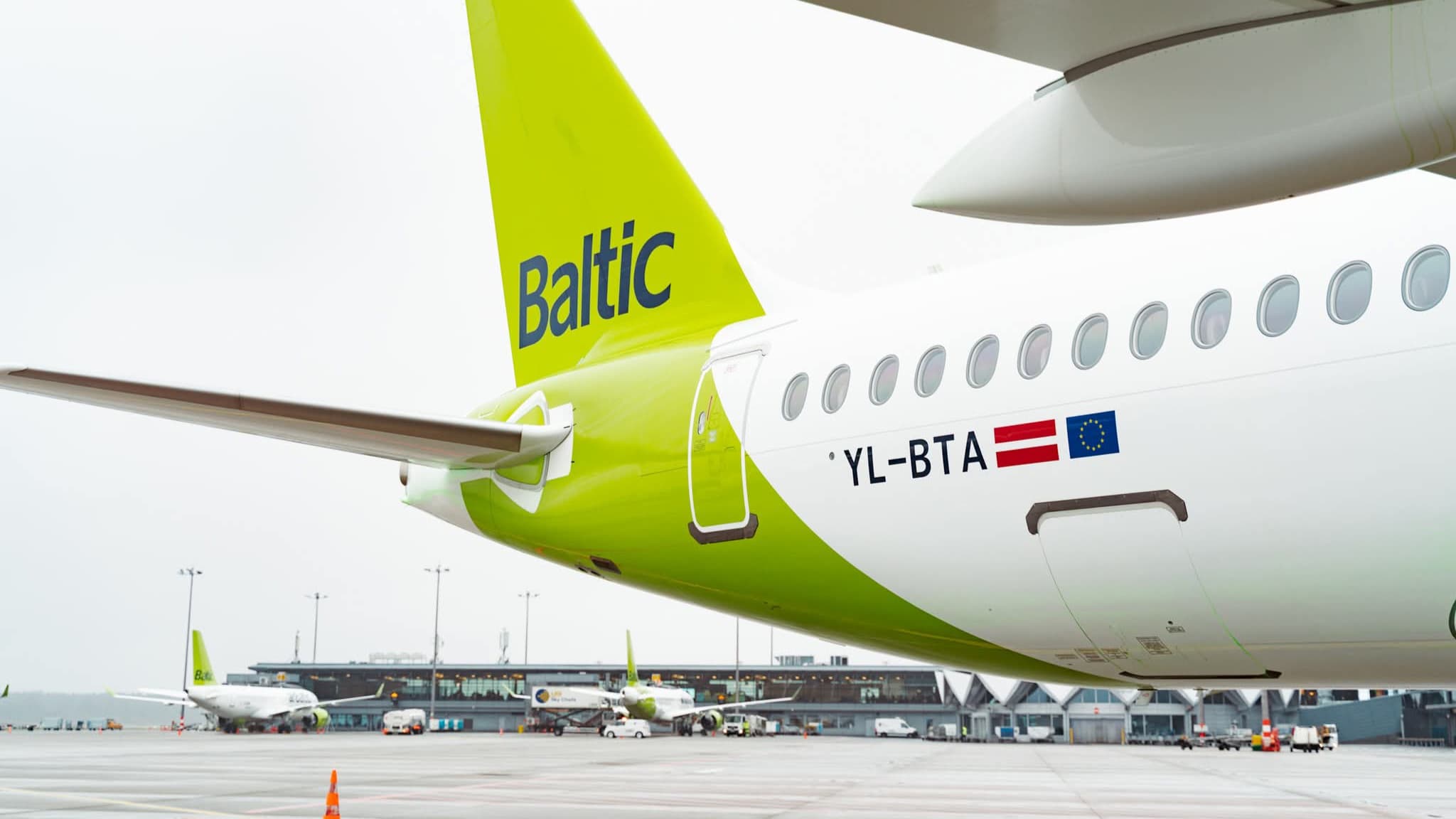
**AirBaltic strengthens its winter offer with two new Alpine routes**
Latvian national carrier airBaltic has announced the launch of two new winter seasonal routes connecting the Baltic capitals to major Alpine gateways. Starting January 2027, the airline will operate a weekly Riga–Turin service (from 30 January to 20 March) and a Vilnius–Geneva service (from 2 January to 20 March), both on Saturdays using the Airbus A220-300. Flight time is approximately 2 hours 50 minutes for each sector. These additions bring the total number of new winter routes for the 2026–2027 season to 15, complementing previously announced services from Gran Canaria, Tenerife, Kuusamo, and other points.
**Strategic focus on winter leisure traffic**
The choice of Turin and Geneva is no coincidence: both cities serve as primary access points to the Italian and Swiss Alps, respectively, a region heavily frequented by ski tourists. Mantas Vrubliauskas, airBaltic’s Vice President of Network Management, stated: “Winter remains an important season for leisure travel. These two new routes will provide more opportunities to reach the Alps, access a wide range of ski resorts, and enjoy a variety of winter activities.” The airline’s winter network is designed to offer something for everyone: sunny destinations, winter sports getaways, and city breaks across Europe.
**Fleet and operational context**
AirBaltic operates an all-Airbus A220-300 fleet, one of the youngest in Europe. The carrier was also the first in Europe to offer Starlink high-speed internet on board, already installed on more than half of its aircraft. This homogeneous fleet simplifies crew scheduling, maintenance, and training—a key point for ATPL students studying fleet commonality and operational efficiency. For ATC trainees, the addition of seasonal routes to airports like Turin (LIMF) and Geneva (LSGG) means increased traffic variability, especially during peak winter weekends, requiring flexible slot coordination and handling of mixed traffic flows (scheduled, low-cost, and charter).
**Implications for aviation training**
This expansion illustrates several real-world concepts relevant to ATPL and ATC curricula: seasonal route planning, network economics, fleet utilization, and the impact of tourism demand on air traffic patterns. Students should note how airlines like airBaltic balance year-round connectivity with seasonal peaks, and how secondary airports (e.g., Turin rather than Milan Malpensa) are used to capture leisure traffic while avoiding congestion at major hubs. The homogeneous A220 fleet also demonstrates the operational benefits of a single aircraft type—a topic often discussed in airline management modules.