**A New Identity for a New Strategy**
AirAsia X Berhad has officially adopted the new corporate name AirAsia Group Berhad, following a near-unanimous shareholder vote and registration with Malaysian authorities. The move is part of a deep restructuring aimed at consolidating all airline activities under a single roof, while non-aviation businesses are housed in the holding company Capital A. The group's declared ambition is to become "the world's first low-cost network carrier." This is not merely a rebranding exercise; it symbolizes a fundamental shift from a strict point-to-point model toward a hybrid hub-and-spoke structure, while preserving the low-cost DNA that made AirAsia famous.
**Integration and Separation**
At the heart of this reorganization, AirAsia Group Berhad becomes the parent company of all airline operations, including short- and medium-haul flights previously structured under AirAsia (AK) and AirAsia Aviation Group. These entities have been progressively merged into AirAsia X, now rebranded, to simplify the capital structure and clarify the purely aviation perimeter. Simultaneously, all non-aviation activities are placed under Capital A, a sister holding focused on services and aviation-adjacent businesses. This clearer separation between aviation and non-aviation is intended to make accounts more transparent, reduce administrative redundancies, and facilitate financial management of each division. The restructuring marks the culmination of a long recovery from post-pandemic financial difficulties, during which AirAsia X was under a restructuring regime and Malaysian stock exchange surveillance. The name change and consolidation serve as a signal to markets that the group has turned a corner and is ready to grow on a stronger foundation.
**Expanding Network and Fleet Modernization**
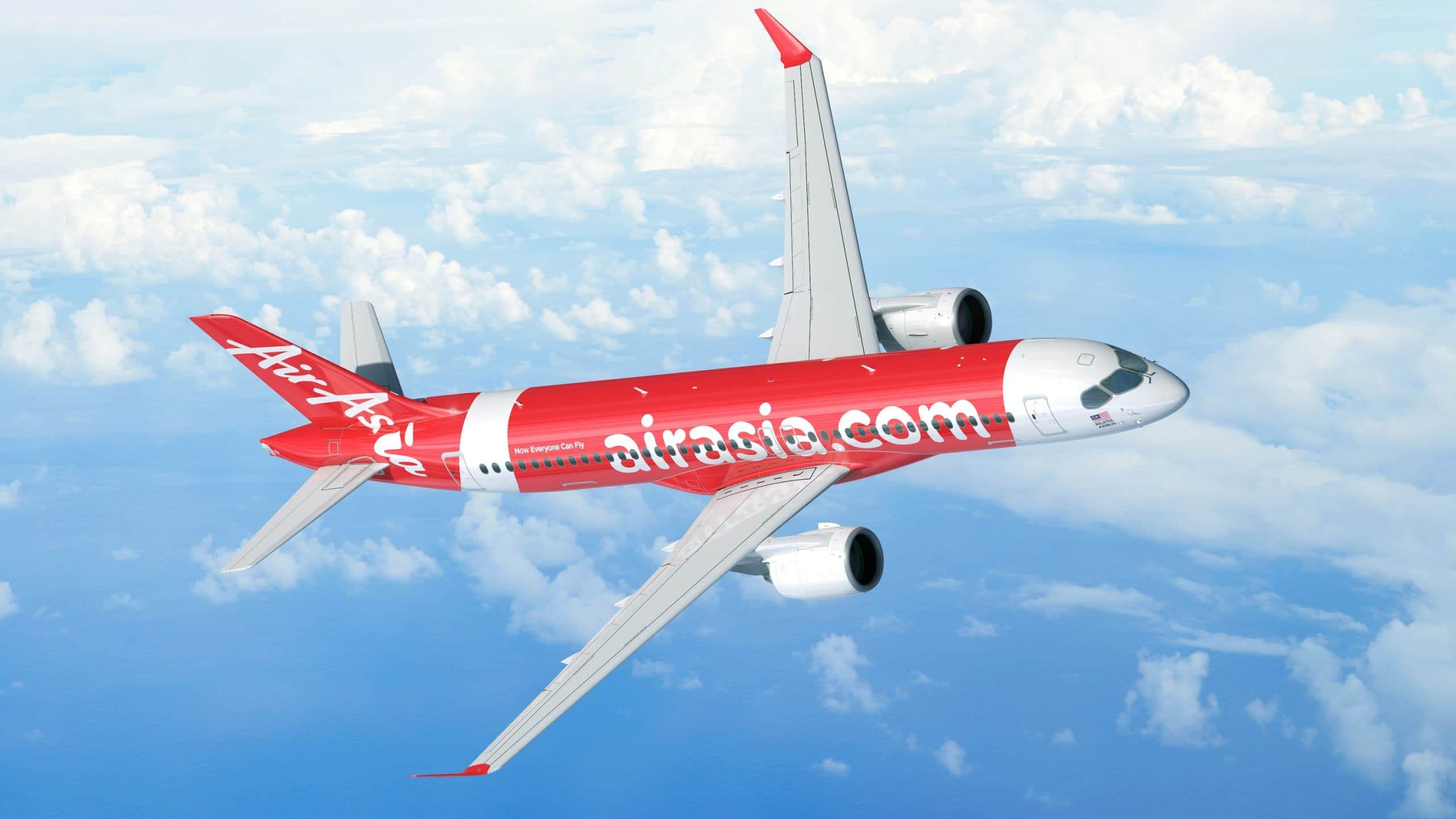
AirAsia Group is now focusing on strengthening its leadership in key markets in Malaysia and Thailand, while deepening its presence in North Asia, notably with the return of the Kuala Lumpur–Busan route since June 2026. The group also highlights the strategic role of Bahrain as a virtual hub connecting Asia to the Middle East and Europe, with the launch of the Kuala Lumpur–Bahrain–London route, marking its return to the UK and its first European hub outside ASEAN. This expansion relies on a modernizing fleet primarily composed of Airbus A330 widebodies, supplemented by Airbus A321neo LR/XLR single-aisle aircraft for medium- and long-haul routes with lower capacity. Almost all aircraft grounded during the pandemic have been reactivated, and the priority is now on optimizing fleet mix, daily utilization, and unit costs, with an accelerated replacement of older airframes by newer, more fuel-efficient aircraft. These investments are supported by an expanded order book, including over 430 A321neo LR/XLR aircraft for the group, which should further reduce cost per available seat kilometer in a highly competitive environment. In May, the group ordered 150 Airbus A220-300s, turning the page on the previously ordered A330neo and signing the largest firm order ever for the 100- to 160-seat twinjet.
**Implications for ATPL and ATC Students**
For ATPL and ATC students, this restructuring illustrates how a major airline group evolves its business model and network strategy, directly affecting route planning, fleet management, and operational coordination. Understanding the shift from point-to-point to hub-and-spoke operations is crucial for future pilots and controllers who will work in such environments. The integration of short- and long-haul operations under one brand also highlights the importance of seamless connectivity and multi-hub coordination, which are key concepts in modern aviation. Additionally, the fleet modernization with A321neo LR/XLR and A220-300 aircraft demonstrates the trend toward more fuel-efficient, longer-range narrowbodies, which will shape future flight planning and air traffic management.