**A Historic Order for the A220 Program**
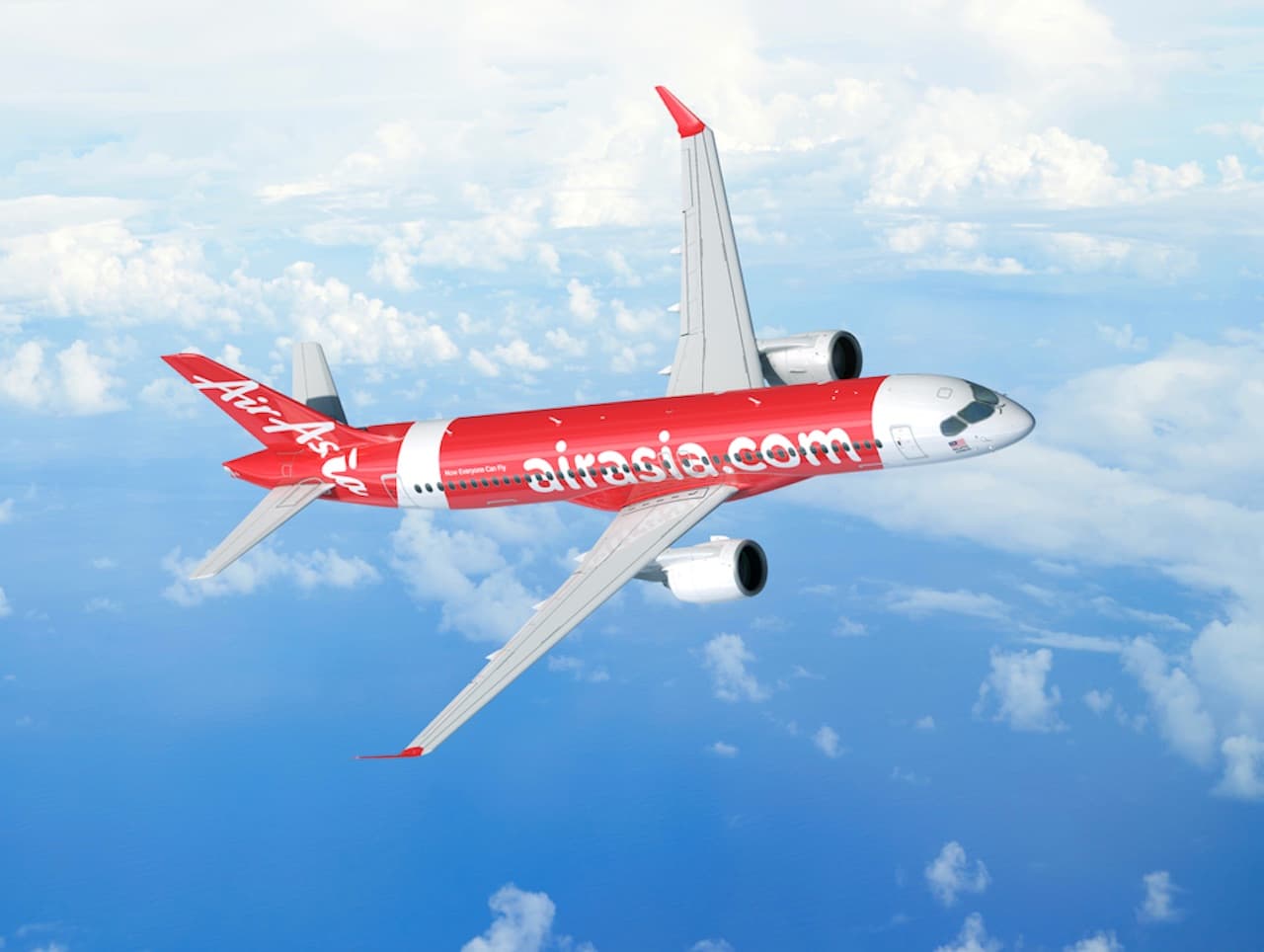
AirAsia has placed a firm order for 150 Airbus A220-300 aircraft, marking the largest single order in the history of the A220 program. The deal, announced at the A220 assembly line in Mirabel, Quebec, pushes the program past the symbolic milestone of 1,000 firm orders. As of March 2026, 501 A220s had been delivered to 25 operators worldwide, showing a growing but still maturing installed base compared to the A320neo or 737 MAX families. For ATPL and ATC students, this order is more than a headline—it represents a strategic shift in how low-cost carriers are rethinking their fleets and networks, which directly impacts the routes, frequencies, and aircraft types you will encounter in your career.
**A New 160-Seat Configuration for Low-Cost Operations**
AirAsia will be the launch customer for a new 160-seat cabin layout, achieved by adding an extra over-wing emergency exit on each side. This densification is explicitly designed for low-cost models, where reducing cost per seat-kilometer is the central metric. The A220-300 typically seats 120–150 passengers, but this high-density variant brings it closer to the economics of an A320 while retaining the lighter structure and longer range (up to 3,600 nautical miles or 6,700 km). For ATPL students, understanding the trade-offs between seat density, range, and operating costs is crucial for future airline planning and performance calculations. ATC trainees should note that higher-density configurations can lead to increased passenger loads on regional routes, affecting traffic flow and airport capacity management.
**Strategic Network Implications for Asia**
Tony Fernandes, AirAsia's founder, stated that the order reflects "long-term discipline and the scale of our ambitions." The A220 will be used to open new markets within ASEAN and into Central Asia, freeing up larger A321s for longer or higher-demand routes. This fleet strategy creates a two-tier network: smaller, more frequent services on thinner routes with the A220, and higher-capacity flights on trunk routes with the A321. For ATC students, this means more varied traffic patterns—smaller aircraft operating at higher frequencies to secondary airports, potentially increasing complexity in airspace management. ATPL students should study how this type of fleet planning affects crew scheduling, maintenance programs, and route profitability.
**Technical Profile and Competitive Positioning**
The A220-300 is powered by Pratt & Whitney PW1500G geared turbofan engines, offering significant fuel and noise reductions compared to previous generations. It is already certified to operate with up to 50% sustainable aviation fuel (SAF), with Airbus targeting 100% SAF compatibility across its entire range by 2030. This environmental angle is increasingly relevant in Asia, where regulators and airlines are intensifying climate commitments, though the higher cost of SAF remains a barrier. For ATPL students, the A220's advanced materials and aerodynamics are a case study in modern aircraft design, while ATC trainees should be aware of its performance characteristics—such as climb rates and approach speeds—that differ from larger narrowbodies.
**What This Means for the 150–190 Seat Market**
The AirAsia order adds to a backlog already strong with operators like Air Canada, Delta Air Lines, airBaltic, and Breeze Airways, but until now dominated by North American and European carriers. This deal gives Airbus a major low-cost foothold in Southeast Asia, securing years of production for the Mirabel and Mobile assembly lines. Embraer remains a competitor on the 120–146 seat segment with its E195-E2, but the A220's new 160-seat variant directly challenges Embraer's position. For students, this competitive dynamic is a real-world example of how aircraft manufacturers respond to market demands, influencing the types of aircraft you will fly or control in the future.